
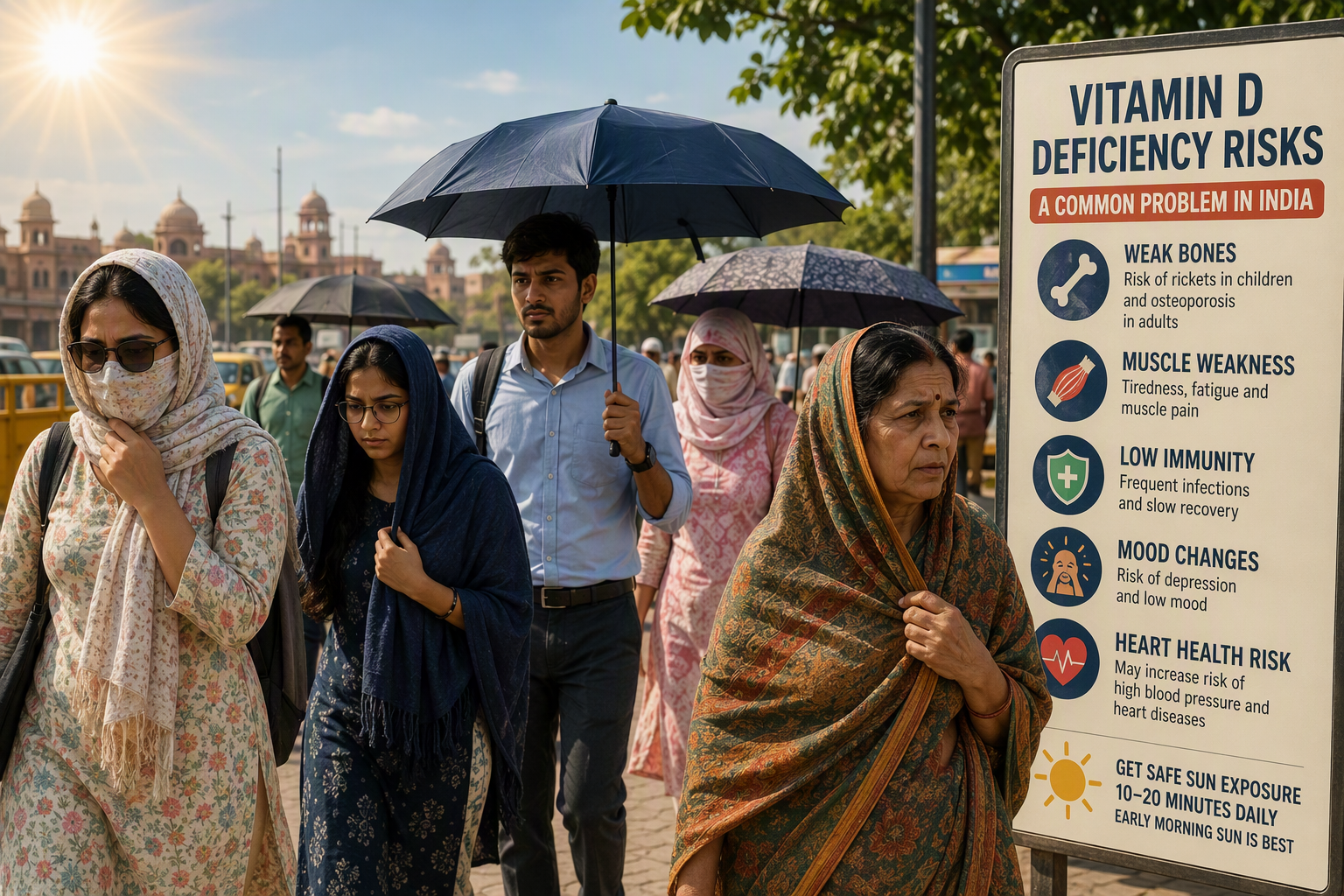
Key Highlights
- Vitamin D deficiency is very common in the Indian population. A lot of studies say there is a high prevalence of vitamin d deficiency in people of all age groups.
- Low sunlight exposure, staying inside more, air pollution, and darker skin can all make it harder for your body to make vitamin d, even when there is hot sun in the climate.
- Poor dietary intake is important too. The Indian diet does not have enough vitamin d. There are not many fatty fish, egg yolks, fortified foods, or other good dietary sources, so people do not get enough from what they eat.
- Some people have a higher risk. Women, children, old people, and groups living in cities or in northern india often face low vitamin d.
- Low vitamin d is not good and can be bad for your bone health, calcium absorption, immune function, and muscle strength.
- You can improve vitamin d status by getting more sunlight exposure, trying food fortification, having testing done, or taking vitamin d supplements.
Introduction
Vitamin D deficiency is a big problem in India. Even though there is a lot of sunlight, many people still have low vitamin d levels. This may feel strange to some, but it is true for a lot of the indian population. There are several things that cause this. Sunlight exposure, dietary habits, and skin pigmentation all play a part. The way people live day-to-day can also change vitamin d production.
This matters because vitamin d is needed for bone health, muscle strength, and overall health. If you live in India or care about people in the country, knowing about vitamin d deficiency can help you make good choices. Learn more now so you do not get problems later from low vitamin d levels.
Overview of Vitamin D and Its Importance
Vitamin d is a kind of vitamin. Your body gets it when the skin is out in sun with uvb rays. The body can also get some of it from food and supplements. Vitamin d helps your body use calcium.
It helps the body stay healthy by making the immune system strong. Muscles need it to move right. Nerves use it to send signals. It is needed for overall health.
When vitamin d levels drop, bones can get weak. Problems can happen in other parts of the body too. This is why it is good to know how vitamin d works before we talk about its lack in India.
Functions of Vitamin D in the Human Body
Vitamin d is important for your body to take in calcium in the intestine. If you do not have enough vitamin d, your body will not use calcium well, even if you have enough in your food. This can change your calcium levels. It also affects how strong your bones are and your bone health when you get older.
Vitamin d is important for your immune function. It helps your body control swelling, helps cells grow, and lets cells turn into other kinds of cells. The reason this vitamin works well is because your body has special spots where vitamin d can stick. These spots are in your intestine, bone, and in many other parts of your body. So, having low vitamin d is not just about weak bones. A low level of this vitamin can also make you get frequent infections and have other health problems.
Just as important, vitamin d helps your muscles to work well. It also helps your nerves send signals in the body. If you do not have enough vitamin d, you might feel bone pain and muscle weakness. Children can get rickets from this. Adults may get osteomalacia or osteoporosis. There is also a higher risk of falls and fractures. You can get vitamin d from dietary sources, but there are not many foods that have it.
Why Vitamin D is Crucial for Indians
For the Indian population, vitamin d matters a lot. Things you do each day can make your vitamin d levels go down. Many people say sunlight exposure will help with low vitamin d. But in real life, vitamin d status does not get better just because you go in the sun.
One reason for getting less vitamin d is skin pigmentation. People who have darker skin have more melanin. This can make the skin produce less vitamin d. A lot of people spend more time indoors. Many live in big cities. They also may not get much sun exposure. All these things can lead to lower vitamin d production.
Dietary habits make things harder. A lot of people in India have vegetarian diets. Most natural sources of vitamin d come from animals. Food with added vitamin d is not eaten much, either. So, they have low vitamin d. Even in a sunny place like India, vitamin d levels are still low. The people can be at a higher risk of low vitamin d.
Prevalence of Vitamin D Deficiency in India
Vitamin d deficiency is seen a lot in India. Many people in the indian population have poor vitamin d status. Kids, adults, and older people can all get it. Those who are at high risk feel it more. Studies show that men and women from all parts of the country are affected. The prevalence of vitamin d deficiency is high for almost everyone.
Most reports say that the high prevalence of vitamin d deficiency can be seen in about 80% to 90% of people. Other studies may show different numbers. But, there is no doubt this is not a small or rare problem. In the next sections, you will read more about how big the issue of vitamin d deficiency is. You will also find out which people have the highest prevalence of vitamin d deficiency and are most affected by low vitamin d.
How Widespread is Vitamin D Deficiency Among Indians?
Studies in India show that the prevalence of vitamin d deficiency is high. It can be anywhere from around 40% to almost all people. Most studies say that about 80% to 90% of people in the Indian population have low vitamin d levels. Reports on community groups say low vitamin d can affect 50% to 94% of people. This shows that vitamin d deficiency is a big problem in India.
There is a change in these numbers depending on the area, but the problem is present across the country. A study in schools showed that about 34.2% of premenarchal girls in Pune had it. In Himachal Pradesh, the number is much higher, reaching 80% to 81% in children. Studies from hospitals show a wide range, from 37% to 99%.
| Population or Region | Reported Vitamin D Status Pattern |
|---|---|
| Community-based Indian studies | About 50% to 94% deficiency in many groups |
| Most Indian studies overall | Often 80% to 90% deficiency |
| Hospital-based studies | About 37% to 99% deficiency |
| Pune schoolgirls | Around 34.2% deficiency |
| Himachal Pradesh schoolchildren | Around 80% to 81% deficiency |
Risk Factors for Indian Populations
Vitamin D deficiency can affect people in many ways. There are some risk factors that are often found in India. These can be from your body, what you eat, where you live, and how you spend your day. In northern India, people often get vitamin d deficiency, even though there is sunshine.
Several common risk factors stand out:
- Darker skin and more skin pigmentation can make it hard for the body to get enough vitamin d.
- A lifestyle where you stay indoors and do not get much sun exposure can lead to low vitamin d.
- People with more body fat or a higher body mass index often have lower vitamin d levels.
- Eating foods that do not have much calcium or vitamin d can make the problem worse.
- Women who go through several pregnancies and lack good nutrition may have a higher risk.
These things can happen to the same person at the same time. This is why you may find children, women, older people, people in the city, and some groups living out in the country have low vitamin d. If we know these patterns, we can understand the main causes of low vitamin d that will be talked about next.
Major Causes of Vitamin D Deficiency in India
The causes of vitamin d deficiency in India come from more than one reason. Limited sun exposure is one part of it. The way people eat is changing, and this also matters. A low intake of foods with vitamin d is common. There are biological reasons as well, which change how the body makes and gets vitamin d. All these things work together and cause vitamin d deficiency.
That is why people may still have low levels and a higher risk of not getting enough, even when they live in sunny places. People in towns or cities can get these problems, but people in the country can get them, too. To help you see why, we will first talk about sunlight. Then, we will talk about how the way people live and their culture can make a difference.
Limited Sunlight Exposure Despite Sunny Climate
India gets plenty of sunshine, but many people do not have good vitamin d status. Why does this happen? It is not just about living in a sunny place. To make vitamin d in your body, your skin needs enough direct sunlight exposure. The UV rays, mainly UVB rays, help your body start vitamin d synthesis. This is how you get vitamin d from sunlight exposure.
In city life, many people be indoors most of the day for work, school, and travel. This means they do not have much time outside. Even if you go out, what you wear or standing in the shade can make you get less uv rays. Air pollution can be another problem. It blocks uv rays from getting to you. Because of that, your skin cannot make enough vitamin d. The lack of uv rays leads to low vitamin d production for people living in the city.
Skin pigmentation can affect vitamin d levels. People with darker skin have more melanin in it. This makes vitamin d synthesis less efficient. A mix of indoor routines, pollution, and skin pigmentation explains why there are low vitamin d levels in many Indians, even with sunny weather.
Common Lifestyle and Cultural Factors
Daily habits can make the level of vitamin d in your body go down slowly. In India, the way that many people live leads to less skin getting direct sun exposure. You might think going outside for a short time is enough. But this may not give your body what it needs.
Common contributors include:
- People be inside more often because of the way we work and learn now.
- Sunscreen is used by people. It blocks sunlight and can make it harder for the body to do vitamin d synthesis.
- Some cultural clothing covers most of the skin. That can also stop vitamin d from being made in the body.
- More body fat has been linked to lower vitamin d levels in people.
Some habits, like wearing clothes that block sunlight, can keep the skin from getting vitamin d. Women who dress this way are more likely to not have enough vitamin d. If these people also do not eat well, their vitamin d status can be even poorer. This leads us right to the next topic, which is about missing parts in the Indian diet.
Dietary Patterns and Nutritional Gaps
Diet is key for vitamin d deficiency in India. A lot of people there do not get enough vitamin d in what they eat. Many Indian diet plans, mostly in homes where people eat only vegetables, are low on natural dietary sources of this vitamin. Most vegetables and grains do not offer much vitamin d.
This can be a problem if people do not get enough sun exposure. Not having enough vitamin d from food, and eating less calcium, can make vitamin d status go down even more. Food choices often make this problem bigger. The next two sections will show where these gaps come from. They will also talk about which groups have the greatest risk to their vitamin d status because of their diet.
Typical Indian Diet and Vitamin D Intake
A regular Indian diet does not give the body enough vitamin d. The reason is, there are not many foods that are good dietary sources of vitamin d. Most of the foods people eat in India do not have much of it. This is even more true for vegetarian diets, which many in India follow.
The main food-related points are:
- Fatty fish gives you a good amount of vitamin d, but many people do not eat it a lot.
- Egg yolks have little vitamin d, so most people do not get much from them.
- Dairy products can give you vitamin d if it is added to them.
- Vegetables, grains, atta, rice flour, and other foods do not give you much natural vitamin d.
Another problem is that families in India do not eat enough fortified foods. They get the right amount of calories, but their vitamin d intake may not be enough. Food fortification is important in India because it can help more people get the vitamin d they need for good health.
Groups at Greater Dietary Risk
Some people in India can be at higher risk for low vitamin d. They do not always get good dietary sources of vitamin d, so they need more help with the food they eat. A low vitamin d intake is a serious problem in India. This is even more important for children who are growing, women who are pregnant, and people who are older.
Groups at higher dietary risk include:
- Pregnant women, especially if they do not have good food in what they eat
- Children, who need enough vitamin d so they can grow and make strong bones
- Elderly adults, who might eat less and have bone health that is not as good
- People on strict vegetarian diets, who eat foods with almost no added vitamin d
Women who get pregnant again not long after having a baby can have more health problems. A lack of vitamin D may harm both the mother and the child in these cases. If the woman also does not have enough calcium or she does not get much sun exposure, the risks can be higher. These people are often the ones with the most risk.
Populations Most Affected by Vitamin D Deficiency
Vitamin d deficiency is a big problem in India. This problem affects people of all age groups. Some people are at higher risk, like women, children, and older adults. Studies show that these groups often be vitamin d deficient. They may not see signs of it right away. Pregnant women are at a higher risk. School-age children also face a high risk of vitamin d deficiency.
People who live in cities feel the impact of spending too much time indoors. The air there also has more pollution. People who live in the country do not always get full protection. They can get more sunlight exposure, but they might have low levels because of a poor diet. In the next parts, we will compare these two groups more.
Impact on Urban vs. Rural Communities
When you look at urban and rural places, you see that the reasons for low vitamin d are not the same. In cities, people do not get much sunlight exposure. This often happens as they spend most time working in offices, studying inside, and living in apartments. People in cities also do fewer outside things. Pollution in the city can block uvb rays. These rays are needed for vitamin d production.
Rural places in India may seem not at risk for low vitamin d because people spend a lot of time outside. But studies show low vitamin d levels are common in these areas. This is true even with lots of sun. So, just being in sunlight does not mean you will have adequate vitamin d.
In rural areas, what people eat matters a lot. A diet with a lot of phytate and not much calcium can make it hard for the body to take in calcium in the gut. This can also affect how vitamin d works. This problem can be seen in people in cities and in the country, but each place may have different things that be part of the issue.
Women, Children, and Elderly at Higher Risk
Some people feel low vitamin d more than other people. Women, children, and older people often be at higher risk for this. It can happen because of how our bodies work, the food we eat, and how we live. Indian women can get low vitamin d more easily in some places.
Key reasons include:
- Women may get less sun exposure because of the clothes they wear and the time they spend inside.
- Children need vitamin d to grow well and stay healthy, especially for their bones.
- Older adults are at higher risk for losing bone strength. They can also be more likely to fall and get fractures.
- Being pregnant or having several pregnancies can make low vitamin d status even worse.
These groups do not always show big changes right away. It can be easy to miss if they have a deficiency. Still, a problem like this can hurt bone health, muscle work, and a person’s health over time. This is why it matters to learn more about these health effects.
Health Effects of Vitamin D Deficiency in India
Vitamin D is good for more than your bones. Many people in India have low vitamin d. This can hurt bone health and lead to muscle weakness. It can also cause other problems in the body. Severe vitamin d deficiency can make your bones sick and it is easy to see. But even mild vitamin d deficiency can make the body feel bad as time goes by.
Researchers have found that low vitamin D can be linked to many health issues. A person may have problems like infections, heart disease, diabetes, autoimmune diseases, and some other troubles which last for a long time. If you live in India and want to know what vitamin d deficiency can cause, you should be aware that it harms bones and other areas of the body.
Bone Health and Skeletal Problems
The biggest issue from vitamin d deficiency is trouble with the bones. Vitamin d helps the body keep calcium levels steady. It also makes bones strong. If you do not have enough vitamin d, bone health gets worse. The body will not use calcium well.
In kids, very low vitamin D can lead to rickets. This issue means their bones do not get enough minerals. The bones may not grow as they should and can turn bent.
In adults, low vitamin D is linked to osteomalacia and osteoporosis. These problems make bone density go down. It gives a higher risk for bones to break easily.
You may feel bone pain and muscle weakness even before you find out what is wrong. In older people, having low vitamin d can make you fall more often and break bones more easily. So the bone pain and muscle weakness are not just hurting your body. They can change the way you move, how you do things on your own, and your quality of life over time.
Non-skeletal Health Impacts (Immunity, Chronic Diseases)
Vitamin D is not just good for your bones. It helps with immune function and keeps swelling down. If you do not have enough vitamin D, your defenses may get weaker. You may get frequent infections, like those in your upper airways. Some people with low vitamin D can also get tuberculosis.
Researchers have studied how low vitamin d can be linked to some long-term health problems. These health problems can be type 1 diabetes, type 2 diabetes, heart disease, and depression. A few studies show that not having enough vitamin d can also be connected to rheumatoid arthritis.
There is new talk about how vitamin d might change cancer risk. Low vitamin d is tied to cancer in many places in the body. But people still need to study this more. The most important thing is not having enough vitamin d can hurt more than just your bone health.
Recognizing the Signs and Symptoms
Vitamin D deficiency can be hard to spot. When people in India have low levels of vitamin d, they might not feel any different at first. A lot of us may be living with low vitamin d and not know about it. That is why low vitamin d is often underdiagnosed.
When signs of vitamin d deficiency appear, they can be hard to spot. A person can feel muscle weakness, bone pain, feel tired, or deal with frequent infections. These signs might come from other things too, not just low vitamin d, so people may not notice the problem right away. In the next sections, you will read about what people often miss and why it is important not to wait.
Commonly Overlooked Symptoms in Indians
Yes, vitamin d deficiency in India can be hard to see at first. Many people do not know the early signs because these signs feel mild. It’s easy to think these signs come from stress, age, too much work, or not enough sleep. But these small symptoms can still hurt your overall health.
Commonly overlooked symptoms include:
- You may feel muscle weakness, even when doing usual things.
- You could feel bone pain or have body aches that come back again.
- You may feel tired or have low energy most of the time, and you don’t know why.
- You get frequent infections, like having colds over and over.
- There is a general feel of poor stamina or less physical strength.
Because these signs are not clear, many people do not know they have low vitamin d levels. Children, women, and older adults might miss the early warning signs. If these symptoms keep happening, a healthcare provider may ask you to take a test to see your vitamin d status.
Consequences of Prolonged Deficiency
If you do not take care of vitamin d deficiency, the effects can build up over time. A lack of vitamin d might not cause clear problems right away. Still, it can slowly hurt bone strength, your muscles, and your overall health. This is why having low vitamin d levels for many years can be bad for you.
Severe vitamin d deficiency can give children a lot of trouble. It can cause rickets. This is when bones bend or twist. Kids may have issues with bones that last for years. In adults, not having enough vitamin d for a long time can lead to osteomalacia and osteoporosis. Bones can get weak because of this. Adults have a higher chance of falls or broken bones. These problems are worse for older people.
Having low vitamin d for a long time can make it more likely for you to get sick. This does not only mean bone problems. There are studies that say low vitamin d may be linked to infections, conditions where the body attacks itself, heart disease, diabetes, and some cancers.
It is good to remember that each person is different. It helps to find out about low vitamin d early, before you feel any strong signs.
Diagnosis and Testing Practices in India
In India, the way to find out if you have vitamin d deficiency is by testing your blood. A lot of people feel OK even when their vitamin d levels are low. Some may feel only a little unwell. A healthcare provider will look at your vitamin d status. He will also check any risk factors and your history.
The most common way to check vitamin d in the body is with a test called serum 25-hydroxyvitamin D. This number tells how much vitamin d you have in your body. At times, other test results might be checked too. Now, let’s talk about the main ways to test, what they show or do not show, and when you may need this test.
Standard Diagnostic Methods and Their Limitations
The main way to find out if you have vitamin d deficiency is getting your blood checked for serum 25-hydroxyvitamin D. This test shows the d level in your body. If your d level is less than 20 ng/mL, that means you have vitamin d deficiency.
Other values, such as serum calcium, phosphate, and parathyroid hormone, help to see the full picture. This is important if they feel that there might be bone disease. The body also has an active form of vitamin d, but people do not usually use it to check vitamin d status. The reason is that many things in the body can control it closely.
One problem is the way the tests are done and the numbers used to judge results. These things can change from place to place, and from study to study. Cost and being able to get the test is another issue. People who be at high risk need to have tests that are low-cost and easy for them to get. Mass screening is not seen as a good option.
When Should You Get Tested?
You do not always have to get mass testing for vitamin d. Still, there are times when checking your vitamin d levels is a good idea. If you feel some symptoms, are in a high-risk group, or have more than one risk factor, it is best to talk to a healthcare provider. They can help you know if you need to check your vitamin d.
Testing may be advisable if you are:
- You feel bone pain, have muscle weakness, or you get frequent infections.
- You are pregnant, an elderly person, or you look after a child who may be at risk.
- You are not getting enough sun exposure. This can be because you stay inside most of the time or you wear clothes that cover your skin.
- You eat foods that are low in vitamin d and you do not eat many foods that add vitamin d.
People who have trouble with the liver, kidney, or skin can be at risk. The best way is to test those who might need it. A healthcare provider will read your symptoms, how you live, and your health past to know if you have a problem. The healthcare provider will decide if you need treatment.
Conclusion
Understanding vitamin d deficiency is important for people in India. The reason is that vitamin d has a big role in bone health and how you feel overall. Many people do not get enough vitamin d. A lot of people miss out on sunlight exposure, and some foods do not have much vitamin d. These things make the problem worse.
If you notice signs or feel symptoms, it is good to test your vitamin d levels. You can take steps to fix your vitamin d deficiency once you know what is wrong. Doing this helps you feel better and is good for people around you. If you want help with your vitamin d levels, you can talk with our experts for a free consultation.
Frequently Asked Questions
Can Vitamin D Deficiency Go Unnoticed for Years in India?
Yes. Vitamin d deficiency in India can stay out of sight for a long time. Low vitamin d levels lead to tiredness, muscle weakness, or body pain. A lot of people do not notice these signs. Bigger health problems come up later. That is why targeted testing for vitamin d can help.
Are Indian Women More Likely to Have Vitamin D Deficiency?
Indian women can be at a higher risk for vitamin d deficiency. They often do not get enough sunlight exposure. Clothing may cover most of their skin, so sunlight does not reach it. There can also be pregnancy demands. Their dietary intake may not have enough vitamin d. When women have more pregnancies or do not eat enough foods with vitamin d or fortified foods, these risk factors are even higher.
What Are the Best Ways to Prevent or Treat Vitamin D Deficiency in India?
The best way to get more vitamin d is to spend time in the sun. You can also get vitamin d from dietary sources and foods with added vitamin d. A healthcare provider may tell you to take vitamin d supplements if you need them. For people at high risk, checking vitamin d status helps find the best treatment.

