Key Highlights
- Good posture is important for your spinal health and helps your body move with less strain.
- Poor posture can cause back pain, muscle fatigue, and make you feel discomfort every day.
- Small habits you repeat over time can add to your risk of injury.
- Paying more attention to your body helps you see problems before they turn into bigger issues.
- Slumped positions can make it harder to breathe, slow your digestion, and affect how easily you move.
- Mindful movement and stronger support for your body can help you get better health.
Table of Contents
Introduction
Poor posture affects how you feel each day. It is not just about the way you look when you sit or stand. Poor posture can change your overall health because it adds strain to your body during everyday activities like working, walking, lifting, or relaxing. This strain can build up over time. It may cause back pain, stiffness, and make moving harder. That is why poor posture comes up so much in physical therapy. If you feel tired or tight most of the time, poor posture could be part of the reason.
Understanding Posture and Its Role in Daily Health
Posture is how you keep your body, both when you sit still and when you move. It makes a big difference in comfort and support. It also helps with spinal health in daily life. Good posture lets you have a balanced body. You can do physical activity with less stress if you keep your posture right.
Many people do not notice that bad posture can lead to health problems. This is because the problems show up slowly over time. If you improve your body awareness, you can spot these patterns sooner. To understand this, it is good to know what makes healthy alignment different from unhealthy alignment.
Defining good vs. poor posture
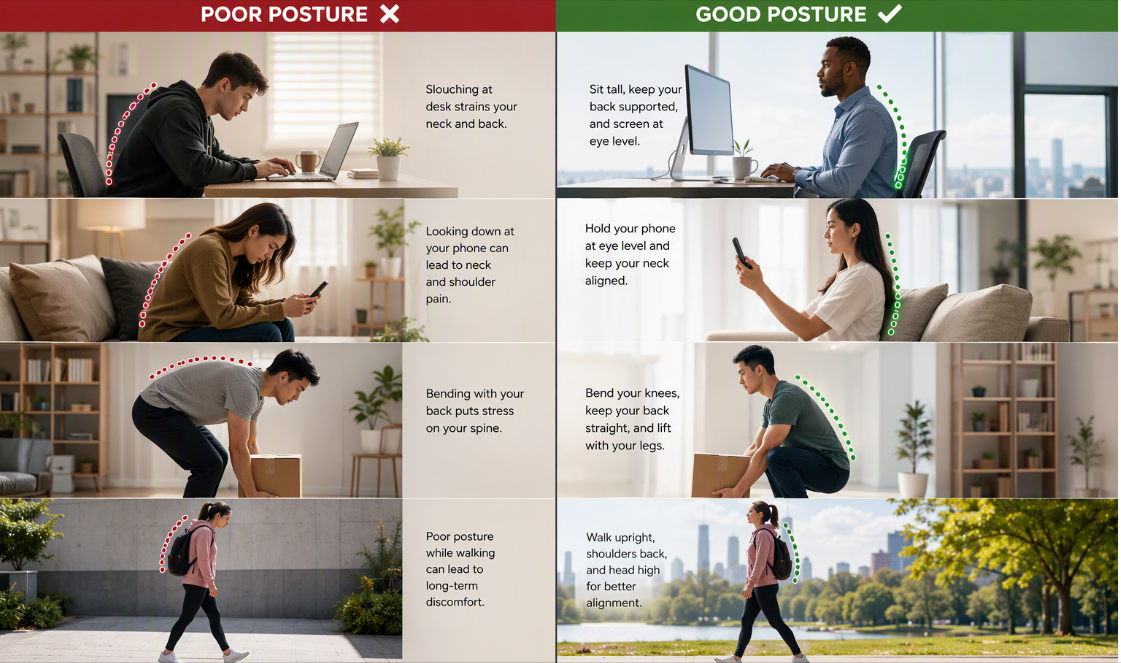
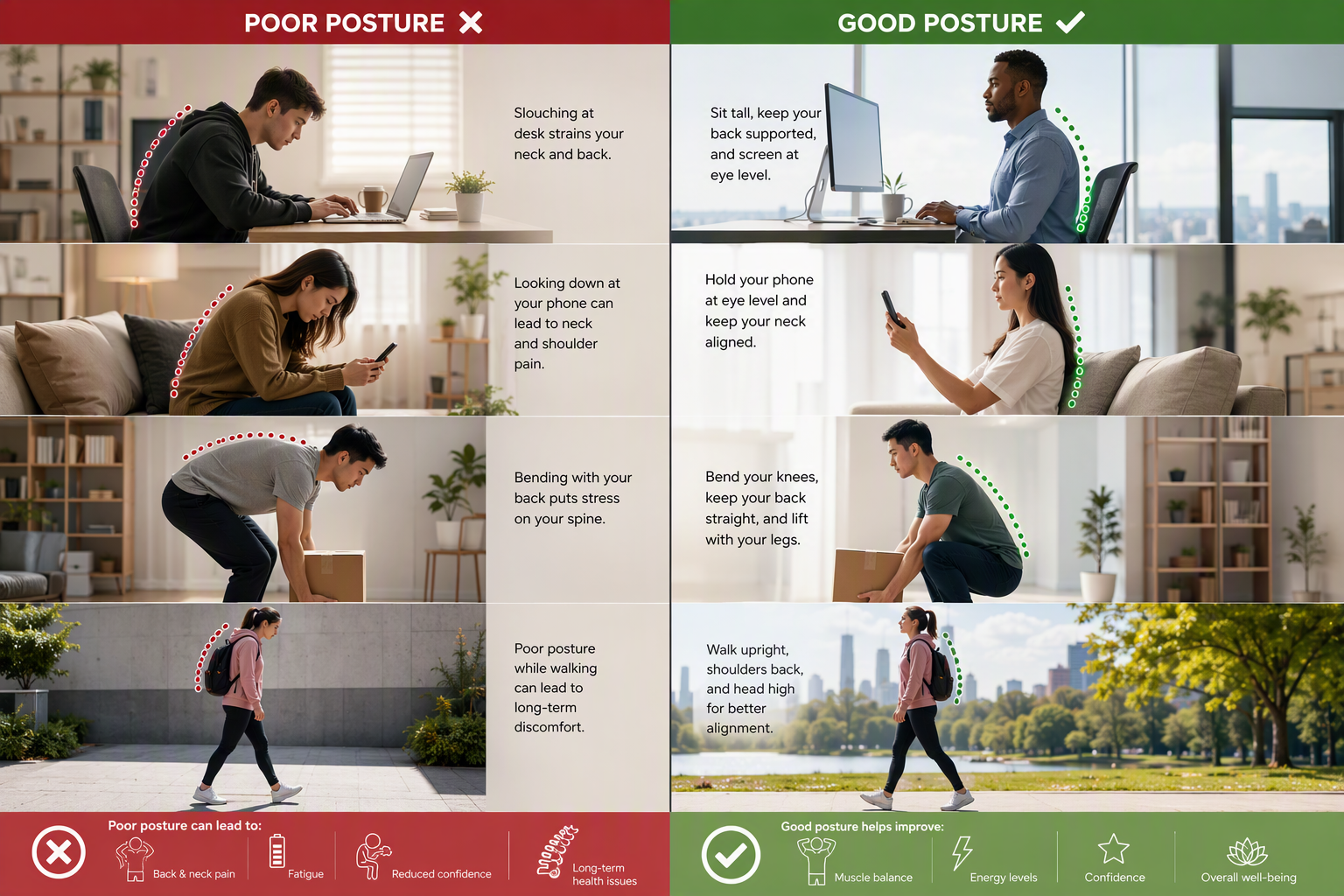
Good posture is when your body is lined up the right way. Your bones, muscles, and joints all get support in a way that feels natural. When you practice upright posture, keep your head up and don’t let your shoulders round forward. This setup helps your body feel more supported and takes away stress during daily life.
Poor posture is not the same as good posture. A slumped posture, shoulders that roll forward, or bending the wrong way for a long time can move your body out of its good shape. You might not feel much right away, but if you keep doing it, the stress adds up over the year. This is why poor posture can change your overall health each day.
In simple words, good posture lets your body use less effort to do things. Poor posture forces your body to work harder when you move or even when you sit still. The difference between good posture and poor posture is not only about how you look. It also affects how your body deals with daily life.
How the body naturally maintains alignment
Your body keeps itself in line by using muscle strength, balance, and you being aware of how you stand and move. A neutral spine helps with this. It makes your body feel more steady, and movement feels smoother or not forced. When everything works like it should, your joints and tissues do not feel as much strain that is not needed.
Core muscles help with this. Strong abdominal muscles and back muscles support your trunk. They keep your body steady and stop you from falling into bad positions. Flexibility is also important. If you have tight spots in your body, they can pull you out of a natural posture.
Body awareness is just as important. When you notice the way you sit, stand, lift, or walk, you can make changes before you feel pain or feel bad. This is why body awareness matters to spinal health. The way you keep your body lined up helps your movement. A good lineup can support how you move. A poor lineup can slowly make it harder for you to move well.
Common Signs and Symptoms of Poor Posture
Poor posture can show in ways people might ignore. You may feel muscle fatigue, some nagging pain, or pain in your shoulders and neck. People often feel tension headaches too, especially if they sit in one position for long periods. These are all common signs of poor posture.
These signs can get worse as time goes on. They may cause constant pain. If you see the symptoms come back often, a physical therapist can find out if your posture is causing it. Next, let’s talk about the aches and movement changes that show up first.
Physical discomforts and aches to look out for
Many problems with how you stand or sit often start as small pains. It can feel sore when you sit for a long time, stand in a way that is not balanced, or keep moving the same way every day. These early signs show that your joints and muscles are working harder than they need to.
Common discomforts include:
- Back pain that gets worse while you do work or chores at home
- Low back pain or strain in the lower back after you sit for long periods
- Neck pain that happens when you look down or lean forward
- Muscle tension between or around the shoulder blades
At first, you may feel these symptoms sometimes. Then they can happen more often. This can change how you sleep, move, or focus in your day. If the aches keep coming back, it is good to look at your posture.
Changes in movement and flexibility
Poor posture is not just about feeling uncomfortable. It can change the way your body moves too. If your joints and muscles stay in bad positions, the range of motion you have might get smaller. Everyday moves can feel stiff. You might feel awkward, or feel you have less control.
You might notice:
- It is harder to bend, reach, or turn. You feel less flexible.
- Your muscles get tired faster, even when you do simple things.
- Moving isn’t as smooth. Walking or lifting feel less easy.
These changes are important. They can stop people from being independent or make simple tasks feel hard. Poor posture can hurt the spine and how you move. It lowers balance and flexibility, and the joints do not work well together. In physical therapy, people work on these issues with better awareness. This helps the body learn healthier ways to move.
Hidden Health Risks Linked to Poor Posture
The health risks of poor posture are not just about having sore muscles. If you have bad posture for a long time, it can hurt your spinal health. It can also put stress on the nervous system. This can change how your body feels and works each day.
Poor alignment can change blood flow and how you breathe. It can also reduce space that the internal organs need to work well. These changes happen slowly. That is why you may not notice them right away. To get the full idea, you should look at the spine first. After that, think about how it affects other parts of the body.
Effects on spinal health and nerve function
Your spine helps keep you steady when you sit still. It also lets you move around. If you keep a poor posture for a long time, your spinal health can get worse. The spine can become weaker. This might raise the risk of injury. It can make it harder for you to move in a good way.
The spine helps protect the spinal cord, which is a very important part of the nervous system. If the spine is not straight, the body might move in ways that put more stress on the spine and the tissues near it. This can take away comfort, throw off balance, and hurt how well the nerves work.
| Area | Possible effect of poor posture |
|---|---|
| Spinal health | Long-term strain can make the spine more fragile |
| Spinal discs | Repeated stress may increase wear over time |
| Spinal cord support | Misalignment can place extra pressure on surrounding structures |
| Nerve function | Movement and comfort may be affected when the body is under constant strain |
| Nervous system | Ongoing poor mechanics can influence how the body handles daily activity |
Surprising problems beyond just back pain
Poor posture does not just cause back pain. When you sit or stand in a slouched position, it can be harder to breathe well. This is because it limits your lung capacity. Poor posture can also change the way your body digests food. Some people feel pain when they have acid reflux or feel pressure after eating meals.
There is a link between posture, mental health, and emotional state. The research in the source says that when people feel down, they may hold their body in a closed way and look down. If they feel unsure or worried, they might lift their shoulders and feel stiff.
Problems beyond back pain may include:
- Trouble breathing when sitting with your back rounded or hunched
- Lower lung capacity when you do daily activities
- Digestive problems, like acid reflux
- Shifts in your mental health and emotional state
Everyday Habits that Worsen Posture in India
Everyday habits can make posture worse over time. Long hours in front of screens and sitting for a long time add stress to the body. When you stay in the same static posture and repeat this every day, you may feel more pain. The longer these habits last, the more likely it is that you will feel discomfort.
Daily routines are important for people at every age. This is true for older adults too. As people get older, they may see changes in how strong they feel, how well they can move, and how good their balance is. These changes are natural. A lot of problems start from the way people work or how they often sit. We will talk about these next.
Work-from-home routines, screen time, and seating choices
If you sit in front of a computer for a long time, how you set it up is important. A chair that does not feel good, desk that be at wrong height, or sitting still too long can make you slouch. Even little things in the setup can cause your neck, back or shoulders feel strain.
Helpful points to watch include:
- Check if the height of your monitor lets you look straight ahead. You should not need to drop your head down.
- Think about how often you stay seated in one position for long periods. Try not to sit still for too long.
- Look at whether your seating supports your body in a good and comfortable way.
- See how much time you sit in front of a computer without standing up or stretching. Try to take breaks from sitting.
Work-from-home routines often make people stay in one spot for a long time. This can make bad habits worse. If you change how you sit, get up to take short walks, and do some gentle stretching, it can help with muscle tension. These steps also help your posture during the day.
Early signs that your health may be affected
The good news is that your body will often let you know before posture problems get worse. At first, you might feel only mild signs, but do not ignore them. A few small changes, like feeling sore, tight shoulders, or muscle fatigue after easy tasks, can show there is strain from your posture. These little things can be a sign for you to take action.
Some early signs include:
- Getting stiff or tired after you sit or stand in the same spot for some time
- Seeing that your shoulders are bent forward or you feel like you stand more hunched
- Everyday movements feel less easy or less comfortable than they did before
Catching these clues early can help you get ahead of any problems. A body practice like yoga or tai chi can help you notice when something is not right. If you still feel discomfort, you could talk to a healthcare provider, physical therapist, or a manual therapy expert. They can help you find out what is wrong.
Conclusion
In the end, keeping good posture helps with your overall health. Poor posture leads to problems like chronic pain, and it can even cause health issues that go far beyond just feeling uncomfortable. It is important to spot signs of poor posture and try to change your habits every day. A few small changes can really make life better. This could be changing your work setup at home or paying attention to how you sit and stand during the day. If you want tips or help to improve your posture, feel free to ask our experts for a consultation. Your health is important, and we can work together to make it a priority.