
Key Highlights
- Sitting for long periods can increase health risks from a sedentary lifestyle.
- If you do too little physical activity, you may have trouble with heart disease, high blood pressure, and weight gain.
- Some early warning signs are low energy, poor posture, stiffness, and muscle weakness.
- Being at a desk or using screens for long hours may hurt your circulation and mental health.
- Taking small movement breaks or using exercise snacks can give health benefits, even when you feel busy.
- Moving often helps cut down sedentary time and keeps you working well each day.
Table of Contents
Introduction
Excessive sitting is common now in modern life. It may feel normal to be at a desk, in front of a screen, or commuting most of the time. The truth is, you can have a sedentary lifestyle without really knowing how it affects you. A day spent mostly sitting can raise your chance of chronic diseases. This can happen even if you still go to the gym or do some exercise. The big issue is all the inactive time that adds up during your day.
Understanding Excessive Sitting and Its Prevalence in India
Excessive sitting is when people spend a lot of time with little movement while they work, travel, or relax during their leisure time. This leads to more sedentary behaviour and increases the overall sedentary time for the day.
In daily life, the work at your desk, using the screen, and being on public transport can make you sit more. If you have to sit for your job, the main idea is clear. Get up and move often. Try not to sit for more than an hour without a break. Also, add regular exercise to your routine. These actions show why sitting has become a big problem for many of us today.
Defining Excessive Sitting in Modern Lifestyles
A sedentary lifestyle is when you spend a lot of time sitting or lying down when you are awake and do not do much physical activity. You might sit still at work, during your drive, or at home while watching screens. The amount of time you spend being still matters. The hours can add up during the day, even if they are not all at once, and this can be bad for your health.
Some experts say that sitting still for four to six hours a day counts as sedentary behavior. Studies mentioned in the source show that the risk of cardiovascular disease and other health issues goes up if you sit for 10 hours or more every day. This can be a problem for people who work at desks or spend a lot of time looking at screens.
There are several health risks from sitting for long periods. These include heart disease, high blood pressure, and obesity. It can also cause low energy and muscle weakness. Many people get poor posture and feel depressed when they sit too much. A good body mass index will not fully protect you from the bad effects of too much sitting.
Trends of Desk Jobs and Screen Time
Work has changed. Many people now sit for long hours at a desk. There are few breaks in most jobs. After you finish work, you might spend more time on screens. This adds to your daily sedentary time before you even know it.
At the same time, activity levels often go down. Tasks that used to need walking or standing now happen with email, calls, and computers. Leisure time also shows this pattern, because there is more television, gaming, and phone use. These things make people sit more in the evening. It adds up to a full day of extended sitting.
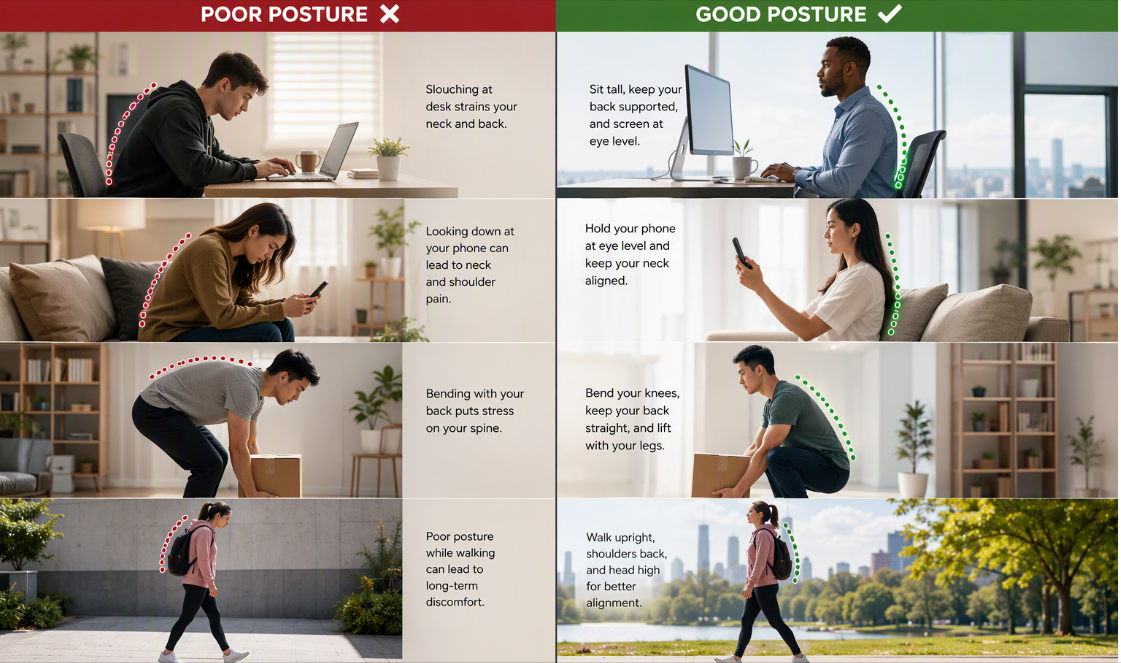
Sitting for long periods can be bad for your posture. You might find yourself slouching or hunching your shoulders. Your neck and lower back can feel tight or sore after some time.
Being still at your desk for too long also slows down how blood moves in your body. Your muscles don’t need much when you’re not moving, so your blood circulation drops. This can make you feel stiff and slow.
Early Signs and Symptoms Caused by Prolonged Sitting
Your body usually lets you know when something is wrong before bigger health problems start. Some early signs of physical inactivity are having low energy, feeling stiff, and feeling discomfort when you sit for long hours.
You can often see poor posture, muscle weakness, or feel pain in your lower back, hips, and knees. Some people start to feel numbness in their legs or feel less comfortable walking as time goes on. These signs show that too much sitting is already changing how your body moves. The next parts talk about these warning signs in more detail.

Physical Discomfort and Postural Issues
Sitting for long periods can make you feel sore or uncomfortable. When you sit for a long time, the muscles can feel tight and the joints might not move as much. After some time, this can make it hard to move around during your day.
Poor posture is one big cause of pain. If you slouch at your desk or pull forward to look at a screen, it can hurt your lower back, neck, and shoulders. Sitting for long times can make your joints dry, so there is less cushion. This can lead to stiffness and joint pain in your hips and knees.
Watch for signs like these:
- The lower back aches or feels tight after you sit.
- Your shoulders look rounded or your head sticks out in front.
- Hips, knees, or other joints feel stiff.
- You feel not good in your body, but it gets better when you stand or walk.
Reduced Mobility and Muscle Weakness
Reduced movement can sneak up on you. If you spend long hours sitting still in the day, the muscles in your hips, upper legs, and lower back do not get used much. This lowers how much those muscles work and can lead to your body getting out of shape.
As this goes on, you will start to feel muscle weakness more. The information shows that too much sitting can lead to loss of muscle mass and less muscle function. This happens mainly in your lower body and trunk. You might feel less steady or not as flexible as before. It can also make you feel slower when you get up, walk, or go up the stairs.
Health problems from long periods of sitting can show up fast. You may feel stiff or have low energy early on in your daily life. More serious issues need more time to build up. If you keep doing this for many hours, the effects add up. Extended sitting can become a habit. This kind of sedentary time can slowly take away your strength, make movement feel harder, and lower your comfort.
Key Health Risks Linked to Excessive Sitting
Excessive sitting does not just make you feel stiff or tired. Sedentary time is linked to health risks that can harm your heart and metabolism. It can also affect your body weight and lead to poor health outcomes in the long run.
Can sitting for most of the day lead to more health problems? Yes, it can. Studies show that staying still for a long time is linked to a higher risk of chronic diseases, such as obesity, heart disease, high blood pressure, depression, and some types of cancer. Even if you follow the physical activity guidelines, sitting too much during the rest of the day can still be bad for you. Here are the main risks that you should know about.
Cardiovascular Concerns and Circulation Problems
Your heart needs you to move often. It works like the other muscles in the body. If you do not move enough, it can get weak. Too much sitting is linked to cardiovascular disease. This risk can go up, even if someone has a good body weight or body mass index. People do not have to be overweight to be at risk from too much sitting.
Another problem with sitting for long periods is that blood flow gets slower. This happens because your muscles do not work as much when you sit. You might feel sluggish, and this can also hurt your heart health. It may even lead to high blood pressure. When you do not move enough, your body can feel stress at its cellular level.
| Concern | How prolonged sitting affects it |
|---|---|
| Blood flow | Slows down because inactive muscles need less circulation |
| Heart health | Weakens support for normal cardiovascular function over time |
| Blood pressure | Higher risk of hypertension with repeated inactivity |
| Overall risk | Greater chance of cardiovascular disease with high sedentary time |
Increased Risk of Diabetes and Metabolic Syndrome
Sitting for most of the day can be bad for more than just your muscles or joints. The main source says that not moving for a long time may lead to chronic diseases. This can also hurt metabolic health and cause several problems over time.
When you sit still for long hours, your body burns fewer calories. It gets used to not being active. This can cause you to gain more body fat. It also makes it harder to keep a healthy metabolism. Doing this for a long time can lead to problems like diabetes and metabolic syndrome. That risk gets higher if you also have low activity levels.
Metabolic syndrome is talked about a lot when people talk about things like high blood pressure and body fat. The information says that if you do not move around much in daily life, it can upset the body’s hormones that help control both appetite and metabolism. This can make you more likely to have insulin resistance or health issues with your weight when you have risk factors and sit too much in a day.
Weight Gain and Obesity Factors
Weight gain is easy to see when you live a life full of sedentary behaviour. If you sit most of the day, the body will use fewer calories. This is because your muscles do not work much, so they do not need extra energy. If you eat the same amount of food, your body gets more calories than it needs. This extra will most often become fat.
This change might look small at first. But over weeks and months, it can add up. The source says that not moving enough can also change how you feel hunger or how your body uses energy. This can help your body store fat. That means your body weight and body mass may go up over time. Most people see it happen around the middle of their body.
Common things tied to much sitting and obesity are:
- You burn fewer calories when you sit for long hours without moving.
- There is less movement in your day outside of any planned exercise you do.
- Hormones change and this can affect your hunger and how your body uses food.
- When you spend a lot of time being inactive, your body weight can slowly go up over time.
Effects of Sitting on Musculoskeletal Health
Sitting for long periods can be tough on your body. It often leads to poor posture and muscle weakness. A person may feel lower back strain. Over time, joint pain can also get worse.
This happens when you sit and do not move your muscles much. Sitting still makes your body parts not work as hard. When you stay in one spot, your muscles and tissues can feel stiff. The muscles that help you sit and stand may not get as much use.
This can change the way you sit, stand, and walk during the day. The next two sections talk more about how your body holds itself and how you feel pain.
Poor Posture and Spinal Alignment
Poor posture is easy to spot and shows that sitting can affect your body. Many people lean forward to see a screen. Some drop down through the chest or let the head move out in front of the shoulders. These ways of sitting put more pressure on the spine.
Over time, this strain can change how your spine lines up. The lower back then has to work more than it should. The body stops spreading the weight evenly. It starts using bad sitting habits. You might feel tightness in your lower back while you work. You can also feel sore when you stand up.
If you sit for long periods, one of the first health risks you feel is strain from poor posture. At first, it may not feel serious. But if that bad posture becomes the way you always sit, it can lead to discomfort. You may also get muscle weakness. Over time, the way you move may not feel as good.
Stiff Neck, Shoulders, and Lower Back Pain
Neck pain, shoulder pain, and lower back pain are things many people feel when they have a lot of sedentary time. These spots in your body can get tight if you sit and do not move for a long time. If you use a screen a lot and do not have good work habits, the pain can get worse.
You might notice early warning signs that are easy to miss. By the middle of the day, you may feel a low pain. Your back can feel stiff after meetings. You might feel tense, but when you get up and move, it gets better. This shows the pain is coming from not moving, not just from a busy day.
Early signs to look for include:
- The neck gets stiff after you use the computer.
- The shoulders feel tight or sore when you hunch over.
- The lower back hurts after you sit for a long time.
- The pain goes away when you stand, walk, or stretch.
Mental and Emotional Well-being Impacts
A sedentary lifestyle does not just change your body. It can also impact your mental health. This happens often when long hours of sitting are spent on screen-based work or when you relax in front of a screen.
The gathered information shows a connection between sedentary behavior, especially spending time watching television or using a computer, and feeling depressed. This matters as not moving much can affect the way you feel, the way you think, and how you act throughout the day. If you feel irritable, not motivated, or your mood feels flat, your activity habits could be a part of it. Now, let’s talk more about mood and thinking.
Anxiety, Stress, and Mood Disturbance
Mental health can change when people move less. The source says that sitting for a long time and using screens is linked to feeling down. A sedentary lifestyle can impact more than how you feel in your body or how fit you are.
Mood disturbance can feel like not wanting to do much, or having very low feelings. You may feel tired in your mind, too. If you sit all day, your body will lose some of the natural boost you get from moving around. Moving less can also be tied to stress and anxiety. This is true, mainly, when you work a lot with screens and do not take enough breaks.
When you sit too much, it can cause poor posture and slow down the flow of blood in the body. Poor posture adds tension on your body. Slow circulation can make you feel tired. These things together make you feel less comfortable and lower your energy. Because of this, stress may feel even harder to handle during the day.
Sedentary Habits and Cognitive Function
Sedentary behaviour can be a big part of feeling tired and not alert. If your activity levels stay low most of the day, you might feel like you do not have much energy. This can happen even if you get a good night of sleep. It is common for people to feel a mental drag when they do not move enough.
That happens when you do not move much. The blood in your body flows slower and you use less energy. If your body is slow, your mind and focus can feel less strong as well. The information does not show clear changes in memory, but it does show that not being active changes how you feel day by day. It can make your energy levels go down and harm your mental health.
Movement matters when you have too much sitting. It can break that pattern when you feel tired and have low blood flow. A short walk helps your body feel good and can give you more energy. This way, you feel better and can stay focused at work or with other things you need to do every day.
Why Movement Matters—Counteracting Sitting Risks
The good news is that moving your body can help fight problems that come from sitting a lot. When you do physical activity, it is good for your heart health. It also boosts energy, helps blood flow, and makes your days feel better.
One workout by itself is not the whole answer. The main source says it is good to have regular physical activity and spend less time being still during the day. This means following physical activity guidelines is important. But it is also important to break up your day with movement and not sit for too long at one time. The next parts will show how moving each day helps and how it can change the way you feel.
Benefits of Daily Physical Activity
Daily physical activity can help your body after long times of sitting. It makes your muscles work harder, helps blood move better, and can keep away the stiff, slow feeling you get from extended sitting. It also makes it easier for your body to work well the whole day.
The health benefits are more than just feeling comfortable. Moving your body can help you keep a healthy weight. It is good for your heart health too. You will feel more energy in your day. The source says that doing aerobic exercise for several minutes, with a higher heart rate, is very helpful for your heart and cardiovascular system.
Benefits of moving more each day include:
- You can feel better energy levels because the blood moves better in the body.
- You get help for a healthy weight as you use more calories.
- You get stronger support for your heart health and blood pressure.
- You can spend less daily sedentary time by taking regular activity breaks.
How Exercise Improves Circulation and Energy
Exercise helps blood flow. It does this by making your muscles work harder. When muscles move, they want more oxygen and food, so there is better circulation in the body. This fights one big problem caused by sitting. Sitting makes blood move slower through your body.
You can feel the change fast after some physical activity. A short walk, climbing stairs for a few minutes, or just getting up to move, can help take away that heavy and slow feeling. This often comes from sitting in a chair for too long. When your blood flows better, your energy levels get better too.
For heart health, this is very important. Doing regular aerobic activity will make your heart rate go up for some minutes. It gives the cardiovascular system practice it needs. Exercise is not only to burn calories or lose weight. It helps fight problems with circulation and energy that can come from daily sedentary time.
Practical Ways to Add Movement During the Day
You do not always need a full workout to add movement into your day. Small changes can help boost activity levels. They also lower the amount of time you sit, and you may not even notice it.
That is where exercise snacks help. These are quick and easy ways to move that fit in your day at work or at home. A few minutes each hour may not seem like much, but they build up over time. For example, if you walk for five minutes every hour in an eight-hour workday, it adds up to about 40 minutes of extra movement. Here are some practical ideas you can use.
Simple Desk Exercises and Stretching
Yes, there are special exercises that help lower the health risks from sitting too much. Moving around for a short time and doing easy activities can be good. You do not have to go to the gym every time you want to help your body feel better.
Simple exercises and stretching at your desk can help relax tight spots in your body. These moves can wake up your muscles and lower the feel of stress that builds up when you sit for long hours at a computer. The goal is to not sit for more than an hour at one time. Try to move often and make this a habit.
Good options include:
- Stand up when you are on video meetings or phone calls.
- Take a five-minute walk every hour.
- Do some gentle desk stretching for your neck, shoulders, and lower back.
- Use a standing desk to help you sit less during the day.
Tips for Staying Active at Work and at Home
If you want to lower the time you spend sitting each day, try to use realistic habits. Small changes are often easier to keep up with than making big plans. The main idea is to look for simple ways to move more often. Do not just focus on hitting a certain step count and then sit still for most of the day.
At work, you can swap sitting for moving around more. At home, you can add movement to things you already do. These changes help to make your activity levels better. You can do this without making your day feel too hard or busy.
Try practical steps like these:
- Walk to a coworker, not send an email.
- Park out farther, then use the walk for extra steps.
- Take the stairs, not use the elevator.
- Walk while you talk on the phone or in short breaks.
Conclusion
In the end, sitting for too long can really harm your health. The effects of a sedentary lifestyle show up in more than just your body. You may feel pain, have muscle and joint problems, and it can even affect how you feel each day. If you notice these signs, it’s good to start moving more during your day. Try adding some desk exercises, stand up, or take regular breaks. These small actions can help reduce the bad effects of a sedentary lifestyle. When you choose to get up and move now and then, you help your body and feel better in your mind, too. If you want advice that fits your life, feel free to ask for a free consultation!
How quickly can health issues develop from excessive sitting?
Health issues can show up early as stiffness, low energy, or muscle weakness after sitting for a long time. When you have a lot of sedentary time and physical inactivity every day, health outcomes usually get worse over the years. If these risk factors keep going, it is more likely that bigger health problems will come up in the future.
Is sitting really as harmful as smoking?
Sitting and smoking are not the same thing. A sedentary lifestyle can still have real health risks. Too much sitting is linked to cardiovascular disease and other chronic diseases. This link happens even if people get physical activity. That is why it is important to reduce much sitting. Moving more and getting physical activity both matter for your health.
What are the best exercises to offset sitting-related health risks?
The best choices for physical activity are simple and easy to do. These include walking, running, cycling, swimming, and other ways that make your heart rate go up. Exercise snacks during the day are good, too. To get the most health benefits, try to have regular exercise, keep your activity levels up, and sit less.