
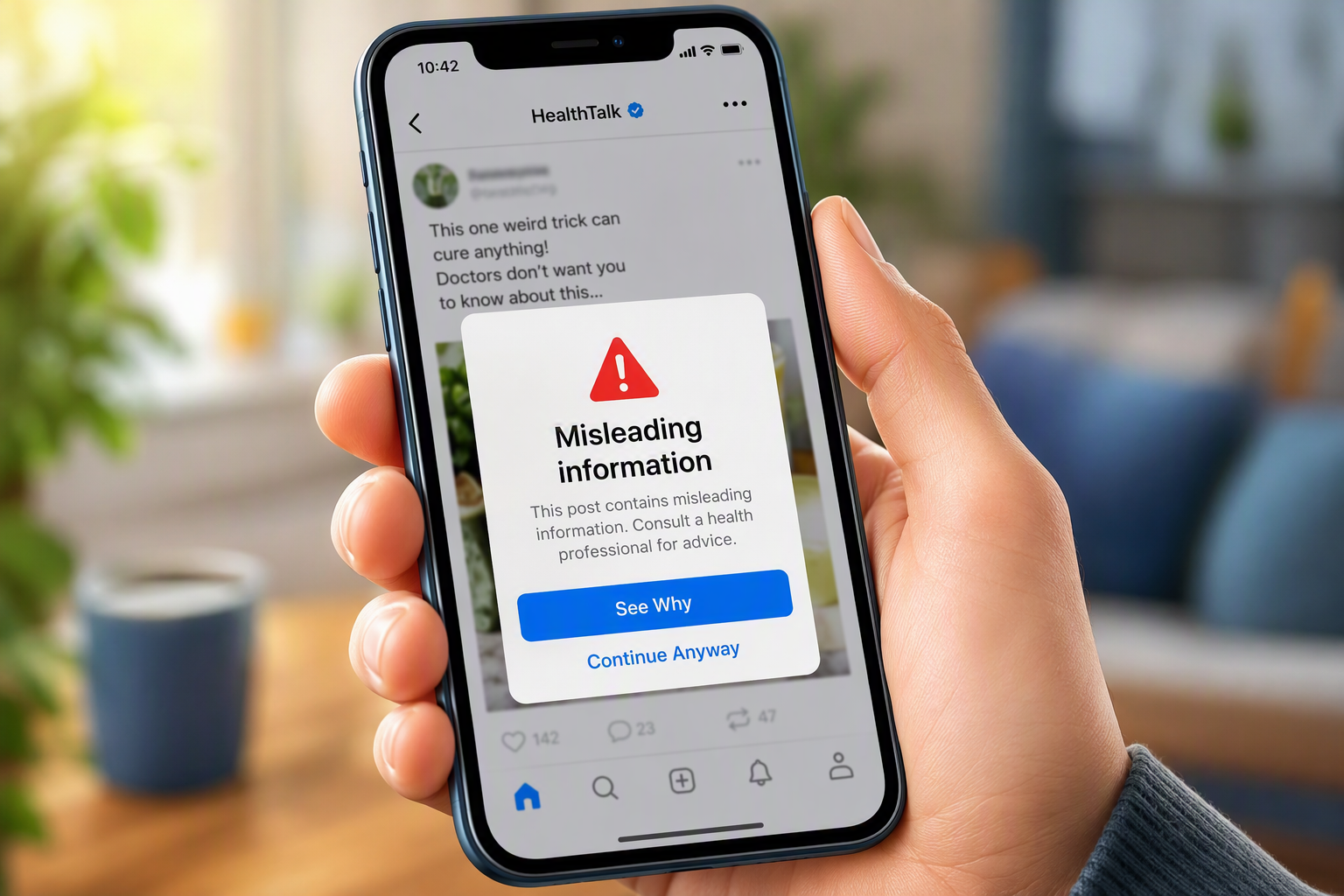
Key Highlights
- Medical misinformation on social media spreads fast. It can hurt public health.
- False information often looks real because it feels emotional. It gets repeated and it is easy to share.
- Social media platforms care more about what gets likes or shares. They do not always make sure the information is accurate.
- During big health issues, like COVID-19, health misinformation was everywhere. It became more harmful.
- People need stronger health literacy. They also should check credible sources and build good habits.
- Health professionals, community leaders, and social media platforms should help share accurate information.
Introduction
Social media changes the way you get and share health news. But it also makes it hard to stay away from false information. A post, video, or text that is not true can spread more quickly than advice from doctors and experts. It can lead people to act before they know the facts. This brings real risks for public health when people believe and react to claims about vaccines, treatments, or how to keep diseases away. The issue isn’t just the bad stuff found online. There is also a bigger gap between what gets popular on social media and what is safe and trusted in medicine.
The Rise of Medical Misinformation on Social Media in India
Across India, health misinformation is growing as more people use social media platforms to get news, advice, and talk with others every day. False information can spread fast. It moves through short posts, videos, and is shared in groups on these social media sites.
During big health problems like COVID-19, the number of messages and the speed of news on social media went up a lot. People started to look for answers, control, and comfort. This made people more likely to trust and share wrong claims. To get why this happened, it helps to see how big it got, where it showed up the most, and how people in each place use social media. This can show what people believe during these times.
Understanding the Scale and Growth of Online Health Misinformation
Health information is now easy to get online. This helps many people in ways that were not possible before. It is great if the advice is good. But sometimes bad advice also spreads fast. Public health agencies and clinicians see misinformation spread as part of the health landscape. It is not just something online that does not matter.
The main thing that has changed is speed. Now, things move faster and feel bigger than they did before. The world health organization now calls this an infodemic. There is too much information, both true and not true. This makes it hard for people to get clear help when they really need it.
Current responses help, but they work only a little. Fact-checking, adding content labels, and links to accurate sources can cut down the harm. The world keeps changing, so public health needs to keep watch, use trusted voices, and share updates again and again.
Key Platforms Where Medical Falsehoods Are Most Common
Medical falsehoods show up on all big social media platforms. Each platform lets people share these claims fast and without much work. On Instagram, posts look good and often make false information easy to share. On Twitter, fast talks let weak claims spread over time. This makes them feel normal to people.
The most usual types are misleading tips about treatment, rumors about vaccines, conspiracy theories, and cures that no one has proven during outbreaks of infectious diseases. These posts tend to use emotional words, simple explanations, and sound sure of themselves but do not share real proof.
| Platform | Common pattern of false information |
|---|---|
| Short visual posts, health tips, and influencer-style claims about supplements or medical treatments | |
| Rapid sharing of rumors, reaction threads, and repeated claims during breaking health events | |
| Group chats and forums | Peer sharing, screenshots, and recycled advice passed along without checking credible sources |
These trends show that the way a platform is made is just as important as what is on it.
Influence of Indian Social Media Trends on Health Information
In India, people on social media like fast, easy-to-share health information. Viral content is popular because it is short and has strong feelings. It is simple for them to send it to family and other people in their community. That lets wrong health advice move around quickly, before experts can answer.
Algorithms in social media can make the problem worse. They show you posts that get a lot of clicks, comments, and watch time. This way, more people see bold statements, even if they are not true or are wrong. Things like reposts, trending topics, and what you see in your feed help spread these posts even more.
During times of health trouble, you see this pattern even more. People start to look for answers everywhere. At the same time, there are more gaps in what people know. In these times, you will see a lot of rumors, fake cures, and wrong videos show up quickly. That is why telling people facts early and keeping them up to date is so important.
Factors Behind the Rapid Spread of Medical Misinformation
The spread of misinformation does not happen by chance. It gets bigger because social media algorithms push people to like and share things. People often share what feels urgent, emotional, or matters to them. In public health, this quick sharing can make confusion online cause harm in the real world.
Trust is also a big reason people believe things. They often feel comfortable with ideas that match their worldview. If a claim helps lower doubt or comes from friends or groups they know well, they may trust it more. Seeing the same message many times matters, too. When one idea shows up again and again, it starts to feel true. The next sections talk about the main reasons behind this pattern.
Role of Virality, Algorithms, and User Engagement
Virality is what makes false health claims spread so quickly. Social media algorithms push content that people watch, like, and share. These algorithms do not check for medical accuracy. If a post gets strong reactions, it will reach a lot of target audiences in little time.
A few features make this worse:
- Recommendation systems give more attention to content that gets lots of clicks, comments, and shares.
- Reposting tools make it easy for things to spread. This helps weak claims go even further.
- Trending feeds can make ideas from the edge seem like they are popular.
Current ways like downranking, adding warning labels, and sending people to accurate health information can help. But these steps are not enough by themselves. The best answer is to mix platform changes, tougher moderation, and better health literacy. This helps people stop and think before they share what they see.
Impact of Emotional Content and Sensational Headlines
The type of content is important. Content with emotion spreads fast. It makes people feel fear, anger, surprise, or outrage. These feelings make people react right away. They do not think much. In misinformation, the message is made to catch attention first. It gives answers only after grabbing people.
Sensational claims get attention because they feel urgent or like a secret. They might talk about a cure you have not heard of or tell about a big risk. Sometimes, they call out known groups or companies. This way, the post seems important to people, even when the real facts are not strong.
Common warning signs include:
- Headlines that surprise people, split groups, or scare others if there is no background.
- Posts that show only examples which fit their story and leave out credible sources.
If you see these things, slow down. Using strong words is often how people try to spread misinformation.
Why Repetition and Peer Sharing Amplify False Claims
Repetition makes false information feel real. If you see the same claim again and again, the brain starts to think it is true. This happens a lot with health misinformation. On busy feeds, people do not check every post. So, misinformation spreads quickly.
Peer sharing adds something extra. It is when friends, family, or people in the community share advice. People often feel this is more reliable than something they hear from a big group or distant place. In an echo chamber, the same ideas get talked about over and over, but new or different information does not reach the group.
Public health groups should talk to people using the voices they know and trust. They should not just send out official statements. It helps to use simple words, give early warnings, and share true messages many times. It is also important to listen to people with empathy. People are readier to change their minds when they feel respected, not judged.
Types of Medical Misinformation Found on Indian Social Media
Medical misinformation in India is shared on social media in many ways. Some posts talk about unsafe home remedies. Others tell lies about vaccines, or give conspiracy theories. Some warnings about normal health issues are too dramatic. Many of these posts seem simple and helpful at first, but that is not always true.
During times when health is at risk, you will see that falsehoods get stronger and show up more often. The things people say can change fast, with a lot of talk about quick fixes and miracle cures. People also say that big groups are not telling the truth. If you know about these main types of falsehoods, you can look for the patterns. This can help you spot trouble before these falsehoods shape your choices.
Misleading Treatment Advice and Home Remedies
A lot of medical misinformation shows up with simple treatments that look safe and easy. Many of these posts talk about home remedies, supplements, or things you use every day. They make people feel like you could use these and not need real medical care. The way these messages sound makes them spread fast.
Problems come up when advice does not include the full story. A home remedy might be shared as a fix for a sign that could be serious. A supplement may also be shown as a way to solve many things that are not really linked. This can make people wait too long before getting help and can make them feel unsure about what can really work.
Watch for posts that:
- They say you will get fast results. They do not talk about any limits, risks, or having help from a doctor.
- They use personal stories to show it works. They do not share accurate information.
Not every home remedy is bad, but people who use social media need to be watchful. Sometimes advice found online may look like it can take the place of medical care that is proven to work. Social media users should be careful with this, because not all those tips are safe or good for you.
Vaccine-Related Falsehoods and Conspiracies
Vaccine misinformation is a big problem on the web. A lot of this comes from fear and conspiracy theories. It makes people feel unsure about getting vaccinations. Some claims talk about safety. Others say side effects are worse than they are. You will also see talk about hidden reasons behind vaccinations, but these ideas do not have good proof.
This type of content can reach many groups. But it can feel even worse for people who feel unsure, do not trust institutions, or do not have good sources of information. If this type of content is seen again and again with family or in online groups, weak claims may start to feel like facts.
Typical patterns include:
- Some posts say that vaccines cause things like infertility, but they do not show any proof.
- Some people claim that health professionals or public health agencies are hiding the real story.
Because vaccines need trust from people, these stories can lower how safe you feel. They can also hurt public health for everyone.
Unproven Cures During Health Crises Like COVID-19
Health crises bring urgency, and that often opens doors for cures that are not proven. During COVID-19, people felt fear and uncertainty. They faced nonstop updates. In this time, health misinformation became stronger, happened more often, and was pushed as fast fixes.
Posts about unproven cures often said that you could be in control when you feel like things are not in your hands. They make weak ideas seem like hidden facts or easy fixes. They claim that medical professionals do not talk about them on purpose. This is very risky, as a lot of people read these posts when they feel lost and want help.
The result was a lot of advice that seemed good. But, it could make people avoid getting the right care, taking steps to stay safe, or getting a vaccine. This shows why public health needs to speak up fast when things get tough. It also shows how important it is to give clear, simple advice many times before rumors spread.
Effects of Medical Misinformation on Public Health Outcomes
Medical misinformation is not just about online opinion. It can change how people make their choices about health. It can make them lose trust. People might wait or not get care. That can put direct pressure on public health and the health care system.
The real-world effects are big. People miss chances to stop problems early. Illness gets worse. The stress goes up for healthcare workers and groups. They work hard to give help. When there is misinformation, trust in science and groups can also fall. The next parts will show how these things happen to people, workers, and groups in India.
Influence on Individual Health Decisions and Behaviors
Misinformation on social media can change how you feel about your health before you even talk to your doctor. A post you see again and again can shape what you fear, what you trust, and what you decide to do next. At first, these changes might feel small, but over time it can affect you in bigger, more serious ways.
People might put off going to checkups. They may say no to getting care that can help stop a problem before it starts. Some even try things that are not safe because advice they read online felt more real or seemed better than official tips from doctors. This is one of the main reasons why misinformation hurts public health so much.
Common effects include:
- Delayed or skipped care, like not getting checkups.
- More people trust inaccurate information instead of advice based on proof.
When people make choices based on false claims, overall health can be at risk. The harm may not show right away. But it can slowly get worse, turning a small problem into something much harder to handle.
Challenges for Healthcare Providers and Policy Makers
Healthcare providers see patients who come in with ideas they read online. That makes it hard for clinicians. They must deal with not only symptoms, but also misinformation. The first thing to do for many is not to share facts. It is to work on building trust again.
Policy makers and public health agencies are dealing with a big problem. They must act fast. They have to talk in a clear way. These groups need to reach people on many channels. The issue is that misinformation keeps popping up. If messaging is slow or hard to read, this creates space where rumors grow.
There are clear things that work for public health. Groups in public health can join with community groups, help health professionals to talk in ways people understand, and use trusted people to share accurate health information. These groups can help check facts, make local ways to share news stronger, and create simple messages that get to people in ways they will notice. It is important to reach people where they are and make sure the message is easy for all to get.
Case Studies: Real-world Consequences in India
The evidence shows a clear pattern. This happens in India too. Misinformation can make disease outcomes worse. It can stop people from taking preventive action. It can also put public health systems under a lot of strain. Real-world case studies during COVID-19 showed this. During that time, rumors and false cures changed how people acted. People needed good information most then.
The harm happens in a few ways. People might not get care when they need it. Some might not get vaccinations. Others could believe viral claims more than what clinicians say. These choices can make people sicker and put more stress on hospitals, health workers, and public health agencies. This makes it harder for all of us, especially when there is a big public health crisis.
There are some cases where things went well. People in the community, health professionals, teachers, and leaders from churches helped by talking with others and answering their questions. Media groups worked harder to clear up wrong information. A few technology platforms made sure fewer people saw posts that were not true and sent users to credible sources instead. These actions are not perfect, but they can help stop harm.
Vulnerable Groups and Their Susceptibility to Misinformation
Anyone can get affected by poor health tips found online. It is not only about how smart you are or what school you went to. This happens a lot because people feel overwhelmed by too much information. Mistrust plays a part, too. What people already believe and low health literacy are also reasons it takes place.
Some vulnerable groups can be at greater risk from misinformation spread. They may not have enough tools to tell if something is true. They may lack access to advice they can trust. Children, elderly people, and those with low digital literacy often have a harder time dealing with misinformation. The way people feel about their culture and who they trust affects which messages they accept and which they reject.
Children, Elderly, and Low Digital Literacy Populations
Children, older people, and users with low digital literacy can have a hard time spotting medical misinformation. They may not be able to judge online claims well. A good-looking post can seem true, even if it does not to have real proof. A fast-moving feed can make people less likely to stop and check facts.
The problem is not that people are not smart. Research shows that the mind takes shortcuts when there is too much information or when people do not know how lies spread online. If you get health information from forwarded posts or short videos, you could get wrong advice and not even know.
Higher risk often appears when people:
- There be a struggle to find credible sources or warning signs in posts.
- People often rely a lot on what their friends share instead of asking medical professionals.
That is why health literacy, media, and digital skills are important. They help people build resilience. These programs support vulnerable groups. The groups can stop, think, and check things before they act.
Cultural Beliefs and Patterns of Trust in Health Sources
Worldview is important in how people see health information. A lot of people accept messages that match their culture. It has to feel right or fit what they already believe. If health information sounds like something they know, they feel more safe with it.
Trust is important. People do not feel the same about all sources of information. Some feel more trust in local community leaders, their family, or people they know, instead of public offices. If there is mistrust in healthcare or in the government, it is easy for misinformation to spread.
That is why you can’t just fix things with facts alone. Effective communication starts with empathy, sharing values, and showing respect. When trusted messengers use clear language and answer questions openly, people are more likely to accept accurate health information. They feel listened to, not ignored or looked down on. This way, everyone gets better health information and can make good choices.
Strategies for Individuals to Identify and Avoid Health Misinformation
You can cut down your chances of believing or sharing wrong medical info if you build better health literacy habits. The aim is not to be an expert. It is to take your time and look if the claim comes from credible sources.
Taking a simple pause can help stop a lot of problems. When you see a post that is very surprising, feels urgent, or seems too sure, be careful with it. You should look for accurate information from health professionals and other trusted groups before doing anything. The next two parts will show you some practical ways to check and share health content in a responsible way.
Tips for Evaluating the Credibility of Online Health Information
When you read health information online, look at the source first. Ask who is giving the information and what proof is shown. Check if the message talks about limits or things not certain. Reliable content wants to share facts, not surprise. It does not make big promises with little proof.
You can protect yourself with a few simple checks:
- Look at the claim and match it with credible sources like health professionals or known public health organizations.
- Be careful with posts that use big words, strong emotions, or have no clear proof.
- If the post is based on stories, screenshots, or one big example, do not see it as a fact.
These habits help you because misinformation tends to come in ways you can notice. It spreads fast and looks sure of itself. Misinformation also repeats a lot. Your best move is to stop for a moment. A quick check for accurate health information matters before you believe what you see.
How to Responsibly Share Medical Content and Report Misinformation
Responsible sharing has one main rule. If you are not sure, do not share. Many social media users pass along false claims without wanting to. People feel they help friends or family, but sending something fast means misinformation can reach many more people.
Before you post anything about medicine, check it first. If you see something that is not clear or seems wrong, the site often lets you report it as misinformation. A small step like this can stop harmful content from spreading and help everyone get better information.
Two practical habits can help:
- Share only when you know the info is true. Make sure it’s from credible sources and is accurate information.
- If you see a post that is clearly not true, report it. Don’t argue or give it more attention.
Public health groups can help with this in a few ways. They can make reporting easy for everyone. They should give users simple explanations, so that people understand what to do. They also need to share clear guides that answer common questions before any rumors get started.
Conclusion
To sum things up, medical misinformation on social media is a big problem. It can do real harm to public health. When you read health information online, you need to be alert and careful. It is important to know the spread of misinformation and how it works. This helps all of us spot credible sources and ignore false claims. Better thinking skills and understanding what makes health content reliable can help you make smart choices, too. If we do this together, we can cut down on the bad effects of misleading information and help everyone stay healthier. If you want help with health information on the internet, feel free to ask our experts for a free consultation!

