
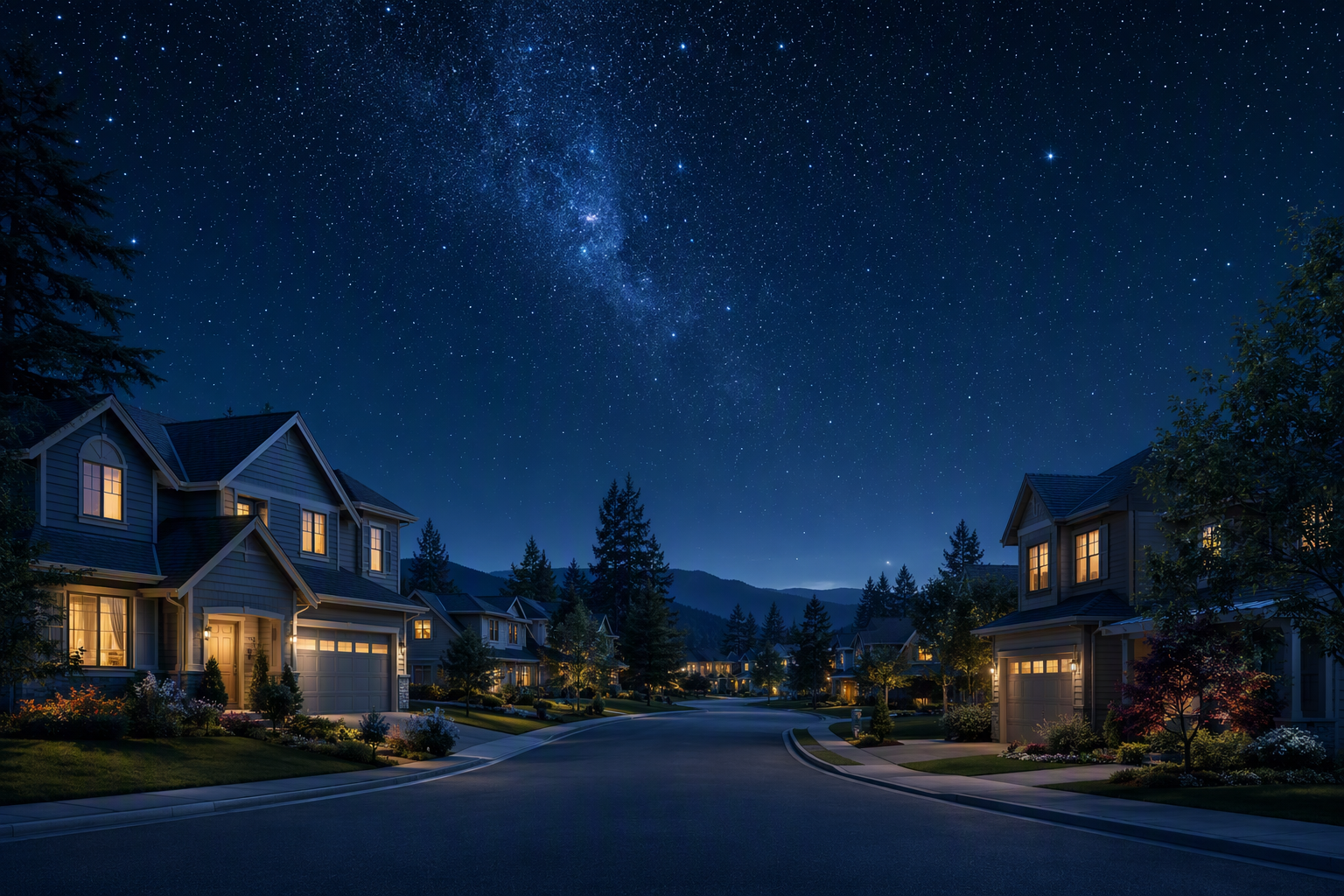
Key Highlights
- Artificial light at night can mess with your circadian rhythm. This will make it hard for you to get good sleep.
- Light pollution is the glowing sky, glare, clutter, and light coming over from other properties into places that need to stay dark.
- Bright light and blue light from screens and outside lamps can bring several health issues as time goes on.
- Nighttime light exposure has been linked to poor sleep, problems with mental health, and worries about heart health.
- You can help prevent this by dimming lights, using shields on fixtures, and not using electronic devices late at night.
- Keeping a dark sky is good for human health. It can also save energy and cut down on light pollution.
Introduction
Artificial light has made a big difference in how you live, work, and get around after the sun goes down. But, it has also affected the way you see the night sky. In many places, being in the dark is not normal anymore. This is important for human health because your body needs regular light and dark cycles. When nights are bright, your body can find it hard to keep its natural rhythm. Knowing more about how artificial light at night changes your sleep, mood, and daily life can help you make better choices at home and around where you live.
Understanding Artificial Light at Night and Light Pollution
Light pollution happens when there is too much or wrong use of artificial light at night. It can cause glare and light spill into adjacent properties. The night sky looks different in big cities because of sky brightness. You might notice a glow in the sky that hides stars and makes the night sky feel less clear.
This is not just an environmental factor. It changes how your body gets natural darkness. It also leads to wasted money. A big part of lighting is lost each year, and the annual cost is high. To see how this affects health at night, we need to look at where the light starts and how it is not like natural light.
Types and Sources of Artificial Light Exposure After Sunset
After sunset, you may see artificial light from many places. Some light sources are in your home. Others are outside, like from streets, shops, or buildings near you. Indoor and outdoor exposure both matter. Each adds bright light when your body thinks there should be darkness.
Common sources are things you use or see every day. A night light in the hallway can seem small. Large lights outside throw glare and may shine into bedrooms or yards. When light goes past where it should be, it can also affect adjacent properties.
- Electronic devices used late at night
- Street lamps and parking lot lighting
- Exterior lights on homes and businesses
- Signs, neon displays, and indoor night light use
Outdoor lighting can be harmful. It often shines right into your living spaces. Indoor lighting can be even worse. It is close to your eyes, and you use it for a longer time.
How Light Pollution Differs from Natural Illumination
Natural light comes from the moon, stars, and the way the sky glows. This lets natural darkness help with rest. Light pollution is not the same. It adds artificial sky brightness. This makes the stars hard to see and keeps the environment brighter than what is natural.
You can see the change in the sky by looking at sky brightness ratings like the Bortle Scale. A higher Bortle class shows the sky is brighter. Stargazing gets worse as the sky glows more. In places with lots of light, you can only see the brightest stars. Even spots that feel dark can have enough light to make the night sky less good.
That difference is important for your health. Natural darkness helps keep your body’s timing on track. But artificial sky brightness from light pollution makes you stay in bright light long after the sun goes down. When people ask what light pollution is and how it affects health, the answer is easy. Sky brightness from artificial light takes away the darkness your body is used to. It acts like a signal that tells your body to stay awake, even when it should be winding down.
Impact of Artificial Light at Night on Human Circadian Rhythm
Your circadian rhythm is the system inside the body that, helps to control sleep, stays alert, and does other things each day. Artificial light at night can change this. It gives light during the hours that, should be dark. People who do a night shift or other shift work often face this, problem.
When this keeps happening, the body can find it hard to keep normal clock gene expression. In other words, your body loses its basic signs for rest and recovery. The next parts will talk about why this rhythm is important. They also show how changes in this rhythm can be seen in daily life.
The Role of Circadian Rhythm in Health and Wellness
The circadian rhythm is key to human health. It helps your body know when it should be active and when it should rest. For many years, people lived with a simple cycle of day and night. That pattern made sleep steady and kept the body’s timing normal.
Melatonin secretion is a key part of this system. When it gets dark, your body starts to get ready for sleep. This goes hand in hand with clock gene expression. That helps to control your body’s daily patterns. If the evening is still bright, these signals may not be as strong. They may also show up later than they should.
That is one reason why artificial light at night makes it hard for people to sleep well. You do not feel ready to rest because your body gets mixed signals. You might stay awake longer. You may fall asleep later, or wake up and not feel rested. As time goes by, it can affect more things than just sleep.
Disruption Patterns Caused by Artificial Light at Night
Not all changes to sleep are the same. At times, artificial light can make you go to bed late. Other times, it stops your sleep again and again, so you can’t rest well. If your room is bright, or you do your job under strong lights during the night shift, your circadian rhythm may start to move away from what is normal. This can lead to sleep deprivation.
This effect can get stronger if you are exposed to bright light at night many times. A single night where you stay up late may just make you feel tired the next day. But if you see bright lights at night again and again, your sleep schedule can be thrown off. It gets harder to feel normal because your body keeps getting the wrong signals about when to rest.
You might find it hard to go to sleep. Your rest may not feel good. You can feel too awake right when you want to relax. These are real ways that artificial light at night can mess up how people sleep. If this keeps happening for a long time, other health problems may start to show up.
Health Risks Linked to Nighttime Exposure to Artificial Light
Nighttime light exposure can cause many health problems. Some of these are sleep issues, depression, heart disease, high blood pressure, obesity, and diabetes. A group of people who live where there is more nighttime light may also get attention deficit disorder. Lower melatonin levels have been found in people with more nighttime light. This may be linked to higher breast cancer risk in some group of people.
That does not mean there is always one main reason for every case. Still, what study participants say and the patterns found in people show that artificial light can have an effect on important parts of the body. To answer the main question simply, the next sections talk about sleep, mood, heart health, and groups of people who are at risk.
Effects on Sleep Quality, Mental Health, and Heart Health
When nights stay bright, several health areas can be affected. Sleep quality is usually the first thing to change. These effects can be seen in other ways too. The facts show that changes in the body clock be linked to heart disease, depression, hypertension, obesity, diabetes, and attention deficit disorder.
It is said that there is worry about breast cancer. Women staying in spots where you might read outside at midnight, because it is so bright, could have a higher risk of breast cancer. Women in darker areas do not face the same risk. For heart health, the concern is that being disrupted again and again might lead to cardiovascular disease over time.
| Health area | Possible effect of nighttime light |
|---|---|
| Sleep quality | Harder to fall asleep, less restorative rest, greater sleep loss |
| Mental health | Higher stress on mood systems, depression-related patterns |
| Heart health | Links with hypertension, heart disease, and cardiovascular disease |
| Cancer concerns | Lower melatonin levels associated with breast cancer patterns |
So yes, being around artificial light at night can change how you feel or act. It might also connect to a higher risk for heart disease.
Special Considerations for Age Groups and Vulnerable Populations
Some people feel the effects of nighttime lighting more than others. Children feel it. Older adults feel it. People who work a night shift feel it, too. Their sleep and daily routines can be weaker already. Because of this, they are parts of groups that need more care.
Darkness helps the body stay healthy. A group that gets less rest may find it hard to deal with light at night. Children feel change in their sleep because of bedroom lights and using screens. Older adults have a tough time keeping a good sleep schedule. More light at night can make it harder for them to get strong rest.
Shift workers are also a key group. Many of them need to work under artificial light at times when their body expects it to be dark. So, artificial light at night can impact people of different ages and groups in different ways. The effect can change from person to person.
The Influence of Blue Light and Its Unique Effects
Blue light is important because not all light at night affects your body the same way. A lot of electronic devices and some bright light sources give off blue light. Your body’s system that controls time, or its clock, can notice these wavelengths. If you use electronic devices with bright light or are near light sources that give off blue light late at night, it can make it hard for your brain to know when it’s time to get ready for sleep.
One big problem people face now is melatonin suppression. When you spend even a short time around strong light at night, it can stop your body from making this important hormone. Next, we will talk about blue light and how it affects sleep. We will also see the difference between blue light indoors and outdoors.
Blue Light’s Role in Sleep Disruption and Melatonin Suppression
Blue light has a big effect at night. It tells your body to be awake at a time when you should get ready to rest. If you look at bright screens or sit in strong lights late, your sleep quality can get worse. This might happen even if you feel okay right then.
A big reason for this is melatonin suppression. The production of melatonin helps you get ready to sleep. But, bright light at night can stop it fast. The information showed that under 15 minutes of bright light at night was enough to fully stop the production of melatonin.
Blue light can have an impact on your health when you use it at night. It can make you fall asleep later, which means you get less rest. It also gets in the way of a main hormone in your body that helps you recover. Over some time, if you see blue light a lot at night, it may lead to bigger problems that are tied to changes in your body’s natural daily rhythms.
Comparing Indoor Versus Outdoor Blue Light Sources
Indoor light and outdoor light work in different ways for you. Indoor blue light usually comes from screens, lamps, and other things close to you. These are often near your eyes and used at night. Because of this, they can have a strong effect on when you go to sleep.
Outdoor lighting makes the night sky brighter. It can cause glare and may shine into bedrooms through windows. In cities and suburbs, this glow keeps nights from being really dark. You might not feel it right away, but your body does notice when it loses darkness.
So, is artificial light outside just as bad as the one inside at night? It can be, especially if it gets into homes and stays there for a long time. Light inside is often shining right on you. Light from outside is more like something that stays in the background for a while.
Behavioral and Psychological Impacts of Artificial Light at Night
Artificial light at night can do more than make sleep hard. It may change mental health and how you act during the day. If your rest is less or moves, you can feel more stress. You may feel more cranky, or find it hard to pay attention. The information shows that when your body’s clock is off, it links to depression and attention deficit disorder.
These effects are important because they change how you feel and act at work, in school, and at home. If the nights are too bright, little shifts in your mood or focus can grow bigger as time goes on. The next parts will show you more about stress, anxiety, changes in how you behave, and mood issues.
Nighttime Lighting and Stress, Anxiety, or Behavioral Changes
Nighttime light can change how calm you feel at night. When your body does not get the darkness it needs, it can stay more awake. This can make you feel more stress and make it hard to relax.
For some people, the changes may come in the form of worry, fidgeting, or doing things out of the normal. Bad sleep and shaky routines can cause these changes. A group of people who see brighter nights may feel different about it, but the pattern still matters. Some feel worn out in their minds, but can’t relax or sleep.
That is why the answer is yes. Being around artificial light at night can change mental health or behavior. Even if you do not feel a big change, late light can shape how you feel, your patience, and how well you bounce back at the end of the day.
Evidence of Light-Induced Mood Disorders
The information shows that nighttime light exposure can mess with circadian rhythms. This is linked to depression. When there is less darkness, your sleep, internal signals, and mood can change. If your sleep timing is off, it may upset your feelings after some time.
This does not show that every case of depression is caused by light exposure alone. Still, the pattern is important. In research and studies with study participants, bright nights and broken sleep are often talked about with mental disorders and lower well-being.
While lights at night may not be the only thing that leads to a risk of depression, they can add to it in some cases. If you have trouble with sleep or feel down, trying to lower the extra lights at night can be a good, simple thing to do.
Strategies to Minimize Negative Health Effects from Artificial Light
The good news is that prevention strategies are easy to use. You do not have to stay in the dark all the time. The goal is to use artificial lighting in a smarter way. This helps your body know when it is night. It can also give your neighborhood a healthier dark sky.
The importance of darkness is not noticed by many people, but it plays a big role in rest and healing. It is helpful to change indoor light and use better outdoor fixtures. This can bring down exposure and still keep you safe and comfortable. Both people and groups can follow the steps below to make the change.
Practical Steps for Individuals
You can make the effect of light better at night with some easy changes at home. The top way is to use only the light you need. Take away light that spills out, glares, or stays on when it should not. Little steps can help you sleep well and avoid too much light.
Indoor habits are important as well. If you use electronic devices in the evening, try to not use them before you go to bed. A night light can help in some homes. But it should be dim and only light up a small area.
- Turn off lights when you do not need them.
- Use fixtures with shields that point the light down.
- Dim your indoor lights late in the evening.
- Limit how much you use electronic devices and bright night light setups late at night.
These prevention strategies are good for keeping things dark, but you still get light that is safe and easy to use.
Community Approaches and Policy Recommendations
Communities can stop light pollution by changing how lighting is set up. Light pollution is not just a problem for one person. It is a public health issue. It is also an environmental factor that can affect neighborhoods, local sky, and energy use. A better plan can help us use less energy and let people get good sleep at night.
The money and earth are big parts of this. Wasted lights cost a lot every year. Making extra power creates more carbon dioxide in the air. Smart lights help cut glare, lower sky glow, and keep to the light staying on the ground where it should be.
- Change badly aimed lights to those that cover the bulb well.
- Make rules to cut down too much lighting and glare that is not needed.
- Tell people to switch off lights they do not need when it is late.
These steps help make nights safer and healthier. You do not have to lose the light you need to see.
Conclusion
To sum up, the effects of artificial light at night are more than just a small bother. They can mess with our natural body rhythms and hurt our health overall. Knowing how light exposure connects with our body systems helps us get better sleep, feel mentally well, and keep a healthy heart. There are ways to cut down on nighttime light exposure, both alone and with other people. This can help make the risks lower and build healthier places to live. If you want tips to change your lighting habits for better sleep quality, feel free to ask for a free consultation. Your well-being is important, and small steps can bring big changes.
Frequently Asked Questions
Can prolonged exposure to artificial light at night affect children and elderly differently?
Yes, children and older adults can feel the effects of artificial light more than others. It is because their sleep patterns may get upset more easily. A bright night light, screens, or even outdoor glare can make sleep deprivation worse for this group of people. These things can also make it harder to keep a good bedtime routine.
What simple changes can help reduce the impact of artificial light on sleep?
Start by lowering the artificial light in your home in the evening. Turn off lamps that you do not need. Slow down use of electronic devices before bed. If you use a night light, keep it low and make sure the light stays in one spot. Cutting back on bright light exposure can help you get good sleep quality. It lets your body settle in a more natural way.
Is artificial light at night linked to increased risk of heart disease?
It may be. Some studies link artificial light at night and trouble with sleep patterns to heart disease and cardiovascular disease. This problem can be bigger for those who work the night shift. They get exposed to light often, which can hurt their sleep and lead to melatonin suppression over time.

