Key Highlights
- Urban heat islands make urban areas warmer than rural areas. People who live in cities feel more heat because of this.
- Extreme heat brings more stress. It can cause heat stress, heat exhaustion, or heat stroke.
- Some people feel the health risks more than others. Older adults, young children, and people with less money are more at risk.
- Climate change makes this problem even worse. It keeps day-to-day temperatures higher and brings stronger heat waves.
- Green spaces, green roofs, and good urban planning can help cool urban areas. These actions also help protect public health.
- When communities build programs and practice fair climate action, both people and cities can handle extreme heat events better.
Table of Contents
Introduction
All over the world, there is a public health problem because cities feel high temperatures. Urban areas are warmer than places outside the cities. This is because the buildings, streets, and human activities trap heat. The extra heat can affect all of us every day. It makes health risks go up. It also makes energy systems and healthcare services work harder. If you live in a city, it is good for you to know about this. Learning why urban areas get hot and how hot weather can impact your body is the first step to keeping us safe and healthy.
Understanding Urban Heat Islands in Indian Cities
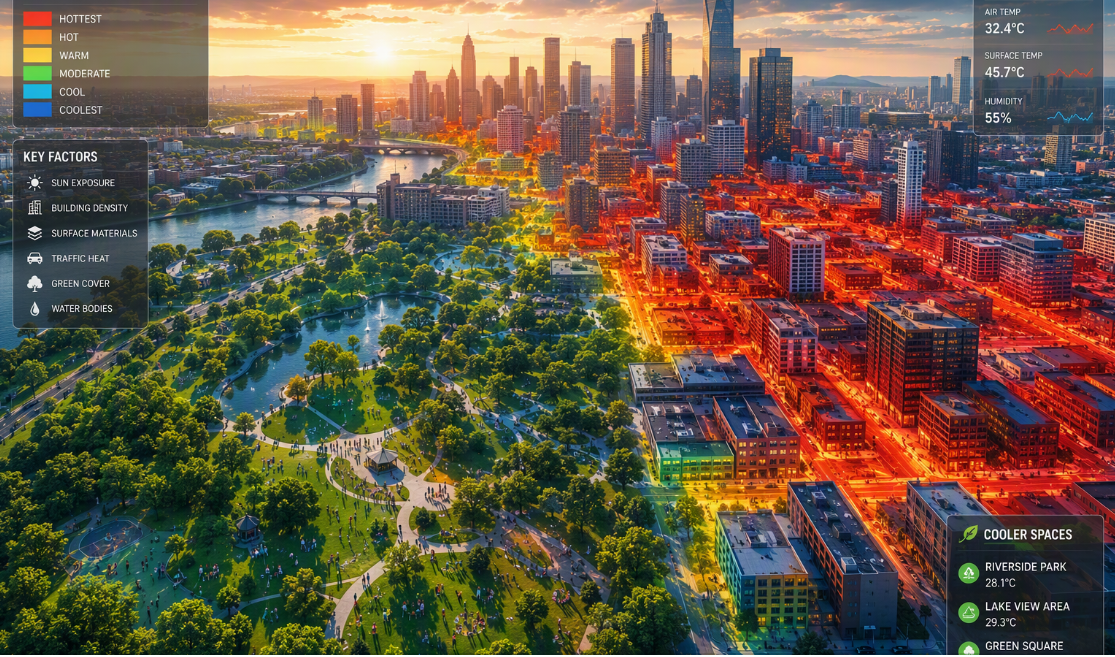
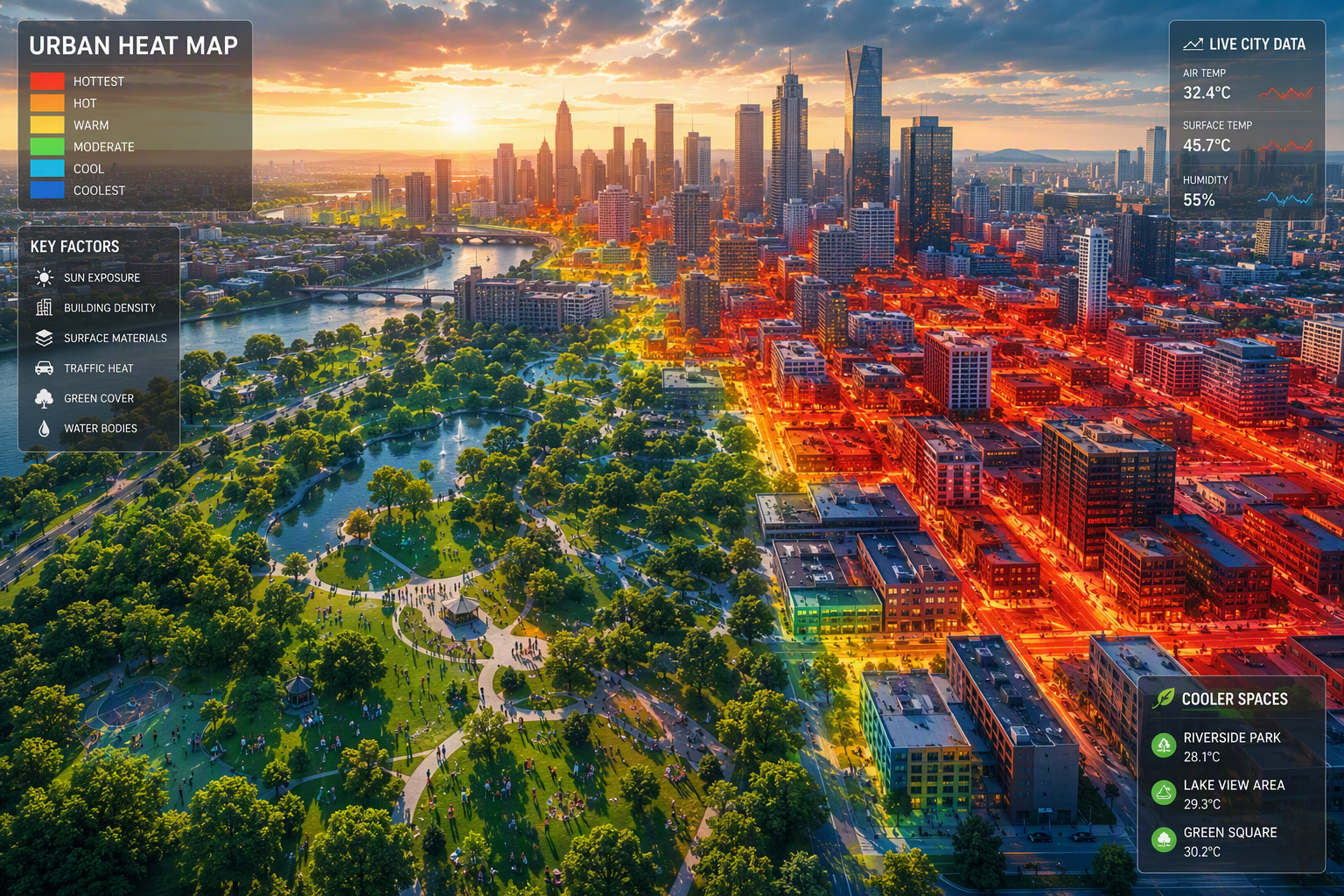
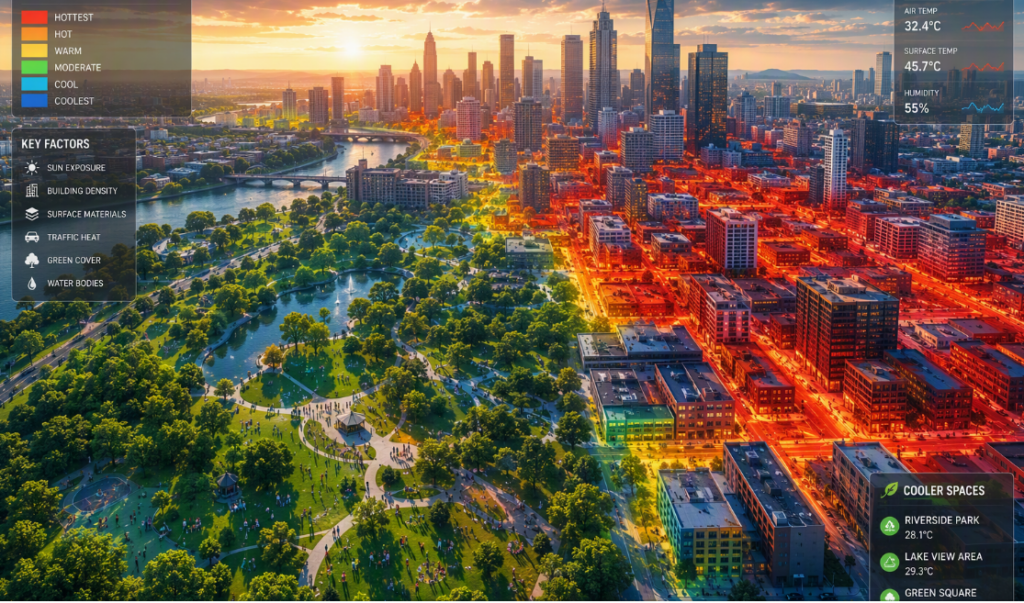
Urban heat islands are spots in urban areas that feel hotter than rural areas nearby. There are many buildings and paved surfaces in the city. There is not much greenery. These things make air temperatures go up. Urban areas keep heat for a long time, so they stay warmer than the other places.
In Indian cities, there is more extreme heat now. People feel this heat more, especially where many live close together and do not have good ways to stay cool. The heat is not just uncomfortable. It is a real public health problem. Heat exposure causes health effects. It also puts more pressure on buildings and roads. The risk of heat is different across neighborhoods.
Definition and Key Features of Urban Heat Islands
An urban heat island is a part of a city that is warmer than places outside the city. This happens because human activities and built surfaces in cities make the area hold heat. A heat island makes the air feel hotter in urban environments, both during the day and at night. Urban heat islands are created by things people do and the city itself.
One thing to know about cities is that things like asphalt, concrete, and dark roofs have higher surface temperatures. These things take in solar radiation while the sun is up. They keep this heat and slowly let it out later. Because of this, heat patterns in cities stay strong even when the sun is gone. Nighttime temperatures do not go down much, so people do not get much rest from the heat.
That is important for health. When people spend more time in extreme heat, they feel more heat stress. This can make heat-related sickness worse. So, if you ask how an urban heat island changes human health, the answer is clear. It makes heat exposure higher and raises the risk of serious health problems.
How Urbanization Creates Heat Islands
As cities and urban areas grow, land use also changes. Many trees and green spaces go away. Roads, buildings, and a lot of paved areas come in. Because of this, the city takes in more heat. It also stays warmer for a longer time.
At the same time, people doing things like driving cars, running factories, using buildings, and turning on air conditioning add waste heat to the area. When people use more energy, it puts more heat into where we live. This goes up a lot in busy parts of a city where air cannot flow well.
Urban heat islands cause people in cities to feel hotter. People spend more time in the heat. Hot nights do not let the body cool down. This makes it hard for the body to feel better. With urbanization, there is more heat stress. Air quality gets worse. There is a higher risk of heat exhaustion and heat stroke. All of these problems are bad for environmental health.
Comparing Urban and Rural Temperatures in India
When you look at urban areas and rural areas, you can spot one big difference. Heat stays in urban areas for a long time. Roads, rooftops, and walls help keep the heat. Rural surroundings cool down faster. There are more plants and open land in rural areas.
This makes the temperature in the city feel different from other places, especially after the sun goes down. At night, cities stay warm. This can make people feel bad and can keep them from getting good sleep when it is hot outside. This extra heat at night helps show why urban heat islands and urban heat can be bad for health.
| Area Type | Typical Heat Pattern |
|---|---|
| Urban areas | High temperatures persist because built surfaces store heat |
| Rural areas | Cooler conditions return faster due to vegetation and open land |
| Urban nights | Nighttime temperatures stay elevated for longer periods |
| Health impact | Longer heat exposure raises stress on the body and public health systems |
Main Causes of Urban Heat Islands
Urban heat islands are caused by changes in land use and many buildings that are put close together. In urban areas, people use energy all the time. There is less natural cooling in these places. Streets and other surfaces hold onto heat, so it feels hotter.
Human activities like traffic, buildings, industry, and cooling systems add more heat to the air. This makes heat exposure feel worse in many neighborhoods. Because of that, cities see more people getting sick from heat. The reasons below show how the layout of a city can make normal hot weather turn into a bigger health problem.
Loss of Green Spaces and Vegetation
Trees, parks, and other green spaces help keep the air cool. They provide shade and use a process called evapotranspiration to lower the heat. When development removes these green spaces, cities lose their natural way to fight higher temperatures. This leads to hotter streets and makes buildings feel warmer during the day.
The environmental health effects can be seen in many ways. When there is less vegetation, concrete and asphalt soak up heat. This makes the area hotter. There are fewer cool spots for people when extreme heat comes. In neighborhoods with fewer resources, health risks go up.
Key effects include:
- There is less shade, so people and workers feel more heat when outside.
- There is less cooling from nature, so air and ground feel hotter.
- There are fewer ways to add green spaces in the city, so over time, we lose chances to lower heat and get health benefits.
Heat-Absorbing Building Materials
Many city surfaces, like asphalt, concrete, and dark roofs, be common in urban environments. These surfaces take in solar radiation from the sun when day time. That heat does not go out. Instead, they keep it.
That storage causes surface temperatures to rise. The air around it gets warmer, too. Streets, rooftops, and parking areas hold heat and release it later in the day. Cities stay hotter than rural surroundings, even after dark.
For people who live here, the heat stays for more time. There is less time to cool down. Hot surfaces make buildings feel warmer inside. This makes people use more air conditioning. When the heat does not go away, there can be more heat exposure and heat stress. Heat exhaustion and other health problems can get worse, mostly if there are long heat events.
Effects of Traffic and Industrial Activity
Busy roads and industrial areas give off a lot of waste heat. Cars send out warmth from engines and burning fuel. If there is a traffic jam, the heat goes up even more. Factories and places where people work make heat when they run machines and need power. In a city with many people and buildings, that waste heat can pile up fast.
As air temperatures get higher, the body has to work harder to keep cool. This makes urban heat islands lead to more heat problems in cities. People who walk, work outside, or live near others feel this most.
There is a strong link between climate change and city life. When people use more energy and there is more traffic on the roads, the amount of greenhouse gas emissions goes up. These gases stay in the air and make climate change worse as time goes by. So, traffic and industry in a city not only make it feel warmer now, but also increase the heat dangers for all urban populations in the future.
Direct Health Impacts of Urban Heat Islands
Urban heat islands make places hotter. This leads to more heat exposure for people in that area. When the heat stays high for a long time, health risks also go up. People can feel heat stress, which might feel mild at first. If it gets worse, this can lead to serious sickness. In some cases, it may even cause death. Because of this, urban heat is a big problem in public health.
The danger from extreme heat is not only one issue. It can start heat stroke. It can make breathing tough for people. It can put more pressure on the heart. It can also make other health problems worse. The parts below say what the main health effects are and explain why some people be at much greater risk than others.
Increase in Heat-Related Illnesses and Deaths
Yes, urban heat islands can make cities feel more hot. This has led to more people dying from heat. When a city stays hot for a long time, the body does not get time to cool down. This is a big problem during heat events. It can get bad fast, especially for people who do not have good ways to keep cool.
Common health effects from heat exposure start with dehydration. A person may feel tired and dizzy. This can turn into heat exhaustion and heat stroke. If people stay in the heat for too long, their body becomes stressed. The stress can make organs stop working well. It could even cause premature death. Hot nights make these dangers worse, because the body does not get enough rest.
Serious outcomes often include:
- More people have heat exhaustion when extreme heat goes on for a long time.
- The risk of heat stroke gets bigger if the heat keeps up and there is no break.
- High-risk groups have a greater chance of premature death when strong heat events happen.
Impact on Cardiovascular and Respiratory Health
The urban heat island effect makes the air feel hotter in cities. When you feel extreme temperatures, your body works more to stay cool. That puts extra stress on your heart. If you have health problems with your heart, this heat island effect can make things worse.
Heat exposure can also make it hard to breathe. When cities get hot, air pollution tends to go up. Heat and sunlight help nitrogen oxides and volatile organic compounds change, which leads to more ground-level ozone. Bad air quality can make asthma worse and also affect other long-term conditions.
These pressures matter most when it is hot outside for days in a row. A person who has heart disease or a lung problem may feel much worse if they live in a city with high heat and pollution. This is why urban heat islands are not just about being too warm. They can make the heart and lungs work much harder, which is not safe.
Exacerbation of Pre-existing Medical Conditions
Many people begin summer with health problems. This can make it tough for their bodies to handle heat. Urban heat islands trap heat and raise daily heat exposure. This causes health risks to get worse. It is also harder for people to escape extreme heat, especially in places where a lot of people live close to each other.
The health effects can be worse for vulnerable populations. Many people with a chronic illness have a hard time staying cool. They might not feel better at night, and may have more trouble because of bad air quality. If cooling, healthcare, or safe housing are not enough, the danger can get worse.
That is the way urban heat islands make heat sickness a bigger problem in cities. It’s not only about making new cases; they make old health problems worse too. If the hot weather stays for several days, the risk of bad health issues goes up. This can cause more people to visit hospitals and even lead to deaths caused by urban heat.
Vulnerable Populations and Social Equity
Extreme heat is not the same for all urban populations. The health risks get worse for vulnerable populations. This happens because they do not have much protection from long heat waves. Many of them live in poor housing. There may also not be enough places nearby to cool off.
Urban heat affects people in many ways, not just the environment. It is also about fairness. Some places have more trees, better services, and safer homes. Other areas do not have these things. This causes health problems to be worse for people living there. The next parts will look at who faces the highest risk and why this problem hits some people harder than others.
Who Is Most at Risk from Urban Heat Island Effects?
Some groups feel the effects of urban heat more than others. Vulnerable populations are people who have trouble keeping their body temperature stable. Also, they may not have enough ways to cool down. They could have limited healthcare or may not live in safe homes.
Older adults and young children are more likely to face health risks with heat exposure. People who work outside or have health problems over a long time can also be at higher risk. In many cities, some communities have extra problems. They can live in places that are hotter. They may not have many things to help or protect them.
Groups at greater risk include:
- Older adults may feel bad in the heat if it stays for a long time.
- Young children can lose water quick or feel too hot very fast.
- Marginalized communities may not have good homes, enough trees for shade, or the cooling they need.
The Link Between Urban Heat and Health Inequality
Urban heat makes clear that where people live can change their health. Some places in cities have many trees and green spots. The homes are better there. Other parts have more roads with less shade. Because of this, some urban populations feel more heat exposure.
Health inequality gets worse in the hottest neighborhoods when they do not have enough care or resources. Cities, when compared with rural surroundings, hold more heat. Within cities, some areas feel more heat because of old planning choices and not enough money put in.
This is why we need social equity in plans for heat. If cooling steps are given only to areas that already have good service, the people who face the most danger will still stay at risk. A fairer way to do urban planning can help reduce risk in places where the problem is the greatest. It can also make city actions for heat help all people better.
Impacts on Low-Income and Marginalized Communities
People in low-income and marginalized groups feel extreme heat the most. The places they live in may have fewer trees and less green space. There are more surfaces that hold heat. Many people there do not have good air conditioning. Their homes may not keep the heat out well. They may not get health care when they need it. All of these things mean their health risks go up when there is extreme heat.
From a public health view, this is an environmental justice issue. In the past, some neighborhoods did not get enough help or money. This made them hotter and not able to deal with urban heat. If leaders do not take climate action in these places, people in these neighborhoods will feel urban heat islands more than others.
Common challenges include:
- People have few ways to cool down when it gets very hot.
- People spend more time near hot roads, buildings, and bad air.
- There be bigger health risks if public health help and buildings are not given out in a fair way.
Worsening Environmental Factors and Climate Change
Urban heat islands are a big problem, but they are not the only thing we need to worry about. Many other issues in environmental health are important too. Air pollution and the loss of trees can make days feel hotter. When both urban heat and air pollution rise, people feel it twice as hard. It is like getting two hits at once on your body.
Climate change adds to the problem of urban heat. It makes the average temperatures go up. People feel stronger heat waves. Nights feel warmer too. Because of this, urban heat islands can be bad for people’s health. The points below show how pollution, less green space, and more heat from climate change make these risks higher.
Role of Air Pollution and Lack of Trees
Yes, things in the environment can make the urban heat island effect worse for health. The urban heat island effect gets stronger because of air pollution. Higher temperatures can make chemical reactions speed up. These reactions use nitrogen oxides and volatile organic compounds, and this means ground-level ozone can go up. When that happens, air quality gets worse.
At the same time, when there are not enough trees, we lose the cool shade. With fewer green spaces, the sidewalks get hot. Buildings feel warmer, too. There is less relief for all of us when there is extreme heat. Trees help make the air better, so if they are lost, the heat gets worse. It can also lead to more pollution around us.
These linked factors can lead to:
- The air quality gets worse when it is hot.
- People who have asthma or other breathing problems feel more stress.
- The heat in the neighborhood goes up if there are no green spaces or tree cover.
How Climate Change Amplifies Urban Heat Island Health Risks
Climate change makes it warmer. It also causes extreme temperatures to happen more often. These can last longer. They feel stronger than before. In cities, the heat stays in because of buildings and pavement. So the starting temperature is already high. Urban heat islands can get worse in this situation.
The effects of climate change can be seen on long hot days and warm nights. People do not have many chances to cool down. Public health teams feel more stress because there is more sickness, more emergencies, and more energy use. These changes can be risky for people who live in areas that already have a lot of risk.
There is a feedback loop at play. When people use more energy to cool things, there will be more greenhouse gas emissions. This happens if the energy comes from fossil fuels. It’s not just what we do to feel better in the heat. It can make the heat worse over time. This means city heat keeps growing as a problem for public health and climate action.
The Connection Between Heat Waves, Urban Heat, and Public Health
Heat waves feel even worse in cities where it is already warm. This is because urban heat and urban heat islands make the air hotter before a heat wave begins. People living in these places feel the heat sooner and harder than others. So, they can have a rough time even before the heat wave picks up.
During big heat events, the built surfaces keep giving off heat at night. So, nights stay warm. This makes it tough for people to feel better. The health risks are bigger, especially for people who do not have good homes, regular cooling, or quick care. Hospitals and emergency workers feel more stress, too.
The link is simple but very important. Heat waves bring hot weather to the area. Urban heat islands make the heat feel even worse in local spots. Put together, they make people more likely to feel heat stress. People can have trouble breathing, strain the heart, and face other health problems caused by heat. These concerns are tough for people and for public health agencies.
Strategies to Reduce Health Risks from Urban Heat Islands
Lowering urban heat takes simple steps. These things help make the air feel cooler and keep people safe. Cities can plant more trees. They can add more plants in parks and streets. Thereis also a way to use building materials that do not take in much heat. A good public health plan will help people stay well when itis hot. These actions help everyone feel better each day and lower the risk of sickness on hot days.
The best results come about when cooling ideas are a part of sustainable development and decision making in the area. Green roofs, smart design, and community programs all help deal with this issue. The next parts talk about which steps can make neighborhoods safer and better for people over time.
Expanding Urban Green Cover and Parks
Adding more trees, parks, and planted spots is a simple way to keep things cool. Green spaces lower heat by giving shade and letting out natural water. The places with many trees let people sit, walk, and feel better when it is hot.
Urban greening is not just for keeping things cool. It helps make the air quality better. It can also help people feel good in their minds. This practice keeps neighborhoods strong when problems happen.
In some places, you do not see many trees. For these areas, adding green spaces can bring real health benefits. It lowers heat exposure and helps people feel better.
Useful community steps include:
- Planting trees on streets and close to homes can help make the area nicer. These green spaces keep the air fresh and give people some shade. It helps everyone feel better and feel more at home.
- Restoring parks, or making them bigger in warm places, is good for people who live there. It gives them more space to relax, play, and spend time with others. A bigger park also helps keep the city cool on hot days.
- Adding gardens or green spaces where there are many roads or lots of buildings makes the city look better. These areas let people enjoy time outside. They help clean the air, and people feel less stressed when green spaces are close by.
Use of Cool Roofing and Reflective Building Materials
Cool roofing lowers how hot it gets inside a building. It does this by bouncing back more sunlight and bringing in less heat. If people use shiny materials on roofs, streets, or walls, it stops the surfaces from heating up too much in the day. This is a good method to lessen heat in cities.
These materials are important because city surfaces often trap heat. They keep giving off heat even after the sun goes down. If cities use other materials in their buildings and streets, it can help lower the temperature around them. This also helps make buildings feel cooler inside.
That can help lower energy use. If homes and other buildings stay cool by themselves, people use air conditioning less. When there is less need to cool places, power systems feel less stress. This can stop the feedback loop. In that loop, more energy use leads to more waste heat, and that makes it even hotter.
Community-Led Adaptation and Public Health Programs
Local action is important for dealing with extreme heat. The risk from heat waves is not the same in every area. It can be different from one neighborhood to another. Community-led adaption helps urban populations. People can handle heat events in ways that work for their homes and needs. They use things they have. Public health programs play a big role during extreme heat events and heat waves. These programs help people stay safe and healthy.
City agencies set up warning systems and cooling centers. They reach people in high-risk groups. When these plans are done well, it keeps people from getting sick. It also helps everyone be ready. A good case study shows cities the best steps to take. It points out what works and what still needs to be fixed.
Helpful community strategies include:
- Opening cooling centers and letting people know how to stay safe when it gets hot
- Talking to older adults, outdoor workers, and others who could be in danger
- Joining climate action with plans that help public health in every neighborhood
International and Local Perspectives
Urban heat islands are in cities everywhere. The effect on public health changes with where you live. Local weather, city design, and how people act all matter. India has high heat exposure in busy urban areas. The United States has different urban heat levels in each neighborhood.
By looking at examples from here and around the world, we can see what works best. A case study shows how using urban planning, better health systems, and making sure things are fair can lower risks. These examples help us learn more about public health. Some of these good ideas are part of talks at the United Nations about climate and how cities stay strong.
Comparing Urban Heat Island Impacts in India and Other Countries
Urban heat islands cause cities to get hotter than places around them. This extra heat is bad for public health. In India and the United States, there are lots of buildings, crowded roads, and very little green space. These things make urban heat feel stronger. Because of this, people deal with higher temperatures and their health is at risk.
The health issues stay almost the same. A person can get more heat exhaustion, heat stroke, heart problems, and trouble with breathing when heat and air pollution both rise. The real danger can be different because of several things. These include how good the housing is, if you have cooling, the healthcare you use, and how the area around the home is made.
What matters in the world is how people manage urban environments. Some cities have the best ways to keep cool. A few put their money into green projects. Others face larger gaps between rich and poor or cities that grow much quicker. If you look at India and the United States, you can see that good planning and how people live can make a big difference in how much harm there may be.
Successful Initiatives and Case Studies from Indian Cities
In India, simple ways to keep cool and planning ahead work best. A good case study would show that planting trees, bringing back green spots, talking with people, and getting ready for hot weather help a lot. It matters that these steps reach places where people feel the most heat and where there is not much support.
Urban greening and smart urban planning help lower local temperatures. They also make things better for people every day. Not every city is the same, but places like New York show that mixing modern buildings and ways to keep people healthy works well. India can use these ideas and shape them to fit its weather and the things people need most.
Examples of effective action include:
- Grow tree cover and put more green space in those parts of the city that get hotter.
- Use heat planning so we can make changes for blocks or each neighborhood.
- Mix city projects that cool the area with programs that teach people and also give emergency help.
Policy Approaches at National and State Levels
Policy matters because urban heat is not just about the weather. The topic is about climate action, urban planning, public health, and sustainable development. National and state plans let cities connect so they can cool down together. These plans help keep people safe who might be at risk and help cities grow the right way.
Good rules can help with simple things like planting more trees, making cool spots, using heat warning systems, and making better buildings. These ways show where tools and help should be sent, so the places with the most heat and the fewest resources get what they need. A fair plan like this matters a lot for handling heat well.
Across different places, strong rules help local projects lead to better safety. They connect city steps to public health aims and future needs. When states and whole countries see urban heat as a risk for everyone, people can be more ready for heat exposure today and later when climate changes.
Conclusion
In the end, we need to know about urban heat and urban heat islands to keep people safe, especially in places with many people. As cities grow, more people feel the heat. This includes sickness from high temperatures and other health problems caused by hot weather. Some groups feel these problems more than others. We should work on solutions like making green spaces and using things in the city that push heat away. When we all take part and choose to put public health first, we help everyone live better in the city. If you want to know more about how to beat urban heat, feel free to ask for a consultation. Your health and well-being matter!
Frequently Asked Questions
Can urban heat islands increase heat-related deaths?
Yes. Urban heat islands can cause more heat-related deaths. They let extreme heat go on for a longer time and make heat exposure worse, especially at night. This extra heat puts more stress on the body. The health risks get higher for older adults, people with long-term illness, and for those who do not have good cooling or quick help during extreme heat.
Which communities are most affected by urban heat in India?
In India, some groups in cities feel more heat. These groups are called vulnerable populations. They are people who do not have much money, older adults, young children, outdoor workers, and people with health problems that do not go away. Their health risks go up when there is extreme heat. This is because they live in places with bad housing, not enough trees, and only a few can cool their homes.
What can individuals do to reduce health risks during heat waves?
When a heat wave happens, try to be in cool places. Do not spend much time outside. Look for signs that the body is struggling with the heat. Listen to public health alerts in your area. Check on people around you who may get sick from the heat. Go to cooling centers if you need help. Support climate action in your local area and help make neighborhoods greener. This works to lower heat exposure and health risks over time.