Key Highlights
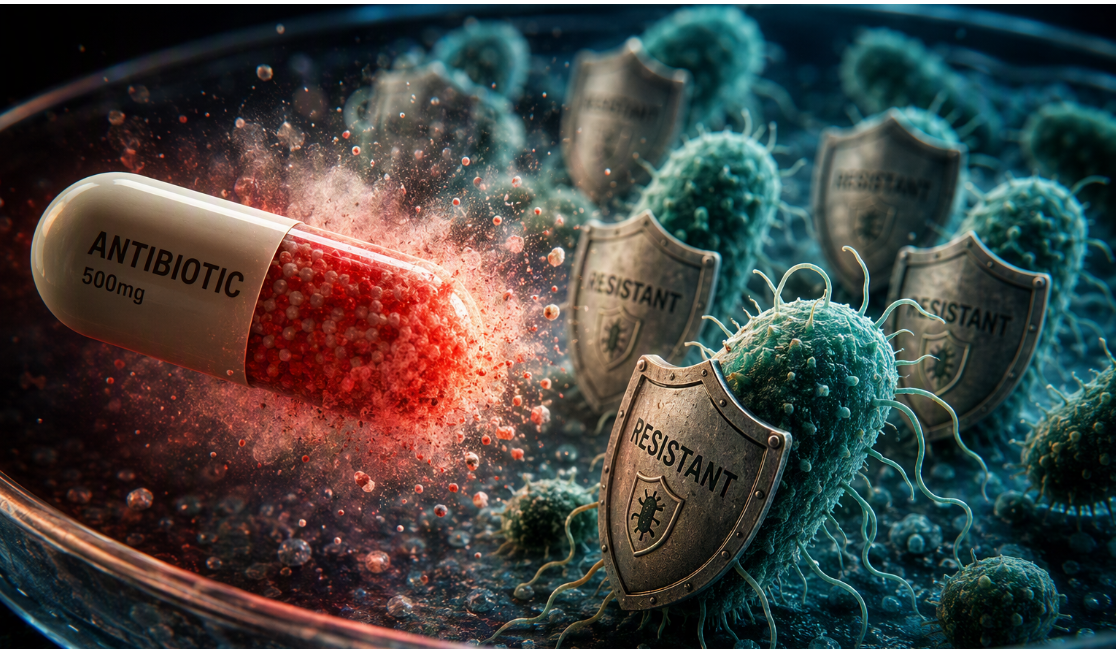
- Antibiotic resistance is a big public health problem in India. It is a part of the even bigger problem called antimicrobial resistance.
- The misuse of antibiotics, using them too often, and taking them without the right advice causes resistant infections to go up fast.
- Common infections like tuberculosis, typhoid, urinary tract infections, and pneumonia are now harder for people to treat.
- Hospitals, private hospitals, and clinics can make things worse or help slow this problem by working on infection prevention and by managing antibiotic use well.
- India is looking at this issue with amr surveillance, a national action plan, and One Health actions.
Table of Contents
Introduction
Antibiotic resistance is not some far-away issue. It is here in India right now. It has a big effect on global health. When antibiotics are not working well, infectious diseases become tough to treat. People take longer to feel better. The risk is higher for children, older adults, and those in the hospital. This is a big challenge for India. People get infections a lot. Antibiotic use is common. To know how big the problem is, you need to learn how antibiotic resistance starts and why it spreads so fast.
Understanding Antibiotic Resistance in India
Antibiotic resistance happens when some bacteria change and that makes antibiotics not work on them anymore. In India, antimicrobial resistance is going up, so infectious diseases are harder to treat. This is a big worry because resistant bacteria and drug resistance are getting worse.
This matters a lot for public health. Infections that people could once treat are now getting worse and sometimes can lead to death. India shows a bigger problem that the world faces. But things are tougher there. More people in India get infections. Many people there do not have access to the health care they need. There is also a lot of antibiotic use. In the next parts, I will go over the basics, the causes, and where India is right now.
Definition and Explanation of Antibiotic Resistance
Antibiotic resistance happens when some bacteria stop reacting to medicines that are made to kill them or slow them down. This is a kind of antimicrobial resistance. Antimicrobial resistance can also happen with things like viruses, fungi, and parasites. In everyday health care, people worry most about resistant bacteria. These can cause infections that are much harder to treat.
The idea isn’t new. The discovery of penicillin changed the way modern medicine works. It made it easy for people to treat bacterial infection that had killed many before. Over that time, some people worried that the careless use of antibiotics would lead to drug resistance. They were right, as this problem showed up after only a few years.
Over the years, there have been more stories of resistant bacteria fighting off many main drugs. At first, penicillin did not work well because bacteria grew strong against it. Then, some types showed up, like methicillin-resistant Staphylococcus aureus. This told us how fast antibiotic resistance can take over and make medicines stop helping people. Because of this, antibiotic resistance is a big public health problem now.
How Antibiotic Resistance Develops
Resistance can get stronger because of evolution. But what people do can make it grow even quicker. When antibiotics are given many times, or not used right, some bacteria can live through the medicine. These ones then grow and spread. This puts selective pressure on the bacteria. The strong, resistant types have a better chance to move from one person to another.
In India, the misuse of antibiotics has made things much worse than before. People sometimes use antibiotics when they have health issues that are not from bacteria, like viral upper respiratory problems. The repeated use of antibiotics without proper testing, or enough checking, and the overuse of antibiotics, all help the development of amr. The use of antibiotics should always be careful to stop this problem from getting bigger.
Another big problem is timing and figuring out what is wrong. If doctors do not have quick tests, they may give antibiotics before they know for sure what the issue is. This can be needed at times if someone is very sick. But when doctors use antibiotics a lot or many times when they are not sure, it puts selective pressure on germs. This helps antibiotic resistance spread both in the community and in hospitals.
Current Status of Antibiotic Resistance in India
India is now having more cases of antibiotic resistance in many health places. There are also more resistant infections found in things like respiratory disease, pneumonia, sepsis, diarrhea, surgical infections, and bloodstream infections. This is a big public health issue. Treatment can take more time, cost more money, and sometimes does not help as well.
Recent amr surveillance shows that several antibiotics do not work as well as they used to. The Indian Council of Medical Research says there is a big problem with how strong bacteria like Escherichia coli, Klebsiella pneumoniae, Pseudomonas aeruginosa, and Staphylococcus aureus have become. Some of these drugs are now almost useless against the bacteria they are supposed to treat.
The ministry of health and other public groups have made rules and built ways to check. Even now, the stress is still strong. During COVID-19, people got more antibiotics. Azithromycin use went up as well. These signs show that India is not only worried about a risk that might come one day. India is already dealing with a bigger problem with resistance today.
Key Drivers of Antibiotic Resistance in India
Antibiotic resistance in India is rising fast. A main cause is the high use of antibiotics. There is a lot of antibiotic abuse. Many people take antibiotics without asking a doctor. Prescription rules that should stop this are weak. There is also inappropriate use of antibiotics in both people and animals. All these issues help antibiotic resistance grow.
The problem can get worse if people take medicine without checking with a doctor first. Some pills are sold easily or used for things that do not really need them. There is also pollution in the area, and people do not all have the same choices for healthcare. These things make it harder to fix the problem. It can help to look at why this happens one step at a time. A good first step is to talk about misuse and taking too much medicine.
Overuse and Misuse of Antibiotics
The overuse of antibiotics is one main reason why resistance happens. When doctors give out antibiotics a lot, bacteria face them many times. This puts selective pressure on the bacteria. Only the strongest ones stay alive.
Misuse of antibiotics is at the heart of the problem. People take them when they only have a virus. Some people stop taking them early. Others pick the wrong medicine or dose. In clinics, the doctor may treat by guessing if there is no fast test. All these ways help resistant bacteria grow.
India had more sales of antibiotics during COVID-19. Many people got extra doses meant for adults and used more azithromycin. This matters because when they use these drugs too often, the medicine stops working as well. If people keep buying and using too many antibiotics, antibiotic resistance will get worse. We will have fewer ways to fix normal health issues or more serious sickness.
Self-Medication and Over-the-Counter Sales
Self-medication is a top reason why antibiotic use can be risky. When people pick medicines without asking a doctor, they may not use the right drug. They can take too much or too little. They may use it at the wrong time, too. This lets resistant bacteria stay alive and spread to others.
Over-the-counter sales mean that people can get medicine more easily in many places. In India, antimicrobials are given some rules, but you can still find them easily. They are also not expensive and can be bought without having a doctor help. This causes some people to use these medicines without thinking. The problem gets worse in places where healthcare is hard to find and people do not have good knowledge about these medicines.
Common risks include:
- Taking antibiotics when there may not be a bacterial infection
- Stopping the medicine once you feel good, instead of finishing it all
- Using old medicine again or listening to people who are not doctors
Both self-medication and getting medicine from the store without a doctor hurt the quality of care. They also help medicine resistance go up in the people around us.
Lack of Prescription Regulations
Prescription rules matter. They tell who can get antibiotics, when they get these, and why they should take them. In India, these rules exist, but not everyone follows them the same way. This problem lets antibiotic use go up without good medical checks.
This is something both public and private hospitals have to deal with. Small clinics and shops that sell medicine feel it too. When people can get medicines so easy, they might not see a doctor for a proper checkup or plan. Clinicians feel pressure if they cannot test fast. This can lead them to use antibiotics more than needed.
The ministry of health has set some rules. But many places, and different levels of healthcare, find it hard to use them. India has a large and mixed health system. That makes it tough to keep things the same everywhere. If rules for prescriptions get stronger, it can help stop people from getting medicines too easily. It lets doctors make better choices and slows down resistance in both cities and places that have little care.
Agricultural and Veterinary Antibiotic Use
Antimicrobial use is for both people and animals. Antibiotics are used in animal health and agriculture. This increases antibiotic resistance in people. Resistant germs or traits can get into food, water, soil, or waste. The effect can be seen outside farms and most people feel the impact.
This is why the one health approach is important. It shows how human health, animal health, and the world around us are linked. In India, people are concerned about leftover antibiotics, unclean places near drug companies, and changes to tiny germs living there.
Important concerns include:
- The use of antimicrobial drugs in livestock and food-animal systems can be a big problem.
- Resistant organisms can move between people, animals, and the environment.
- Drug resistance can happen because there are drug residues left in food and wastewater.
A good one health plan can help India see and cut resistance in the different areas talked about. All these areas are linked, and such a plan will be useful to get, track, and lower resistance across them.
Public Health Impact of Antibiotic Resistance
Antibiotic resistance is a big issue for public health in India. It gets in the way of treating infectious diseases. Because of this, there can be more people who get very sick. There is also a higher chance that resistant infections will spread both in hospitals and out in the community.
If the impact of amr keeps spreading without control, more people will die. People will have to stay in the hospital longer. There will be fewer good options to treat sickness. This puts extra pressure on modern medicine. Many simple steps and everyday care get less safe when antibiotics do not work. The next part will show how this problem leads to more deaths, harder treatment, and cases where many drugs do not work.
Increased Mortality and Morbidity Rates
Antibiotic resistance is a big problem. When it happens, it is hard to treat infections. More people get sick and stay sick for a longer time. More people can die from these health issues. If normal drugs stop working, a doctor may use stronger pills. A person may get serious problems. These problems might have been stopped early if the right medicine had worked.
In India, this is a big problem. The information we have shows that many people die from resistant infections. It happens in direct ways and other ways, too. This hits newborns, kids, old people, and people in the hospital. So, you see, no one at any age can feel safe from it.
This is a global health problem. In 2019, resistant infections caused millions of deaths around the world or made many deaths worse. Experts say that if we do not act, the numbers will rise in the future. In India, more people are dying and getting sick. This shows resistance is not only a problem scientists talk about in labs. It is a real threat for people, their families, and the whole health system.
Challenges in Treating Common Infections
Treating common infections can be much harder when antibiotic resistance goes up. Doctors usually start with the regular drugs, but when resistant bacteria are in the body, these drugs may not help. This can slow your recovery and make you feel sick for a longer time. The doctor may then need to use stronger drugs that are not used as often.
These treatment problems can be seen in pneumonia, sepsis, diarrhea, surgical wound infections, and urinary infections. There are some organisms that do not respond well to drugs that doctors used before, like fluoroquinolones and cephalosporins. When this happens, the available antibiotics we have to use get fewer.
For you, this means you could need more tests and longer care, even if you have a simple infection. You might also need more checking from healthcare workers. When resistant bacteria spread, common infections become harder to deal with. Healthcare workers have less clear choices and face bigger risks. Treating these infections now takes more time and care than it used to.
Spread of Multi-Drug Resistant Organisms
Multi-drug resistance is when germs stay alive even after using many antibiotics. This makes it tough to treat infections. Choices for medicine drop fast, so the problem gets worse. In India, this issue with drug resistance is found in important germs that cause bloodstream infections, pneumonia, infections after surgery, and sickness people get while in the hospital.
The spread of amr in organisms like klebsiella pneumoniae, escherichia coli, acinetobacter baumannii, and staphylococcus aureus is a big worry. Hospitals say that these germs do not get better with drugs like cephalosporins or fluoroquinolones. For some high-risk patients, doctors need to use strong medicine, such as carbapenems or polymyxins.
Some common infections are now harder to treat. These include tuberculosis, typhoid, urinary tract infections, pneumonia, sepsis, diarrheal disease, and infections that happen after surgery. As bacterial amr gets worse, carbapenem resistance and other strong resistance like it also go up. This means it can be hard to use drugs that we usually keep for very sick people.
Economic and Social Consequences
Antibiotic resistance is not only found in hospitals. People can get resistant infections in many places. These infections cause healthcare costs to go up. They make people feel sick for a longer time. This puts stress on families. Health services feel the weight of this problem, too.
There are effects on people’s lives too. A long treatment can break up work, school, and family plans. Getting sick again and again may hurt a person’s way of living. In some places, it can also bring shame. If resistance keeps going up, India will see not just more health problems, but worse money and social troubles as well. The next parts will show these problems in ways you can see day to day.
Increased Healthcare Costs
When antibiotics do not help, healthcare costs get higher. Patients have to stay in the hospital for more time. They may need extra lab tests, more medicine, and more follow-up visits. In hard cases, they must get care in intensive care units. This makes healthcare costs rise even more.
These costs affect families and the health system. A resistant infection can turn a simple treatment into a tough one. This happens fast. It puts more pressure on staff, beds, testing, and medicine. Some of the resources need to be for people who are the most sick.
A health approach that aims to control disease can reduce costs. By using better ways to check infection prevention, diagnostics, and how we use of antibiotics, we can cut the use of antibiotics when they are not needed. This also helps find resistant infections sooner. Simply put, it is cheaper to stop resistance early than to fix big problems later.
Productivity Losses and Economic Burden
Antibiotic resistance can make people stay sick for a longer time. They may need to get treatment again. This can make them miss work. If someone must stay at home, they may not earn their usual pay. A person or their family will need to look after them. So, antibiotic resistance does not hurt just the sick person. It can also change life for everyone in the home.
The economic burden is hard on hospitals, on public health programs, and on the whole economy. When common infections need longer or more expensive treatment, the costs increase. This trouble is bigger in areas where people do not have good healthcare or enough money to pay for it.
For India, antimicrobial resistance is a risk not just at this time. It will also be a big issue in years ahead. Reports say that antimicrobial resistance could cause many deaths in the future. This sickness means that people may not be able to work. Their health care bills will go up. Life will get harder for many of us.
Antibiotic resistance is not just a concern for doctors. It is also a problem for the country’s money and the way things work.
Social Stigma and Quality of Life Impacts
Living with an infection that will not go away can make you feel very tired. The treatment can take longer to work. You may have to go to the hospital many times. Doctors might give you stronger medicine. These can cause more tough side effects. This can make life feel harder for you and your family.
People who have infectious diseases may feel that others leave them out. If an illness is seen as serious, comes back again and again, or is hard to treat, people might stay away. In some places, being sick for a long time can cause fear, confusion, or blaming from others. These things can lead to stress and make people feel upset.
Antibiotic resistance can make it harder for people to feel well. It may take longer to get better. There may not be a clear answer that the medicine will work. A person might feel alone. He or she may feel worried that they could get sick again. The cost of care can be tough. It can also take up a lot of time.
The human side of antibiotic resistance is often not talked about much, but it matters a lot. This issue is not only about lab reports or getting a drug from the pharmacy. It is also about a person’s dignity. It touches their daily routines, relationships, and how well they feel.
Common Infections Affected by Resistance
Many common infections in India are becoming tough to treat. This is mostly due to antibiotic resistance. The ones the get affected the most are tuberculosis, typhoid, urinary tract infections, breathing problems, sepsis, and infections after surgery.
This change matters because the problem is with infectious diseases many people have. These are not rare ones most people don’t get. If normal treatment does not work, resistant infections can be harder to deal with. They also cost more money for treatment. To understand how big the threat is, we can look at some main examples. In India, resistant infections are already making it tough for doctors to help patients.
Tuberculosis Treatment Challenges
Tuberculosis shows how drug resistance can make treatment hard. When this illness gets resistant to medicine, the usual drugs do not work so well. Care then takes more time. It gets harder, and people feel more tired. This is tough for patients and for people who help them. The health system also finds it harder to care for them.
India has many cases of infectious diseases. Some infections, like drug-resistant tuberculosis, are even harder to treat. This puts more pressure on the health system for diagnosis, follow-up, and better treatment results. Most of the information is about antimicrobial resistance. It also shows that antimicrobial resistance makes tuberculosis a bigger problem in India.
Here is a simple overview:
| Infection | Resistance concern | Why it matters in India |
|---|---|---|
| Tuberculosis | Drug resistance reduces treatment effectiveness | Longer treatment and more complex care |
| Resistant tuberculosis | Fewer reliable treatment options | Higher public health burden |
| Difficult TB cases | Need stronger monitoring and system support | Greater strain on patients and services |
This is why people still talk about the importance of tuberculosis when they look at resistance.
Resistant Typhoid and Urinary Tract Infections
Typhoid and urinary tract infections are common in many people. A lot of people think they can be fixed with normal doctor visits. But resistant bacteria can change how doctors help these problems. If first medicines do not help, then the person might need stronger drugs, more tests, or to stay in the hospital.
Urinary tract infections can be a big issue because bacteria like escherichia coli often cause them. These germs are starting to fight against some drugs. If your urinary tract infection does not get better with treatment, you may have symptoms for a long time. It can lead to other problems for you. Typhoid can also be harder to fix if there are less medicines that work.
These resistant infections are a big problem. They can happen to anyone, no matter where you are. You do not need to have a rare illness to get this issue. In India, the people often see resistant bacteria in cases like typhoid and urinary tract infections. This tells us that antibiotic resistance can make normal sicknesses harder to fight. It can also mean your treatment will take longer and feel more risky.
Difficulties in Managing Respiratory Infections
People often use antibiotics to treat breathing illnesses. Sometimes, they use them too much. This is a big reason why fighting antibiotic resistance is so important. If people use the wrong antibiotics again and again, resistant bacteria get stronger. These bacteria are then harder to stop.
Streptococcus pneumoniae is a type of bacteria that is often tied to bad lung sickness. The data says that when main medicines for strong infections do not help, it leads to a lot of deaths in the world. In India, tests say that antibiotics for lung sickness and pneumonia are not doing as well as in the past.
For patients, it means a chest infection might not heal the way it should. For doctors, there are fewer easy choices. You have to use stronger medicine and be careful. Respiratory infections show that resistance can change how we treat people. This happens both in the community and in hospitals. It is even more important in a country where many people get infections.
The Silent Pandemic: Global and Indian Perspective
Antibiotic resistance is sometimes called a silent pandemic. This problem spreads slowly. It makes treatments less useful and can lead to deaths. It is not like a big outbreak that everyone notices right away. Still, this is a global threat. Many people do not see what is happening until antibiotics and other drugs stop working.
In India, the resistance gets worse because of what people do in their daily lives, problems with the health system, and the spread of amr genes in many connected places. India keeps up with global health trends. But there are more issues here, like many infections and a high use of antibiotics. The next parts talk about how India stacks up against the rest of the world and show why the risk is greater here.
How Antibiotic Resistance Compares Globally
Antibiotic resistance is not only a problem in India. It is a big issue for the whole world. Many people in different countries deal with it. The World Health Organization says that antimicrobial resistance is one of the biggest threats to global health. A lot of people lose their lives each year because of resistant infections. This is why countries try to work together to solve this problem.
The global action plan from the World Health Assembly helps all countries work in the same way. It covers making people aware, finding problems early, infection prevention, using antibiotics smartly, and putting money into new ideas to fix issues. India made its own plan based on this. It shows that the country faces problems like what others in the world also deal with.
India is different because it deals with bigger problems in some ways. Many people in the country get infectious disease, and sanitation is not always good. It is also easier to get antibiotics. Not everyone has the same tests, so some get left out. These things can make resistance spread faster than in other, richer places. So, while India follows the trends in the world, things feel more intense there.
Why India Is at Higher Risk
India has more risk with antibiotic resistance. This is because many problems come up together. A big population is one reason. A lot of people get diseases that spread from one to another. There are also big differences in who can get healthcare and tests. All these things make antibiotic resistance stronger. It moves to other people faster because of them.
Antibiotic use is a big reason for this. People can get antibiotics easily. Many use them on their own and take the same treatment again and again. This all puts selective pressure on bacteria. When people use antibiotics a lot and not in the right way, bacteria that fight the drugs get ahead. This does not just affect one person or one clinic. Over time, it spreads to other people in the community.
From a global health view, India is big. It has a lot of people. The use of medicine there is high. Places in India can be very clean or not clean at all. This can help antibiotic resistance spread fast and reach more people. Because of this, what India does is important. It matters for its people and for all who deal with antibiotic resistance in the world.
Role of Climate, Population, and Healthcare Access
Antibiotic resistance does not come up by itself. A lot of things in daily life help to make it happen, like the weather, how many people live near each other, and how easy it is to get help from a doctor. In a big and busy country, these things change the way infections move around, how fast people get care, and if the right tests are done before any treatment with antibiotics starts.
Healthcare access is important. If people do not get help from the right services, they may try to help themselves. Some people use antibiotics on their own. The ministry of health gives advice, but it is not the same in all places. Because of this, care can feel different from one place to the next.
Key pressures include:
- When there are a lot of people living close together, infections can spread fast.
- Healthcare is not the same everywhere. It can be different in each area and healthcare center.
- Weather changes and the environment can make it hard to keep things clean, get rid of waste, and stop diseases from spreading.
These things can make antibiotic resistance worse. They also make it harder to stop it.
Hospitals, Clinics, and Infection Control
Hospitals and clinics play a big role in the way antibiotic resistance spreads. If infection prevention is not strong and antibiotics are not used the right way, healthcare facilities can make hospital-acquired infections worse. This can help germs spread that do not respond well to antibiotics.
At the same time, these places help us deal with resistance. They do this by taking care in how they work, watching closely, and making care safer. Private hospitals, public hospitals, labs, and small clinics each play a key role in this.
The next parts will talk about how infections begin in hospitals, why it is good to look after things the right way, and how labs help people choose better.
Hospital-Acquired Infections and Resistance
Hospital-acquired infections are a big worry. This is because many people in the hospital are sick or have been hurt. A lot of them get treatment that can be hard on the body. In this place, resistant bacteria can spread fast. If people do not control infections well or watch antibiotic use close, things get worse.
Intensive care units show more risk than other areas. Patients inside may need to stay longer and must be watched closely. They often get strong antibiotics, which can help germs grow that are hard to stop. The data says acinetobacter baumannii, klebsiella pneumoniae, and staphylococcus aureus are big problems because these germs do not go away easily in intensive care units.
For hospitals, there is a need to not only treat these infections but also to prevent them from starting. Surgical site infections, bloodstream infections, and pneumonia can all get worse if resistant bacteria are in the hospital. Hospitals must have strong hygiene rules, test often, and give good treatment. This helps to stop the spread of resistant bacteria.
Importance of Antibiotic Stewardship Programs
Antimicrobial stewardship programs help people use antibiotics in the right way. These programs make sure doctors give antibiotics only when they are really needed. The team checks that the right amount of medicine goes to the right patient at the right time. This helps slow down antibiotic resistance in hospitals and clinics where people get care.
These programs matter because healthcare professionals often need to treat people who are very sick before they have all the test results. Stewardship does not stop care from happening. It helps people use antibiotics in a responsible way. Staff can look at each case, focus treatment, and stop using antibiotics when they do not need to. India has started these programs, but they should be used more and in more places.
Strong antimicrobial stewardship programs usually have:
- A group or team that leads the work.
- Clear goals about how to use antibiotics.
- Steps in place to keep track of antibiotic use.
- A way to look at how well the program works.
- Good training for all the people involved.
- Easy advice for giving medicine to people who have common infections or infections caught in the hospital.
- A simple look at which antibiotic to use, how much to give, how to give it, and how long the treatment should be.
- Working with doctors, microbiologists, nurses, and pharmacists to help with this.
If we do stewardship the right way, it helps keep patients safe today. It also helps us have good choices for treatment in the future.
Role of Clinical Laboratories in Surveillance
Clinical laboratories help stop antibiotic resistance. They find out what kind of bacteria make people sick. They also see which antibiotics can still work. If doctors do not get this info, they often have to guess. This means people might use antibiotics even when they do not need to. Because of this, antibiotic resistance and extra antibiotic use can get worse.
Good AMR surveillance needs strong labs and careful testing of samples. India is building up its surveillance systems now. These systems have lab networks. These labs work with the Indian Council of Medical Research. This helps find resistant infections in many hospitals and clinics. It also helps set the policy for the whole country.
Labs help control disease where care takes place. When labs give fast results, doctors do not need to guess, so they start the right treatment quickly. This puts less stress on antibiotics and makes care better for people. Labs do more than just test samples. They help make drug use safer, track sickness better, and fight drug resistance in a smarter way.
National Response and Policy Initiatives
Indian health authorities are doing many things to stop antibiotic resistance. They have a national action plan. There are networks that check how antibiotics are being used. These groups also give advice on how to use antibiotics in the right way. They work on food safety and try to stop pollution as well. All these actions help in the fight against antibiotic resistance.
These actions show that India sees resistance as a big problem. This is true for the world and for the country. The ministry of health, research groups, and other agencies have all played a part in this work. To know what Indian authorities are doing, we can look at three things. These are planning, rules, and collecting data.
Indian National Action Plan on Antimicrobial Resistance
India’s national action plan was made to follow the global rules that the World Health Assembly made about antimicrobial resistance. This plan gives a clear way for us to act, so that people can keep using antimicrobial medicines to help stop and treat infections.
The plan is set to reach some big goals. It hopes to help people be more aware. There is also a push to make research and checking for problems stronger. The plan wants to lower infections by improving cleanliness and ways to stop sickness. A main point is about using medicines the right way for both people and animal health. There is a call for more funds to help find new medicines, better tests, and vaccines. India has shared its own aim, which is to help all groups and levels work well together.
This is important because the problem of antimicrobial resistance cannot be solved by one department alone. The ministry of health, other public agencies, and working with people in other countries all help to deal with this issue. This wide approach matches the same worries shared by groups like the United Nations. They say that antimicrobial resistance is a big problem, and everyone must work together to fight it.
Regulatory Measures for Prescription and Sales
Regulation helps control how people use antibiotics. When antibiotics are easy to get, or if people use them without seeing a doctor, it can lead to bigger problems. This makes it harder to stop antibiotic resistance. India has some rules about this. But there is still a big problem in making sure everyone always follows these rules about antibiotic use.
The ministry of health has given rules for antimicrobial use. Now, more hospitals and clinics follow these stewardship steps. The Indian Medical Association also helps by guiding the doctors. They remind doctors about the right standards and make them more aware. The work from the ministry of health and the Indian Medical Association can help doctors give the right medicine. This helps make prescribing habits better in healthcare settings.
Useful regulatory priorities include:
- There need to be better rules for selling antibiotics by prescription.
- There should be better checks, so people can not get antibiotics if they do not have a prescription.
- More people need to follow advice on the right way to use antibiotics.
These steps can help a lot when the testing is good, the clinician gets the right kind of training, and people learn more about antibiotics. Rules will not fix every problem in the way we want. But, they are a good way to start for safer antibiotic use in India.
Surveillance Systems and Data Collection
Surveillance systems play a big part in public health and antibiotic resistance. You have to measure things if you want to manage them well. When we talk about antibiotic resistance, it is important to know which bacteria are there, where resistance is going up, and which drugs do not work as well now. Collecting good data helps you get a clear idea of the public health problem, and not just see a few random cases.
In India, the Indian Council of Medical Research works to build amr surveillance. It does this with lab networks and gives reports each year. These systems get data from healthcare facilities. They show how main bacteria, like Escherichia coli and Klebsiella pneumoniae, are changing.
This type of systematic analysis is useful for making clinical choices and planning for policy. It lets people in charge change treatment rules when needed. They can find high-risk organisms and make plans for places where resistance is growing quickly. Stronger tracking also helps answer a key question. Are the current policies working well, or is resistance growing faster than the response?
Strengthening Awareness and Education
India needs to work on public awareness and give more education to slow down resistance. If people know more, they can avoid unsafe antibiotic use. When healthcare professionals get better training, they can be more careful with the medicines they give. This will help with disease control and keep others safe.
Yes, in India, there are public awareness campaigns about the dangers of taking too many antibiotics. This is a part of the country’s plan to fight this issue. But even with this, the information shows there is still a long way to go. A lot of work has to be done, especially in places where people do not get good health care.
The next sections will talk about public awareness campaigns, how providers get training, and the role that the media and schools play.
Public Awareness Campaigns in India
Public awareness is very important to stop antibiotic resistance. When people learn that antibiotics cannot cure every sickness and should not be used for all health issues, they use them less in the wrong way. India’s national plan uses communication, education, and training to help fight this problem.
The information shows that many people, mostly in rural and less developed areas, still do not know enough. This means that campaigns must do a better job to get the message out and stay active. The ministry of health and groups like the Indian Medical Association can work to make these messages clear for both the public and doctors.
Important campaign themes include:
- Do not use antibiotics if your doctor does not say you need them.
- Do not stop your treatment early, even if you feel good.
- Learn how to know if you are sick because of bacteria or a virus.
Raising public awareness helps people be more safe in what they do. It can also cut down the daily actions that lead to resistance.
Training Healthcare Providers
Healthcare workers have a big part in this. They pick how much antibiotics to give to people. They also choose which drugs to use. If needed, they will change the treatment after seeing test results. This is why training is very important to stop resistance.
In India, there is a need for more than just experts in big hospitals. Training must reach health workers in small hospitals, and also go to places outside big cities. It is important to have this in spots where public and private care come together. Right now, good disease control and infection checks are not everywhere. Because of this, there are gaps in how they stop illnesses in some places.
Responsible antibiotic use means you need some easy skills. You must know when to use antibiotics and when to wait. It is important to check on how the treatment is going. You should use lab results the right way. Good training helps healthcare workers use antibiotics in a smarter way. It stops extra treatment that is not needed. It keeps patients safe. It also helps workers feel sure about what to do. This makes them better at fighting antibiotic resistance too.
Role of Media and Schools in Spreading Information
Media and schools have a big role in helping people understand antibiotic resistance. Many of us learn our health habits from the news, community events, classrooms, or by talking with our family. Because of this, these places are important for raising public awareness.
In public health, it is good to make the message simple. You also need to repeat it often. Antibiotics play a big part, but they should not be used every time you feel sick. Media can help people know the dangers of treating themselves and using too many antibiotics. Schools can teach kids good ways to use medicine when they are young.
This kind of education helps people make real changes that last. When kids, parents, and other people in the community hear the same messages, they feel better about doing safer things. In a country where antibiotic resistance is getting worse, people who know more can help doctors, labs, and those who make the rules. It also stops people from working against what experts want to do.
Alternative Approaches and Innovations
India cannot rely on old antibiotics for much longer. As more germs get strong against these drugs, there is a need to try new ideas and be more careful. To help, we need better research, improved tests, and new antibiotics. It is also important to use the one health model, which brings together people, animals, and the environment when talking about health. The pharmaceutical industry must play a big role in this work, as India makes a lot of the world’s antibiotics.
At the same time, new ideas should help people in their daily lives. The facts collected show that there are gaps when it comes to quick testing. There is not a big number of new drugs coming in. Companies need to get rewards so they can feel sure about putting in money. India has taken some good steps by helping new ideas and letting them grow. The country is also putting its focus on home-grown treatments, like Nafithromycin. To move forward, India will need a plan that keeps moving ahead. This plan should bring together good management, science, and people from different fields to work as one team.
Promoting One Health Strategies
One Health is an easy way to think about antibiotic resistance. It helps us see how animal health, human health, and the world around us are all linked. If germs become strong against medicine, they do not stay in one spot. That means we cannot solve this problem by looking at just one part.
In India, people are already looking at things this way in the national plan. The information collected shows that “one health” is needed to watch, report, make rules, grow the team, and check how hard-to-treat germs spread between people, animals, and the environment. This bigger view is important in a country with a lot of antibiotic use. Here, people can meet germs in many ways.
A strong one health plan can help bring people together from medical, veterinary, farm, and environmental fields. This way we can find problems early. We can also stop antibiotic resistance from getting worse before it spreads. If India wants to fight against antibiotic resistance, we need to connect human health and animal health work. This is not just a choice, but something we all must do.
Research in New Antibiotics and Vaccines
Research is important. Germs keep changing and get stronger with time. There are not many new drugs to fight these germs now. The information shows this problem well. There are fewer new drugs being made today. Most new drugs are not really new. They are just small changes from old drugs, not brand-new types.
That is why the development of new antibiotics needs help from both public systems and the pharmaceutical industry. Push incentives like grants and tax support can help lower development costs. Pull incentives, such as rewards or more time with exclusivity, can help people invent and bring out new antibiotics. India has also made new ways to encourage ideas, and this could help move progress ahead.
Vaccines are important because they can help lower the number of infections before the use of antibiotics is needed. In India, there is research going on for new antibiotics, vaccines, faster tests, and better rules. This helps keep the country ahead of the problem of resistance. So, India can work to stop these problems early instead of acting only after they happen.
Conclusion
To sum up, antibiotic resistance is a big problem in India. It needs all of us to work together. This includes doctors, people who make the rules, and you too. We face this health problem every day. The main reason for this problem is the use of antibiotics in the wrong way, or using too many antibiotics. If we share what we know, improve the rules, and look for new ways to help when people get sick, we can try to slow down this problem. What you do really matters. This can be how you use your own medicine or how you talk to others about better healthcare rules. When all of us do our part, we give everyone hope for a better and healthier life. If you want to do something about antibiotic resistance or fight the misuse of antibiotics, talk with your local health group or join health programs near you.
What can individuals do to help prevent antibiotic resistance in India?
People can help stop antibiotic resistance. We need to stay away from misuse of antibiotics. Do not take these medicines by yourself. Always do what healthcare professionals say. Public awareness is also key in this. Only use antibiotics when a doctor tells you to. Take all the medicine like you are told. Do not ask your doctor for medicine you do not need. This is how we can all fight antibiotic resistance together.