Key Highlights
- Skin health changes with time and what you are around every day.
- Skin aging shows signs from things like sun, pollution, and weather.
- The way you live, like what you eat, how much rest you get, and if you drink enough water, affects how skin looks.
- High stress levels can take away comfort, bring up skin concerns, and make skin changes look worse.
- A simple skincare routine can help protect your skin barrier and cut down on daily harm.
- Good habits and regular protection help your skin feel stronger, calmer, and look better.
Table of Contents
Introduction
Skin health is more than just age. The environment, the stuff you do every day, and things you stick with for a long time all affect how healthy skin looks and feels over the years. Skin aging happens to everyone, but it can speed up if your skin gets too much sun, pollution, dryness, or if you keep irritating it. The good thing is, small steps made every day really help. When you know what touches your skin daily, you can build better habits for healthy skin. These choices make your skin feel good, stronger, and help it look healthier.
Key Connections Between Skin Health, Environment, and Lifestyle
Skin health is about more than your age or genes. There are also many environmental stressors like sun exposure, pollution, heat, cold, and wind. These things can affect the skin barrier. They can cause more water loss and make skin concerns easy to see. Over time, these stressors can change the texture, tone, and feel of your skin.
At the same time, what you do every day is important. Food you eat, how you sleep, if you drink enough water, and other habits all play a role in your overall health. These lifestyle choices help decide how well your skin fixes itself. That is why your daily habits and things you face outside can show up on your skin. Some changes may feel slow, but others can come up fast.
Why Skin Is Sensitive to External Influences
Your skin barrier does a big job for you. It keeps water in and stops bad things from getting into your skin. The sun, wind, pollution, and bad weather are some of the main environmental factors that can hurt this barrier. When these things happen, your skin can feel dry, tight, rough, or get irritated. This is often how changes in your skin’s health start.
Not all skin types are the same. Dry skin, oily skin, acne-prone skin, pigment-prone skin, and sensitive skin can each act in a different way to the same place or situation. A thing that seems easy for one person may feel hard for someone else, and this is even more true when the skin barrier is not strong.
Pollution puts extra stress on skin. It can cause oxidative stress and inflammation. This may lead to changes in the barrier of your skin. Because of these problems, your skin can look dull or not even. If you have sensitive skin, the effects of pollution can show up faster. You may feel them more in your day-to-day life.
Aging: How Lifestyle Accelerates or Slows Changes
Skin aging does not just come from your age. Things you do each day can make your skin age faster or slow it down. Daily habits play a big role in how your skin deals with stress. They help your skin fix itself and feel good over time. When you have bad habits, premature aging can show up more.
Some routines can help blood flow and make your body work better. Other routines may put more strain on it. Good changes often include:
- Getting enough rest each night
- Choosing balanced meals and staying hydrated
- Using daily sun protection all the time
Stress can be a big factor. If you feel a lot of stress, it can make swelling in the body worse. Your skin problems may also look more clear. Yet, if you keep a regular routine, try to avoid things that bother your skin, and practice easy habits to stop problems, your skin will look better. It will feel calmer, feel smoother, and stay stronger.
Popular Misconceptions About Skin and Aging
Many people feel that skin aging happens just because we get older. But that is not the case. Time does play a part, but things you do every day also change your skin health, skin texture, and skin elasticity. A lot of people also think using more skin care will always give better results. This idea is not right.
A few myths are especially common:
- Only spending time outside in the sun can hurt your skin.
- Pollution is not something that changes what you need for your skin care.
- A skincare routine with a lot of steps works better than a simple one.
- One product can take care of every skin care problem.
The truth is that getting enough daylight, not irritating your skin over and over, and staying away from bad habits are all important. If you have poor nutrition, feel dehydrated, do not rest enough, or smoke, you might see more breakouts, feel dryness, notice dullness, or get more sensitive skin. Good skin care works best when you use it daily, keep it simple, and pick what fits your needs—not just what is popular.
Environmental Factors That Drive Skin Aging
Many things in the environment can cause skin aging. Sun exposure, pollution, wind, cold air, heat, and quick changes in the weather are the most common. These environmental stressors can harm the skin barrier. They can also make your skin feel dry and stressed out from inside the skin cells.
What matters the most is doing it again and again. You may feel that being outside for just one day does not have much effect. However, to be out every day can change your skin with time. This is why you need to take care early.
The next parts show what sunlight, city air, changes in weather, and inside places do to your skin. Each of these can make your skin feel and look different.
Sun Exposure and UV Radiation Effects
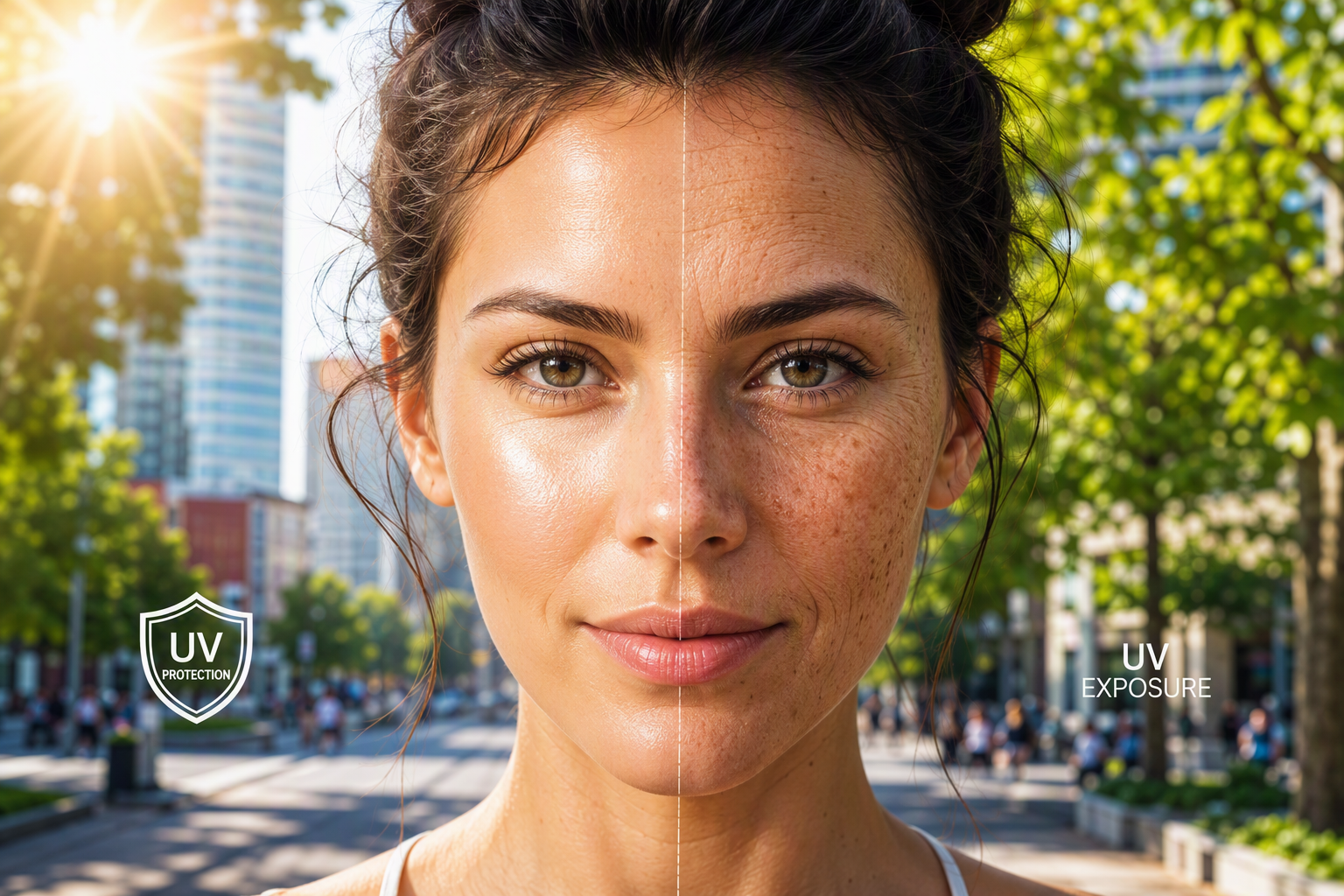
Sun exposure is the main cause of extrinsic change in skin. UV rays can lead to oxidative stress. They also disrupt the skin’s normal repair. This breaks down the skin with time. Ultraviolet radiation that you get over and over again is linked to skin aging. It causes uneven pigmentation, a rough feel, and fine lines.
The effects of sun damage do not just change how you look. Sun damage over time can raise the risk of skin cancer. This is true when you get lots of sun exposure for many years. Parts of the body that get a lot of daylight, like the face, neck, chest, and hands, are the first to show signs.
| Effect of UV radiation | How it shows up on skin |
|---|---|
| Oxidative stress in skin cells | Dullness and early visible wear |
| Collagen breakdown over time | Fine lines, rougher texture, laxity |
| Repeated sun damage | Age spots and uneven tone |
| Cumulative UV exposure | Higher skin cancer risk |
Air Pollution and Urban Skin Challenges
Living in the city can give you some new skin concerns. The air also has more pollution and dust. These and other environmental factors can cause problems with skin. Your skin may get some uneven color, look dull, or feel irritated. These effects may be from free radicals, oxidative stress, and other changes that happen with each exposure. When you face pollution and other things in the air again and again, the skin damage gets worse.
Pollution is not the same for all people. Some feel changes in how their skin looks or feels when the air is bad. The skin can feel more bothered if its top layer is weak. Using rough products on the skin can make this even worse.
Supportive steps often include:
- Wash the skin gently. Do not rub it hard.
- Focus on keeping the skin moist to help its barrier.
- Use antioxidants like vitamin c as part of a bigger skin routine.
Seasonal and Temperature Changes Impact
Weather can change your skin fast. A drop or jump in temperature, wind, and dry air outside can put stress on the skin barrier. These things can also lead to water loss in your skin. You may feel it as dry patches, tight skin, rough feel, or stinging when you put products on your face.
Cold times can be tough on people with dry or sensitive skin. When the air is dry and it is cold outside, your skin may not feel good. On the other hand, when it is hot and humid, you may sweat more. This can lead to clogged pores and may cause irritation for some skin types. Because of these changes, your skin’s health can feel hard to manage as the seasons go by.
Routines often need to change because of this. A cleanser or a strong product that works well when the weather is mild can feel too harsh when it gets rough outside. Paying attention to seasonal environmental factors helps you know when your skin may need gentler care and more support.
Indoor Environments — Heating, Cooling, and Humidity
Indoor places can change the way your skin feels more than you think. The air from heating and cooling systems often takes away humidity. This can make your skin feel dry and tight. You may feel that your skin is less comfortable. When there is less moisture in the air, the skin barrier can find it hard to keep water in.
That dryness can also change how our balance feels. Some people feel there is less softness to the skin and the skin elasticity goes down. Others can notice changes in oil production because the skin tries to make up for the dryness. Depending on your skin type, you may get both dryness and some clogged pores.
If you feel that your skin gets worse when you are inside, the air indoors may be the cause. You should notice signs like dryness, itching, or more sensitivity. When this happens, you can change your care routine. Use softer cleansers. It can also help to use products that give your skin more support and protection. This way, you may feel better even if the air inside is not good for your skin.
Lifestyle Habits That Influence Skin Health
What you do every day can help your skin or make it feel worse. Lifestyle choices like what you eat, how much water you drink, how well you sleep, and what bad habits you have will show up in your skin over time. These daily habits decide how your skin fixes itself and how strong the signs of stress are.
Simple changes can make a big difference. A balanced diet, plenty of rest, steady hydration, and regular exercise help you feel good and look good. Up next, you will see how some habits can keep your skin strong. There are others that can hurt it and lead to problems you can see.
Diet Choices that Help or Harm Your Skin
Food choices play a big part in how your skin looks and feels. A balanced diet is good for healthy skin. It helps the skin heal, keeps it moist, and supports collagen production. Eating foods that have many nutrients can help protect the skin from oxidative stress. They can also make your complexion feel and look more even and comfortable.
Helpful options often include:
- Fatty acids can be found in salmon, sardines, flaxseeds, and walnuts.
- Leafy greens and produce with lots of water help with staying hydrated.
- Vitamin C comes from citrus fruits, strawberries, and bell peppers.
- Food with vitamin E, zinc, and selenium are nuts, seeds, eggs, and legumes.
On the flip side, eating processed foods, sugary drinks, fried foods, and drinking too much alcohol can make inflammation or dehydration worse. Some people may also find that dairy is linked to acne. Skin does not need to be perfect, but it can get better with good daily choices.
Sleep Quality and Skin Regeneration
Sleep gives your body a time to fix itself, and this goes for your skin too. While you rest, your skin can fix and renew itself better. If you get enough sleep, your skin usually looks more calm, fresh, and ready to deal with what comes during the day.
The opposite can also happen. Poor sleep and sleep deprivation may make your skin look dull and tired. A lack of sleep can also make dark circles stand out more. Some skin concerns may feel harder to deal with when you do not get enough rest. Over time, bad sleep habits can hurt skin health and make it harder for your skin to recover.
Getting enough sleep is just as important as having quality sleep. Keeping a steady routine helps you feel comfortable, look better, and feel stronger during the day. If you want to make your day better, sleep is one of the best places to start. A good night’s rest can help all of us feel better in many ways.
Daily Hydration’s Vital Role
Drinking enough water does more than just stop thirst. It helps the skin barrier work better and may ease the discomfort from dryness and water loss. If you do not have enough water in your body, your skin might feel less soft. It can look more tired, too.
Drinking plenty of water is good for you. foods with a lot of water in them can help, too. Hydration matters for overall health and comes up a lot when people talk about skin. Water on its own will not solve every problem, but it makes your daily life better.
Easy hydration habits include:
- Drinking plenty of water all through the day.
- Eating foods that have a lot of water in them like cucumbers, celery, and watermelon.
- Changing what you eat or drink if the weather or inside air feels dry.
Smoking, Alcohol, and Other Harmful Habits
Some habits put steady pressure on the skin. Smoking is linked to premature aging. It can make the skin look more tired and rough as time goes by. Alcohol can hurt the skin too. It dries out the skin, which can make it look dull and feel dry.
These bad habits can lead to more oxidative stress in the body. This can make it harder for you to feel better. If you also have poor sleep, eat the wrong foods, or feel a lot of stress, you may see the effects even more. The most common skin problems are breakouts, irritation, dryness, and uneven tone. These are things that people often notice first.
The good thing is that change can help. Cutting down on smoking and alcohol, and making better daily habits can help your skin get stronger. Making better choices may not take away what your skin faced in the past, but it can help lower stress and help your skin work better in the future.
Stress and Its Role in Skin Aging
Stress does more than change how you feel. When stress levels go up, it can also get to your skin health. The skin may feel more sore, not as nice, and problems can seem to stand out more. As time goes on, stress can make skin aging worse. The face may not look as balanced as before.
Many people see more skin problems when life gets busy or tiring. This is real and not just in your head. Stress triggers can make the skin look different and feel worse. This is why stress management should be part of any skin care plan that is meant for the long run or to help stop problems before they start.
How Chronic Stress Affects Skin
When you feel stress for a long time, it can keep the body tense. Your skin often shows this stress. When stress levels stay high, the skin can get more sensitive. It may feel less good. It can also take more time for skin to feel normal again after any irritation. This means skin concerns feel harder to deal with.
One reason is trouble with the skin barrier. A skin barrier under stress may not keep in moisture well, and it might get irritated more easily. This can cause more dryness, redness, and the skin to feel sore. It is even harder if your skin already faces things like weather or uses too many strong products.
In daily life, you may see more skin problems. The skin can look dull, feel irritated, or older issues can get worse. Chronic stress is not the only cause, but it can make other things feel more serious. Healing from flare-ups may also feel slow.
Signs of Stress Showing Up on Your Skin
Stress can show clearly on your face and skin. During hard times, you may see that you look more tired. You might feel less comfortable, or have skin flare-ups that come up with no warning. These changes happen often because stress triggers can change how your skin looks and feels.
Signs often include:
- You may see dark circles, and the area around your eyes can look tired.
- Fine lines could look more clear than before.
- There can be more dryness, redness, or it could feel irritated.
- Other skin problems may feel harder to calm.
These signs do not always mean there is lasting harm, but they do show that your routine may need some support. If stress stays high, unhealthy skin patterns may keep going for longer. That is why it helps to see the early changes. Respond with rest, softer care, and a better daily plan.
Effective Ways to Manage Stress for Better Skin
Good stress management helps your mood. It helps your skin’s health too. You do not have to have a perfect routine. The main thing is to build steady habits. Try to do things every day that lower stress and help your body feel better. Over time, you will feel and look good.
Supportive steps often include:
- You need to do regular exercise. This helps your body move blood better and is good for your total wellness.
- Make sure you get quality sleep at the same time each night.
- Try simple calming practices. A few are deep breathing, meditation, or yoga.
These habits can help you get healthier skin. They do this by lowering the strain that stress puts on your body. Getting better rest, moving more, and keeping a good routine also help you in other ways. You can make better choices about sun protection, drinking water, and skin care every day.
Building a Routine for Healthy, Age-Resistant Skin
A good skincare routine can be simple. Most of the time, using fewer products that are picked well helps skin health more than having a lot on your shelf. It is important to be consistent. Doing the same routine every day helps your skin more than trying new trends. Stick to this plan if you want to keep your skin safe and see less damage over time.
The best way to take care of your skin is simple and fits you. A consistent skincare routine should work with your skin type, where you live, and what you need. If you use a personalized plan, it can help protect your barrier. It can also lower irritation. This makes skin care feel useful and not too hard.
Protective Measures Against Environmental Damage
Daily protection is a strong habit to have. Many things in the environment like UV exposure, pollution, wind, and dry air can hurt the skin if you are around them often. If you practice protection before you go out every day, it works better than doing it once in a while. Over time, stopping these environmental stressors each day helps your skin. Make protection part of your routine.
Core protective measures include:
- Use sun protection every day with broad-spectrum SPF 30 or higher.
- Wear protective clothing like hats and sunglasses.
- Wash your skin gently to get rid of buildup, but do not scrub.
- Choose skincare products that help keep the skin’s barrier strong. These can be moisturizers and products that have antioxidants like vitamin C.
These habits can help make sure you do not have extra damage and feel good every day. They also cut down the risk that a small problem turns into something bigger. If you want ways to stop skin issues and signs that you are getting older, use daily protection. Try to keep doing it the same way every day.
Creating a Personalized Skin Care Routine
Your skincare routine needs to fit your skin type, not just what is trending for other people. Dry skin, oily skin, sensitive skin, acne-prone skin, and pigment-prone skin all need their own care. This is why a routine made for you will often work better than picking all the same skincare products that are popular with others.
A consistent skincare routine usually begins with simple steps. Clean your skin gently. Use sunscreen every day. Choose a moisturizer that keeps the skin strong. After these basics, you may add products like antioxidants if your skin concerns need it and your skin can handle them. Doing too many active steps in your skincare routine can hurt your skin.
If you want to know what daily changes help the most, keep it simple and use the same routine. A good treatment plan made for your skin type and where you live works better than changing products all the time or using strong ones that make your skin feel worse.
When to Consult Skincare Professionals
Some skin changes need more than home care. If you notice redness that will not go away, color changes on your skin, rough sun spots, or a new mark, it is good to get professional care. These problems are not just a normal part of the aging process.
Professional help can be good when your skin worries start to feel annoying. The right support lets you deal with dull skin, uneven feel, big pores, or light spots. A treatment plan made just for you can care for your skin health. It stops you from getting more stress from guessing or trying things that may not work.
A careful check can help you tell the difference between small worries and things that may need to be seen by a doctor. It also gives you a real idea of what to expect. The goal is not to say your skin will be perfect, but to make a safe plan just for you. This plan should help you feel good now and help your skin look better over time.
Conclusion
In short, the way our environment and the choices we make each day affect skin health in a big way. We should notice things like sun rays, dirty air, and stress. These can change how healthy skin looks and feels. You can help your skin look young and feel good by taking steps to protect it and by starting a skincare routine that works just for you. A few changes in what you eat, drinking more water, and some simple stress management can also help a lot with skin health over time. If you want to work on your skincare routine, you can get advice that fits your needs by booking a free talk with our experts. They are ready to help you have healthy skin.
Can exposure to pollution make skin age faster?
Yes. Pollution is one of the main environmental stressors that can make skin aging happen faster. It can raise oxidative stress and make more free radicals. This may make the skin barrier weaker, cause swelling, and also lead to dull skin, patches, and other changes you can see as time passes.
Which lifestyle changes are most effective for improving skin health?
The most helpful changes you can do for skin health are easy to start. Try to eat better. Make sure to get good sleep every night. It is good to drink enough water. Stay away from habits that harm you. Each day, use skin care that keeps the barrier safe. Regular exercise is also important. It helps you feel well and makes your skin look and feel better.