Key Highlights
- India still has a high tb burden. Public health is getting better, but the problem is not gone.
- The Government of India and the Ministry of Health are doing more for tb. They have made tb detection better, helped more tb patients, and given more support.
- New data in the global tuberculosis report say tb incidence and tb deaths in India have been going down since 2015.
- A rise in tb cases in notification numbers comes from better case finding most of the time. It does not always mean the tb epidemic is worse.
- Drug resistance, poverty, and gaps in rural areas make tb elimination hard to reach.
- The TB Mukt Bharat work fits with the End TB Strategy. It also goes with India’s goal to end tb by 2025.
Table of Contents
Introduction
Tuberculosis is one of the hardest problems for public health in India. Even with better plans for tb control, the tb epidemic still hurts many people. It brings sickness, lost days at work, stress in homes, and many deaths that can be stopped. The tb infection comes from mycobacterium tuberculosis, which spreads fast. This is why early detection and staying with treatment are so important. India has made good progress with this. But there is still a long way to go. To understand why, you need to see how big this disease is and what keeps people from moving forward.
India’s Tuberculosis Burden and Historical Context
India has the most people with tb in the world. It is about 27% of the global tb burden. In 2022, there were an estimated 2.82 million new cases of tb. That means for every 100,000 people, 199 got the disease. tb is caused by mycobacterium tuberculosis. This disease puts a lot of stress on families and health workers.
Still, the picture keeps changing. The tb report and India TB report say that from 2015 to 2022, India lowered tb incidence by 16%. India also brought down tb deaths by 18%. This result is better than what most of the world can do. That is good to know, but India still has a big problem. The next parts talk about who gets tb the most. They also show how policy has changed.
TB Prevalence and Demographics Across India
Across India, tb cases can be found in every age and in all groups. The problem gets worse for people who be at higher risk. The program talks with people who have HIV, people with diabetes, those who do not have enough good food, people living in prisons and old age homes, and also in tribal areas or other places that do not get much help. Pulmonary tb stays a big worry. It passes on most to other people. A study for 2022 shows tb deaths reached 331,000. This means tb is still a big problem.
| Indicator | India Situation |
|---|---|
| Estimated new cases, 2022 | 2.82 million |
| Incidence rate | 199 per 100,000 population |
| Estimated deaths, 2022 | 331,000 |
| Share of global tb burden | Nearly 27% |
| HIV-positive among tb patients | About 2% |
India has improved how it handles tb infection. From 2015 to 2022, the cases and deaths from tb went down. Now, there is better notification, so tb patients are found sooner. With good tracking, we know more about who gets tb, their ages, and how tb infection moves across the country.
Evolution of National Tuberculosis Control Programs
India now gives more attention to tb elimination after many years spent in growing tb control. A big shift happened in 2020. The government of india changed the name of the Revised National TB Control Programme. It is now called the national tb elimination program or national tuberculosis elimination programme. This new name shows the plan is strong. The government wants to end tb in India by 2025. That is five years before the time set as a worldwide goal.
The national strategic plan 2017-2025 gives a simple way to move forward, and it is built on four main parts. The first part is to Detect. The second part is to Treat. Then, there is Prevent, and Build.
This plan is made to find issues early. It uses good drugs for treatment. It also works with the private sector. The plan does contact tracing and stops the spread in the air. At the same time, it looks at the social issues that make things worse.
Results show this has worked at times, but not always. The number of reports went up fast. Now, there are more people who use private reporting. Treatment works better now. Still, the disease can be found in many places. So, the program made their response better, but it did not fix the problem all the way.
Key Challenges Facing India’s Fight Against TB
India has a big tb epidemic. The tb challenge is not because people try less. The main problem is slow tb detection and drug resistance. The healthcare infrastructure is not the same in all places. Even when the services be there, it is not easy to get help to every person in rural areas and high-risk groups.
There is also the problem of making sure care does not stop. Many tb cases need months of help. It is important to have good food and check-ups during this time. If people with tb are not found early or if treatment stops, things get worse fast. The sickness can keep spreading to others.
The next two parts will look deeper at resistant disease. They will also talk about the social reasons behind these gaps that stay open.
Multi-Drug Resistant Tuberculosis (MDR-TB)
Drug resistance is a big problem in india’s fight against TB. When TB does not respond to drugs, tb treatment gets harder. It takes more time to heal. It is tough for people to stick with treatment until it’s done. The numbers show that drug-resistant TB turns up in 2.5% of new cases. It shows up in 13% of cases where people had treatment before. This makes it clear that not finishing tb treatment or the treatment not working can be risky.
In 2023, the program found 63,939 cases of MDR-TB. This tells us how big the problem is. It also shows that their work to find people with drug-resistant disease is getting better. India has made oral treatments for drug-resistant TB shorter. It has opened more places for help. Now, there are 792 centers where people can get treatment.
MDR-TB is still a big problem. People with resistant tb cases might stop taking their medicine if they feel bad side effects. Some also stop if they have to spend money and time on travel. When treatment adherence goes down, treatment outcomes are not as good. If doctors and workers do not manage these tb cases well, it gets much harder to get rid of the disease.
Social and Economic Barriers to TB Control
TB is more than just a sickness. It is linked to poverty, bad food, and how close people are to help. Not knowing about TB is also a big problem. These things make tb control harder. People in cities feel it, and people in rural areas feel it too. But those in rural areas feel it more. People who do not get much care face these problems most.
There are many things that make it hard for tb patients to be found early. Some things also stop them from finishing their treatment.
- Not eating enough can make the risk go up and also slow the time it takes to get better.
- People in rural areas might need to travel a long way. This can make it harder for them to have tests or go back for follow-up visits.
- If there is not much public awareness, people might miss symptoms or wait too long to get help.
That is why public health is more than just medicine. In India, people get help with food to stay healthy. The country works on community engagement. This means that people talk with others and work together. The country reaches out to people who face problems. If they do not fix money and social issues, just seeing a doctor will not stop the disease.
Government Initiatives for Eliminating Tuberculosis
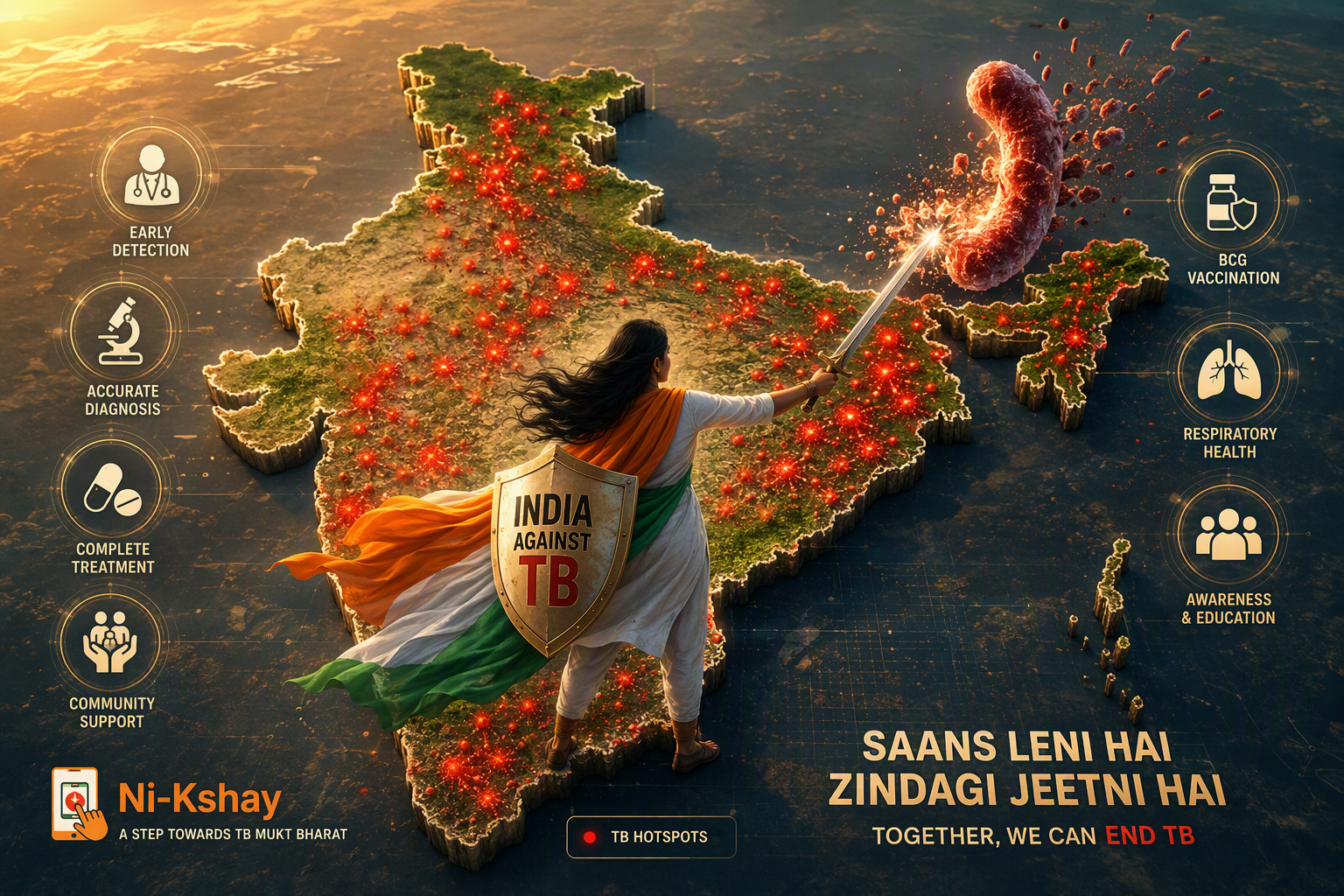
The government of india is working with the ministry of health on tb elimination. The major plan here is called the national tuberculosis elimination programme. The aim is to reach tb mukt bharat by 2025. This means that india wants to be free from tb.
This program offers many services. You get free diagnosis and free treatment if you have tb. There is also help to stop tb before it can start in people. The private sector helps with this work too. The ministry of health and the government of india also support families who are most at risk.
You can see that things are getting better. There are stronger notifications, more checks, and more people getting better. But, a lot of people still have TB, so it is not all good. There are two main parts to the plan. One piece is helping patients fast through Pradhan Mantri TB Mukt Bharat Abhiyaan. The other is the bigger national tb mukt bharat strategy to end TB.
Pradhan Mantri TB Mukt Bharat Abhiyaan
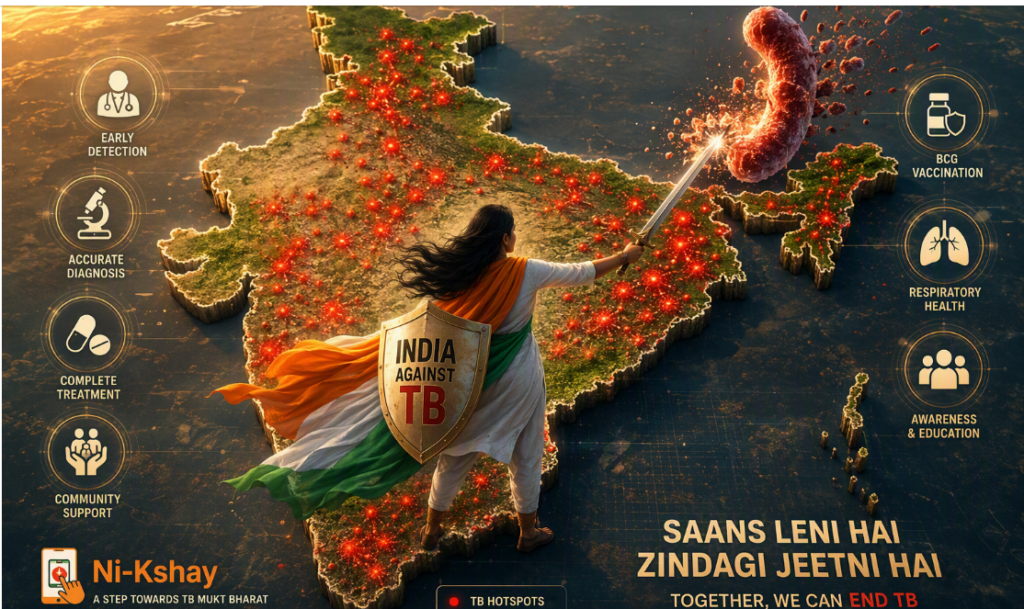
Pradhan Mantri TB Mukt Bharat Abhiyaan began on September 9, 2022. The aim of this program is to help tb patients. It wants to make treatment better. It also hopes to get more people involved. The initiative asks companies and groups to work together as part of their social work. This turns the fight against TB into a movement for all. Everyone can join in and support tb mukt bharat.
The work that needs to be done is large. By July 31, 2024, more than 1.6 lakh Nikshay Mitras had been linked to 11.4 lakh tb patients. About 11.5 lakh people with tb patients agreed to get help from others in their area. Also, almost 18 lakh kits had been given to them. A lot of well-known people, officials, and local leaders are also joining this effort.
Support also helps with direct benefit transfer to improve nutrition. With Nikshay Poshan Yojana, patients who qualify will get ₹500 each month while they get treatment. This makes care about more than just medicine. It helps with real needs that can change how people feel and get better.
Strategies for TB Elimination by 2025
India wants to stop tb by the year 2025. The country is working on a faster and focused national tb elimination program. This plan is a part of the sustainable development goal. But India wants to do it before other countries. The main aim fits with the End TB Strategy.
Key strategies include:
- The case finding needs to be strong. It should focus on people who face the highest risk and in places where they need more support.
- It is good to know early if someone has the illness. That way, they can get the best treatment fast with proper medicine.
- To keep the illness from spreading, we have to follow up with people who were close to those affected. We must give them special care to keep them safe and well.
The program does more than just offer services. It works to build better systems. This means making laboratories stronger and getting the private sector to share case reports. It also includes having more support from people in the community. The program works on issues in society that impact health. Because of these steps, more people know about the program and can use it. Still, reaching the goal for 2025 is hard. The reason is, in India, there is a lot of disease burden.
Advances in Diagnostics and Treatment
India has spent a lot to improve diagnosis of tb. Now, tb detection is much faster. This matters because when people wait, more can get sick, and illness can get worse. With more labs and new diagnostic tools, it is easier to know if someone has tb. They can also find out early if there is drug resistance.
Treatment is better now. The program gives free medicine to people. Services are also closer to their homes. It uses shorter oral treatments for diseases that are hard to treat. Patients who have higher risks get special care. Because of this, treatment outcomes are improving. But it is still important to check on patients often and over time. The next parts will look at what’s new in finding the disease and the way we treat it.
Expansion of Diagnostic Services and Technologies
Diagnostic capacity in India has gone up in the last few years. In 2023, the program did about 1.89 crore sputum smear tests. It also ran 68.3 lakh nucleic acid amplification tests. In 2014, there were 13,583 Designated Microscopy Centers. Now, in 2023, there are 24,573 centers. India opened 6,496 new molecular diagnostic labs. The country also set up 81 culture and drug susceptibility testing labs.
This expansion is good for early detection. It also helps with better case detection. It is great when old systems are slow. The advice is to use mobile diagnostic units. These units use digital X-rays and AI to read results. These tools can reach people who live far from big towns.
Important advances include:
- The number of places with rapid molecular diagnostic tools is increasing.
- Laboratories are bigger now and can test for some diseases that are not easy to treat.
- Mobile diagnostic units reach people who live in spots that are tough to get to.
Improvements in TB Treatment Protocols
TB treatment in India is now made with the patient in mind. People can have free medicine as part of the plan. The services are near people’s homes. The plan gives shorter full-mouth treatments for people with drug-resistant TB. There is extra care for those with very bad signs or who have other tough issues like diabetes, HIV, low weight, or use of drugs and alcohol. This is the new way the country handles TB treatment.
These changes are beginning to give good results. A big part of notifications now come from the private sector. The treatment outcomes are still strong. The treatment success rate was at 84% in 2021. It went up to 85.5% in 2022. In 2023, it got even better at 87.6%. This shows that the treatment outcomes are seeing more progress now.
Preventive treatment is growing in India. A full set of rules for preventive treatment began in 2021. This shows that India works to treat sickness that is active. It also tries to stop new illness before it starts.
The Role of Public Health and Community Engagement
Public health is very important in India’s fight against TB. It brings together diagnosis, treatment, prevention, help with food, data, and reaching out to people. All these parts must work as a team for good results. If they come together, the system finds and helps more people. If not, even the best clinics can miss people who need help.
Community engagement is very important. Healthcare workers, TB champions, caregivers, and local supporters help people learn about TB. They help people feel less fear and encourage them to finish treatment. India’s program now treats community involvement as something that must be done. It is not seen as something extra. The next parts will show you how case finding, education, support, and advocacy work together where people live.
Community-Based Case Finding and Education
Community-based work helps us reach people who may not visit a clinic early. India uses a planned way to go out and find new tb cases in groups that have a high risk. These groups include people with HIV, diabetes, poor nutrition, those who live in homes or hostels, tribal areas, and others who may not be easy to find. With this method, India has found about 3 lakh more tb cases since it began.
Education matters just as much as screening. The states get support with community engagement and self-learning tools for TB champions. These tools help raise public awareness. They also help the general community find cases early and get case detection done sooner.
Individuals and community leaders can help by:
- Tell people who feel sick that they should get tested as soon as possible.
- Give right information about the illness and help stop negative feelings toward it.
- Give help for nearby outreach and check on patients when you can.
Patient Support Systems and Advocacy
For many tb patients, getting support besides medicine helps them finish treatment. India’s support plan gives free tests. It also gives free drugs that meet quality rules. Every month, there is money help while they get treated. The plan knows not eating enough or money problems can slow recovery. It can also make it harder to stay with the treatment.
Nikshay Poshan Yojana is a key part of this plan. Since April 2018, it has given ₹500 each month to help with food while people get treatment. This money goes straight to people’s bank accounts through direct benefit transfer. By 2023, about 1 crore people got help under this scheme. The total money given was ₹2781 crores.
Advocacy makes these benefits even better. Incentives for treatment supporters and ASHA workers give more reasons for them to help. TB Vijeta and Ni-kshay SAATHI models bring in support so there is a network around patients. This kind of patient support helps keep their care going. It also makes treatment feel easier for them.
Tracking Progress and International Collaboration
India needs good ways to track TB cases. The country must check how many people have TB and look at how labs are working. It is also important to know the treatment success rate. Surveys and models that guess how the disease may spread help too. These things let the government know what is working well and what is not. Good data systems make a big difference. If there are a lot of TB cases and the data is not good, people will not see real changes happening in their area.
International teamwork makes this work easier. India gets help in the form of technical advice and rules for reporting from all over the world. There are also many people working with India who want the same goals. In the next parts, you will learn how monitoring tools work. You will see how tb partnership with global groups adds to the national response.
Monitoring and Evaluating TB Control Efforts
In India, watching the TB program is not just about tracking how many people have the sickness. The country made a math model for TB by working with WHO and experts from India. They look at facts from studies, reports on deaths, and open records to know the number of new cases and deaths. This way was also changed to look at each state and union territory from 2015 to 2022.
Data reporting gets better when there are case notifications and digital systems. The Nikshay portal helps with this. But the main plan is to make sure that reporting is tied to the patient. We also need to track support for them. The goal is to help notifications from the private sector to grow.
Evaluation also happens in smaller parts of the government. The ministry uses surveys in local areas to help with tb control. They watch private drug sales and look for missed reports in districts and states. This helps them guess the number of cases that are out there.
When this is added to the treatment success rate going up, it shows a clear picture for tb control. It lets people see where things are good and where things still need to get better.
Partnerships with WHO and Global Organizations
India does not fight TB alone. The World Health Organization works in India to help measure how TB spreads. It also helps plan what to do next and checks how things are getting better. This help lets India see how big the problem is.
When India understands the issue, it can make better plans. The country can then take steps that really work to fix the problem.
International collaboration helps people share what they know. The program sets up Technical Support Units in the country and in the states. It brings together government, companies, and NGOs to work as a team. This makes tb partnership work stronger. New ideas can be used faster because all these groups come together.
This help is a part of the End TB Strategy. It helps fight the global tb epidemic. Many people watch India because it has a lot of tb cases. When world groups support India, they also help fight the global tb epidemic in other places.
Conclusion
In the end, to fight tuberculosis in India, there needs to be a mix of steps that cover the problem and deal with the hard parts. Good plans from the government help in this. New ways to check for TB and better treatment are important. A strong focus on community engagement gives people hope in the fight against TB. If we grow public awareness and join with groups from other parts of the world, India can move ahead in getting rid of this disease.
It is important that all people and their communities know what is happening and take part in these actions. If we all stay together, we can have a healthier future and get rid of tuberculosis.