
Key Highlights
- Environmental toxins are found in the air, water, soil, and in many products people use every day. These can be harmful for human health.
- Air pollution is a big health risk for people. It can lead to lung and heart problems.
- People can be exposed to toxins just by breathing, eating or drinking, and getting it on the skin during day-to-day life.
- A few things that cause concern are heavy metals, volatile organic compounds, pesticides, and harmful chemicals in household products.
- Young children, pregnant women, and older adults might have more health risks because they can face chronic exposure over time.
- There are easy steps you can take in your home to make air quality better and protect your family from everyday toxin exposure.
Table of Contents
Introduction
Environmental toxins are part of the world today. You cannot always see or smell them. They can be in the air from industrial activities, fossil fuels, or from chemicals used on farms. These toxins can also be found in water sources and in household items. Some environmental toxins may not hurt us at low levels. But over time, being around them can have an effect on human health. This is why the topic affects public health and your own choices. When you know about where these exposures come from, it helps you protect yourself and your family.
Understanding Environmental Toxins in Daily Life
You might not know it, but you meet environmental toxins every day. These harmful chemicals are in the air, drinking water, soil, and food. Many things that you use at home have them, too. Environmental pollution from industry, farming, and using fuel has made people get close to these toxins more often now.
Some regular examples are heavy metals, pesticides, organic compounds, volatile organic compounds, and other harmful substances. They get into indoor air, household products, or water sources that are not clean. To know about the risk, it is good to start by understanding what it is and where it is coming from around you.
Definition and Overview of Environmental Toxins
Environmental toxins are harmful substances you can find in the world around you. They can come from industrial activities, farms, or nature. A lot of these harmful substances are environmental chemicals. This includes things like pesticides, herbicides, heavy metals, and toxic chemicals. Some of these are used in consumer products, while others get released as pollution.
In daily life, you often see environmental toxins like air pollutants, water pollutants, soil pollutants, and chemical pollutants. Some are made by people, and some can be found in nature. There are also biological toxins, like certain bacteria, viruses, and parasites. These can move through air, food, and water.
There are some dangers with radioactivity, like radon gas and radioactive waste. All these environmental toxins can be found in different places, like in things around the house, fish that are not safe to eat, and water that is not clean. It is important to know what they are, so we can start to lower how much we are exposed to them.
Major Sources of Environmental Toxins in India
In India and other places that have many people, environmental pollution is common. It mostly comes from big sources that people see around the world. Industrial waste, fossil fuel use, and chemicals from farming add to this. These things get into outdoor air, water sources, soil, and even the food people eat.
Common source categories include:
- Air pollution can come from fossil fuels, industrial emissions, and other air pollutants.
- Water pollution happens because of industrial waste, farming runoff, and when wastewater is not handled safely.
- Some household items and synthetic products may have harmful substances in them.
Inside the home, you may be exposed to things like nonstick pans, cleaning products, personal care items, and building materials. This shows the risk is not only outside in factories or on roads. It can be inside, too. That is why you need to know how you get exposed, not just where the risk comes from.
Pathways of Environmental Toxin Exposure
Environmental toxins get into the body in three main ways. These are breathing them in, eating or drinking them, and having them touch your skin. You can come into contact with these toxins every day and not feel it most of the time. This is how toxin exposure can happen in regular life.
Air pollutants in indoor air and outdoor air can be breathed in. Harmful substances in drinking water, food, and water sources can be eaten. Some chemicals from household products can touch the skin. These paths show how environmental pollution can hurt health in ways people see and some they may not notice.
Airborne Toxins and Inhalation Risks
Breathing is how environmental toxins enter the body quickly. Air pollution has many gases and tiny particles. These can get into the lungs and the blood. This risk comes from both outdoor air and indoor air in homes and buildings.
Important airborne toxins include:
- Particulate matter, mainly the smaller kind, can have more health risks.
- Volatile organic compounds come from everyday things we use and from building materials.
- Sulfur dioxide, carbon monoxide, ozone, and nitrogen oxides are made when burning fuel.
Indoor spaces may have hidden sources of air pollutants. Many air fresheners, cleaners, and other consumer products release these harmful chemicals into the air. When you are outside, the air gets polluted mostly from traffic, power plants, and industrial emissions. Breathing in these air pollutants over time can cause health problems. You might get respiratory issues, lung cancer, heart disease, or other serious conditions.
Contaminants in Water and Their Entry Routes
Water pollution can harm your health when harmful substances end up in water that people use to drink, cook, or grow food. Heavy metals like lead, mercury, and arsenic may get into water sources. This often happens from industrial waste. Substances such as pesticides, herbicides, microplastics, and germs can also contaminate water sources.
You often get exposed by taking in or eating things. This means harmful stuff can get into your body when you drink tap water. It can happen if you eat food made with water that is not safe or eat fish that has toxic substances. Sometimes, bad water quality can hurt the larger food chain and the wildlife around you.
A good water filter can help make drinking water safer. Safe ways of using and drinking water are also important. Doing water quality tests and treating wastewater help the whole community. These things matter because bad water can lead to many health issues in people around the world.
Common Environmental Toxins Affecting Everyday Health
Some environmental toxins often come up when talking about health. People see these in many places, and they are tough to stay away from. The list has heavy metals, organic compounds, volatile organic compounds, pesticides, and industrial chemicals. It also includes some dangers from radiation like radon. Each one of these can cause different health problems.
Some exposures can make your eyes or skin feel irritated for a short time. Other exposures can raise the risk of cancer, lead to organ damage, or cause neurological disorders if you are exposed for a long time. Because harmful chemicals work in their own ways, it helps to look at the biggest groups. We will start with heavy metals and indoor pollutants.
Heavy Metals: Lead, Mercury, and Arsenic
Heavy metals are one of the most well known environmental toxins. They can stay in water, soil, and food for a long time. Some common examples are lead, mercury, and arsenic. People are very concerned about these. You may find them in industrial waste, dirty water, or even food like fish, which can pick up these toxins over the years.
These substances can cause serious health risks. When you are in a place that is not clean, you might feel headaches, chest pain, skin irritation, or stomach illness in a short time. If you have ongoing exposure, you may get neurological disorders. There can also be organ damage, and an increase in cancer risk.
| Heavy metal | Common entry route | Possible health issues |
|---|---|---|
| Lead | Drinking water, contaminated environments | Nervous system harm, long-term health risks |
| Mercury | Fish and contaminated food chain | Neurological disorders, organ effects |
| Arsenic | Water pollution and industrial contamination | Cancer risk, long-term systemic harm |
Volatile Organic Compounds (VOCs) and Indoor Pollution
Volatile organic compounds are gases that come from many things we use every day. They are important in air pollution inside homes and offices. These organic compounds can gather indoors and change how good the air is. You might not see them, but they still affect indoor air quality.
Common indoor sources include:
- Building materials and synthetic finishes
- Cleaning products and air fresheners
- Other household products that release air pollutants
Exposure to volatile organic compounds can cause breathing problems and lead to more health risks from poor indoor air. In homes that do not have good airflow, these organic compounds can stay inside for a long time. This is why indoor pollution is important to pay attention to. For many people, the air in the home is a big source of daily toxin exposure.
Pesticides and Agricultural Chemicals
Pesticides and other farm chemicals be used often to control insects and help crops grow. But the chemicals can get out of farms. The chemicals can spread through runoff, contaminated soil, food problems, and water pollution. This means people can be exposed to the chemicals even if they do not work on farms.
These substances can be connected to many health risks. The effect depends on how much you get exposed and for how long. They may cause skin problems, stress to organs, chronic diseases, and can harm the nervous system or the reproductive system. Some chemical pollutants may also lead to birth defects and changes in genes.
Their impact is not just on people. Agricultural chemicals can mess up ecosystems. They can get into water and cause problems there. These chemicals move through land and water. So, they are still an important part of the bigger talk about everyday toxin exposure.

Everyday Products That May Contain Environmental Toxins
Many people feel that environmental toxins are from factories or from streets that are not clean. But, household products can have harmful chemicals too. You can find these in cleaning supplies, personal care products, food packaging, nonstick pans, and things used in the home.
People worry more about being around low levels of something again and again, not just from one big event. That does not say that every single product is bad by itself. But what you use every day might build up. It is good to look at different kinds of products. This can help you make better choices without feeling scared.
Household Cleaning Agents and Personal Care Items
Cleaning products and personal care products are things we often use in the home. Some of them let out toxic chemicals into indoor air. When you spray surfaces or use things that smell good, you might add more chemicals into the air inside, sometimes without even knowing it.
Products often discussed in this area include:
- Cleaning products can let out fumes or air pollutants.
- Personal care products may have environmental chemicals in them.
- Air fresheners and other household items can change the indoor air.
The health risks depend on the type of chemical and how much you are around it. Some people feel irritation or have respiratory issues before anything else. Chronic exposure can cause more health problems over time. If you want to lower these risks, try starting with the products you use the most.
Plastics and Food Packaging Materials
Plastic containers and food packaging materials are around us every day. Some of these products have harmful substances. These substances can get out into the environment. In some cases, they can go into food or water. This matters, because we all use these materials a lot.
One well-known example is bisphenol a. It is used in many consumer products, along with other man-made chemicals. People worry that these items add to the total chemical load around you. When these substances get into the environment, they can move through the food chain.
Many people want to cut down how much they touch certain things. That’s why they pick options like stainless steel for food and drink containers. The idea is not to be perfect. The aim is to have less contact with stuff you do not need over time.
Health Impact of Environmental Toxins on Different Body Systems
Environmental toxins can harm many parts of the body. The effects depend on what you come in contact with. You may feel changes in your lungs, heart, brain, liver, kidneys, immune system, or reproductive system. Some problems happen right away. Others show up as time goes on and you have long, chronic exposure.
This is why symptoms are different for each person. In some people, you may see breathing problems. There can be changes in the brain and nerves. Hormones may not work right. Some might get chronic diseases. A few can have birth defects. The next parts tell how the body’s main systems can be changed.
Respiratory and Cardiovascular Effects
Air pollution can cause big issues with breathing and can put strain on the heart. When you breathe in dirty air, tiny bits and gases can go into the lungs. These can even pass into the blood. This can make it hard to breathe and can also be rough on your body’s blood flow. Air pollution is not good for people and can lead to serious respiratory problems.
Particulate matter is a worry because the small pieces can get deep inside the body. After some time, being around it can cause stroke, heart disease, lung cancer, and infections in the lungs. At first, people might feel coughing, feel short of breath, or notice irritation. But, the bigger dangers like heart disease and lung cancer come later.
Both indoor and outdoor air can affect us. Pollution from your home, cars on the road, and factories can all make air quality worse. This is why air quality is a top public health issue. If you be exposed to bad air again and again, there is a much higher risk of health problems that last a long time.
Effects on Brain Health and Cognitive Function
Environmental toxins can be bad for brain health and the way you can think. Some chemical pollutants and heavy metals may harm the nervous system. As time goes by, this can change how the brain grows, how you handle information, and how you feel stress.
The research shows that there is a big risk of neurological disorders. Being around some chemicals for a long time can hurt the nervous system and lead to problems that stay with you. For kids, some common chemicals can cause lower IQ and trouble with paying attention.
One reason this can happen is that some toxins disturb how the body works. These toxins can also raise oxidative stress. If the stress keeps going on, the brain might get more vulnerable. So, keeping your mind sharp is not just about getting older. You have to start avoiding things that cause trouble early in life.
Hormonal and Endocrine Disruption
Some environmental chemicals can mess with the endocrine system. The endocrine system helps to control hormones, how we grow, how we reproduce, and how we develop. If this system does not work right, many parts of the body feel the effects. This is why problems with hormones are a big worry when it comes to toxins and health.
Chemicals tied to this discussion include:
- Polychlorinated biphenyls can be found in soil that is dirty and from factories.
- Phthalates and other fake chemicals are often in places we use every day.
- Other chemicals in the air or water can hurt how the body grows or affects having babies.
These exposures matter a lot for pregnant women, fetuses, and babies. Chemicals can pass through the placenta. Some get to babies when they breastfeed. If exposure is bad, experts link it to birth defects and problems with development. Sometimes, the effects last, and there can be changes to hormones or how the body reproduces.
Influence on Metabolic Health and Weight
Environmental toxins can do more than harm breathing or skin. These can mess with how the body works. This can affect metabolic health. The information shows that many common chemicals may change the body’s normal ways, raise the chance of getting sick, and cause more problems in the body. The whole body feels the effects of environmental toxins.
When something in the body stops working right, health issues can spread. They may not stay in just one organ. The risk of getting chronic diseases goes up. These diseases often take a long time to show up. Changes in weight happen for many reasons, and it’s never just from one cause. Still, toxins can make things worse and add more stress to the body.
Chronic exposure is important because it is about the body having small meetings with something again and again for many years. These little contacts can change your health over time, and you may not notice it right away. When you lower any extra exposure, you help your body feel good now and you also help in keeping your metabolic health better in the future.
Vulnerable Populations: Children and Elderly
Not everyone is at the same risk from environmental toxins. Young children, pregnant women, and the elderly are more at risk. Their bodies are still growing, changing, or may not heal well from chronic exposure. So, the same place can be harder for them than for other adults.
Children often face more health risks than others. Older adults can have more problems, too, because they may be exposed to things for many years. For children and older adults, this can lead to more health risks, being less able to deal with sickness, and a higher risk of cancer or other bad health problems over time.
Why Children are More Susceptible to Environmental Toxins
Yes, young children can be more at risk from environmental toxins than adults. Their bodies and organs are still growing. Harmful substances can get in the way of that growth, especially during times when they change fast. This matters a lot for the immune system and the central nervous system.
Key reasons include:
- The body systems that are still growing can be affected more.
- If a mother is around harmful stuff while pregnant, the placenta may let it reach the baby inside.
- Babies may still get exposed to these things from breastfeeding.
These risks show why some chemicals can be linked to birth defects, lower IQ, attention issues, and other development problems. Kids have a lot of years ahead where early exposure may affect their health later in life. For families, this means prevention is important right from the start.
Special Considerations for the Elderly and Healthy Aging
For the elderly, environmental toxins can be tough to deal with. The body might not bounce back as fast as it used to. Years spent dealing with chronic exposure can build up in the body. This adds stress on organs and systems. Because of this, health risks feel more serious and harder to manage.
Healthy aging helps the immune system and makes people more strong. It cannot take away what has happened before. But good daily habits and less of what is harmful can cut extra pressure on the body. This way, healthy aging is about keeping stress as low as possible.
That is why it is important to focus on prevention as we get older. Cleaner indoor air and safer drinking water can help people feel better at any age. Cutting down on high-risk things at home also makes a difference. Even small steps can help older adults stay healthy for a long time.
Practical Ways to Reduce Environmental Toxin Exposure at Home
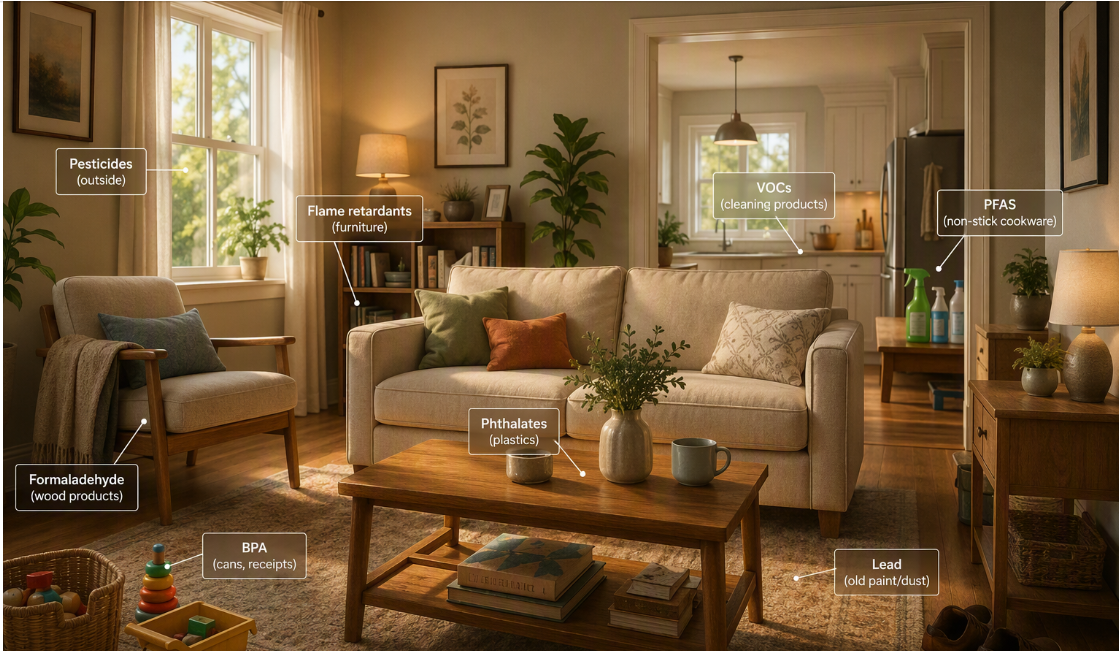
You can’t fully keep away from environmental toxins, but you can make their contact less in your home. Begin with what you use most often. Check the air, water, how you store food, and the way you clean things. Even if the exposure is at low levels, it’s important to care about it, as it can add up over time.
Simple steps to help are to make air quality better, use a water filter, and pick stainless steel instead of some plastics when you can. The Environmental Working Group gives resources that help people know more about what they get exposed to every day. The next part will show how to use these ideas for an easy way at home.
Creating a Low-Toxin Household Environment
Yes, you can lower toxin exposure at home with some easy changes. The goal is to make a home that has less contact with things that are bad for health. You do not have to change everything at one time. If you focus on a few things, you can still see a good result.
Helpful steps include:
- Use a water filter if you want safer drinking water.
- Pick cleaning products well. This helps lower indoor air exposure.
- Help make air quality better. You can do this with cleaner indoor habits and by knowing what in your house affects air.
You can check out the stuff you use every day in the kitchen and at home. If you switch some plastic containers to stainless steel, it may help lower contact with chemicals. Even small changes like this are best when you make them a habit. With time, they can help you feel that your home is cleaner and you have less unwanted exposure.
Conclusion
To sum up, knowing about environmental toxins and how they can change our health each day is very important. This can help you, me, and others live in a better way. Key things to watch out for include heavy metals and the chemicals that can hide in common household products. When we know what these things are, we can start to lower our risk and keep ourselves safe. By using easy steps at home, we can create a space with fewer toxins and protect those around us, like children or the elderly, who may get sick more easily. When we learn about these risks, we can make choices that are good for our health. If you want help with lowering toxin exposure in your house, feel free to ask for a free talk. Your health is worth it!
What are the most common health concerns from environmental toxin exposure?
Common health risks are problems with breathing, heart disease, issues in the brain and nerves, changes in hormones, and damage to organs. If there is chronic exposure to environmental toxins and harmful chemicals, the chance of having long-term diseases and cancer can go up. This is why these health risks are important for not just one person, but public health too.
Can simple lifestyle changes lower toxin exposure at home?
Yes. You can lower toxin exposure in your home in a few ways. Try to make air quality better. Choose cleaning products with care. Use a water filter. Use fewer household products that let out chemicals indoors. Small changes each day can help your home feel safer and cleaner.