Key Highlights
- Ayushman Bharat is an important move by the Government of India to help more people get health coverage and better healthcare accessibility.
- This program is built on two key parts: the Jan Arogya Yojana, and better primary healthcare through wellness centers.
- PM-JAY is known as the world’s biggest health protection plan. It helps poor and vulnerable families.
- The program makes it easier for people to get hospital care. It also helps lower the money that people have to pay from their own pockets.
- It also works with digital systems, health records, and brings more healthcare access to both rural and city areas in India.
- Even now, some things need to be fixed. These include awareness, enough staff, and gaps in putting the plan to work.
Table of Contents
Introduction
Ayushman Bharat is now one of the biggest national health projects in India. It helps with a problem that many families feel—healthcare access is not the same for everyone. A lot of people do not get good health help because care costs too much, hospitals are far, or health systems are weak. This program wants to fix that, so more people can get the care they need and pay less for it. Ayushman Bharat joins hospital help with better services close to home. It is not just words. Now, it gives real health support to millions of people in India every day.
Ayushman Bharat—An Overview of India’s Healthcare Revolution
The Ayushman Bharat initiative started in 2018. It wants to make healthcare access better in India. The goal is to help close the gap between the healthcare services found in cities and those in villages. The Ayushman Bharat initiative is most helpful for poor and vulnerable families. Many of these families delay medical care because they do not have enough money.
The program helps with universal health coverage. It brings together two important things. People can get care early at their local center. If they need a big treatment later, they also get financial protection.
The next parts talk about how this change started and why it is important for all.
Origins and Development of the Scheme
Ayushman Bharat started because the Indian government saw there was a lot of pressure on the country’s health system. There were more people getting sick, public health centers were not strong, and people had to pay a lot of money out of their own pockets. Before Ayushman Bharat, health insurance plans mostly covered hospital stays. They did not look much at basic or primary care.
The Government of India started Ayushman Bharat in 2018, using the National Health Policy 2017 as its base. This change was bigger than just health insurance. The idea was to mix local care delivery with financial protection for people who need advanced treatment. So, Ayushman Bharat went beyond just giving people health insurance. It became a way to make the national health system stronger for everyone.
Over time, the National Health Authority turned into the main group that runs and checks the work, especially for PM-JAY. In a short time, this idea grew into a big plan for the whole country. It now links national health needs with public hospitals, private hospitals, and digital tools. This fast progress shows how the plan moved from the idea stage to a system that really works for people all over the country.
Mission and Vision for Healthcare Access
Ayushman Bharat started with one idea. People should get treatment and not face problems because of money, distance, or bad services. Its main goal is to support universal health coverage. It helps families get both primary health care and hospital care.
This vision is about more than just a basic assurance scheme. It aims to make healthcare accessibility better for the people. A more connected system can help reach this goal. Local wellness centers help cut down on disease early. PM-JAY gives help for bigger health problems, when people need secondary or even more care. Putting prevention and treatment together is important. When healthcare does both, it works well for everyone.
The scheme has helped bring India closer to universal health care. More people can now go to get health care with less worry. The plan has made financial protection better for many, and there are more places to get health services. It has also made the healthcare infrastructure stronger across the country. While not every area has seen the same changes, more people feel safe to see a doctor. The fear of big costs is less for most, and this shows progress in health care for all.
Key Milestones in Ayushman Bharat’s Journey
Ayushman Bharat has seen quick growth in just a few years. Since it started in 2018, it has become a key national health platform. The program brings together nearby care, support from hospitals, and new digital tools. The steps it has taken show that healthcare is now reaching more people than before.
A few numbers can help you see this growth better. They also show why people talk about the scheme when it comes to lowering health expenditure for families who do not have much money. This is also true when there is a need to help with hospital admissions after someone needs serious care.
| Milestone | What it shows |
|---|---|
| 2018 launch | Ayushman Bharat formally began as a national reform effort |
| PM-JAY rollout | Large-scale hospital protection for poor and vulnerable families |
| Over 28,350 hospitals enrolled | Broader provider network across public and private systems |
| More than 519 million beneficiaries reached | Massive expansion of healthcare coverage |
| Over 160,000 COVID-19 hospital admissions covered | Important emergency support during the pandemic |
| Growth of health and wellness centers | Stronger first-contact care and local service access |
Main Components of Ayushman Bharat
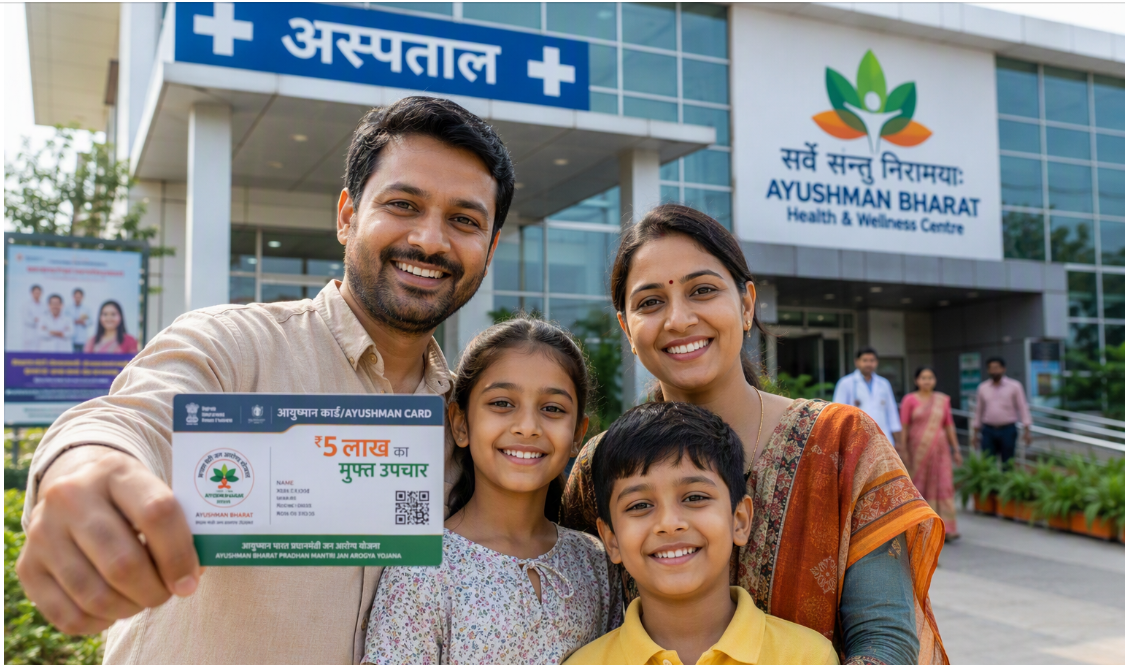
The Ayushman Bharat scheme is built on two main parts. The first part is Jan Arogya Yojana. It gives health insurance coverage to families who need it. This coverage helps them pay for treatment at the hospital, for both simple and serious health issues. The second part of the Ayushman Bharat scheme is to grow wellness centers. These centers help bring care to people and make it easy for them to get help near where they live.
By doing this, Ayushman Bharat wants to make health insurance and care more open to everyone. It uses Jan Arogya Yojana for insurance coverage and adds more wellness centers for everyone’s good.
These parts work together to make a wider health coverage model. One part helps keep families safe from big hospital bills. The other part helps by giving more every day care, like checkups, talks with doctors, and nearby services. To see how everything fits, it is a good idea to look at each piece on its own.
Pradhan Mantri Jan Arogya Yojana (PM-JAY)
Pradhan Mantri Jan Arogya Yojana, or PM-JAY, is part of Ayushman Bharat. It gives hospital protection to people. The program uses money from the government. It was made to help the poorest 40% of people in India. A big illness can be hard for these families. This insurance coverage can be a big help to them and those who are part of the vulnerable population.
The scheme is mainly for people who need to stay in the hospital for secondary or tertiary care. This means families who qualify do not have to pay big amounts right away for hospital admissions that are covered by the scheme. The scheme also works in all parts of the country. So, people can get these services at many places and not just in their own area, as long as the hospital is part of the network.
For many families in India, Ayushman Bharat has become a big help when the family faces health problems. PM-JAY acts like money support at the right time. It aims to stop families from spending too much when serious illness happens. It also helps them get good care. Jan Arogya Yojana stands out because it focuses on the vulnerable population. It connects these groups to a wide group of hospitals. This is why Jan Arogya Yojana is the most well-known part of Ayushman Bharat.
Health and Wellness Centers (HWCs)
Health and Wellness Centers are an important part of Ayushman Bharat. They make up the main part of primary healthcare in India. These centers came from turning old sub-centers and primary health centers into better places to get care first. This is important because many health problems can be found and treated early, and also better, when people get help close to home. These wellness centers help us all stay healthy and get care when we need it.
For people who live in rural areas, wellness centers help a lot. They make it easier to get basic care because you do not have to go far to see a doctor. These centers support many kinds of care. This includes help with checking for sickness and keeping people well. This also means you get care to find and treat sickness sooner. This change is good because the system won’t depend on hospitals only. It will help a lot in places where healthcare infrastructure has not been strong for years.
The model gives more responsibility to state government systems in building local capacity. Ayushman Bharat makes nearby care points better, so people get into the health system earlier. This is one of the best ways the scheme helps with healthcare access for people in India.
Ayushman Bharat Digital Mission (ABDM)
The Ayushman Bharat Digital Mission brings a new digital way into healthcare reform. Its goal is to make digital health infrastructure stronger. This helps connect and improve health services, making it easier to keep track of everything. The plan works as part of the wider national health aim, helping care to be smoother for everyone.
A big part of this work is using digital systems for smooth sharing of information. When health records are set up in a better way, patients, hospitals, and those who run the hospital can all work together better. This helps things move faster, stay connected, and be clear when you need care.
Key features often seen with the Ayushman Bharat Digital Mission are:
- A stronger digital health infrastructure can help join care systems together.
- There will be better handling and sharing of health records.
- This support will make our national health ecosystem more connected.
Eligibility and Enrollment Process
The Ayushman Bharat Pradhan Mantri Jan Arogya Yojana gives insurance coverage to people who the government has already marked as being most in need, at risk, or in certain jobs. This means not every family will be covered. The scheme is not for all, but for some families who meet the rules set by the government.
For people who may get benefits, the steps to qualify are set by approved lists and how each state decides to use them. People living in villages and people in cities are checked using different ways. Also, some states may use their own records if those cover the right groups. The next parts talk about who can get benefits, how they can get them, and what papers they will need most of the time.
Who Qualifies for Ayushman Bharat?
Who can get Ayushman Bharat depends a lot on their income and living conditions. The scheme mainly helps people from poor and vulnerable families. It uses the SECC 2011 list to find potential beneficiaries in both rural and urban areas. The goal is to give financial protection to the bottom 40% of the population who need it most.
In rural India, families can be eligible if they meet at least one deprivation rule. This might mean they do not have land, do not have adults who can work, have a person with a disability but no healthy adult, or are part of Scheduled Castes and Scheduled Tribes. Some groups are always included, like very poor households, tribal people, bonded labor families, and those working as manual scavengers.
In cities, the program helps people in special types of work, such as domestic workers, ragpickers, construction workers, and electricians. The state government and union territories can use their own lists if the right families are there. So, when you want to know who can get the help, the answer is simple. The scheme is made for vulnerable families. It is not for all households.
How to Register and Access Benefits
To access PM-JAY benefits, first check that your family is on the list of people who can get these benefits. The scheme works with certain hospitals. It does not let you get paid back at any place. So, it is important to use only hospitals that are part of the official network. This is why the empanelment process matters.
After you find out you are eligible, you can get the treatment at public hospitals, government hospitals, or approved private hospitals. The hospitals will send in preauthorization requests for the treatment you need. The system is set up to answer fast. A patient can be registered up to five days after they enter the hospital under this process.
Families often get benefits by doing these things:
- Check if you can get benefits by looking at the official beneficiary list.
- Go to a hospital that is part of the network, whether it is public or private.
- Get care under the right package, and your claim will go through the scheme’s system.
Documents Needed for Enrollment
The information collected does not give a full, official list of the documents needed to enroll. What you can see is that you need to prove who you are using the beneficiary databases. This is done by using biometrics and following the scheme’s process. So, joining is not just about applying. It’s also about showing you are part of the household records they have on file.
This helps us see why some people may have trouble getting access. The note says that it can be hard for people who cannot move or who are very sick to sign up with biometrics. This can lead to wait times and make things harder for them. In a big system that can use the insurance model, trust model, or even a mix of both, it is important for the check process to go well.
Enrollment often depends on:
- Be part of the right beneficiary database
- Check identity and fingerprint or eye scan if needed
- Digital systems that connect with the scheme’s health insurance coverage and digital health infrastructure
Benefits and Coverage Under PM-JAY
PM-JAY is made to give full coverage to families who qualify. It helps them for big hospital needs. The main value is to give financial protection at the time of serious illness. During those times, healthcare expenses can go up fast. This can be hard for low-income families. With this, they get peace of mind and do not worry about huge costs.
The scheme helps with many health services that need more care, like secondary and tertiary care. It wants to make sure people do not have to spend out of their own pocket when getting treatment. To understand this, let us look at how the coverage works. We can see it by the services it gives, the limits it has, and what it means for each family.
Cashless Hospitalization and Healthcare Services
One of the strong features of PM-JAY is cashless hospitalization. It is for people who are allowed to use it at certain listed hospitals. With this, families do not need to give a lot of money at the start for the treatment that is covered. For poor families, this can make a big change. It can mean they get care when they need it, instead of waiting because of money problems.
The scheme helps people get hospital admissions for both secondary and more serious treatments. It works with government hospitals and some private sector hospitals. Having both the private sector and government hospitals in the network matters because public hospitals by themselves may not always be enough in all places. When there are more providers, it can help more people get care, especially when the public hospitals do not have enough capacity.
For families in India, PM-JAY brings together who is allowed, hospital package checks, and claim payments in one step. If the patient goes to a listed hospital and the treatment is part of the approved coverage, they get care without paying at that moment. This is what cashless hospitalization means in practice.
Inclusions and Exclusions in Coverage
PM-JAY was made to give wide health insurance coverage for serious sickness. It helps people who need to stay in the hospital. The plan covers both second-level and third-level care. The goal is to stop poor families from losing a lot of money if they get very sick. That makes this health insurance plan bigger than the old health insurance schemes, which mostly only helped with small hospital costs.
Still, the program also has some limits. The notes about Ayushman Bharat say that it mostly pays for hospital stays and the costs from that time. It is more reactive than proactive. This is because things like doctor visits, regular check-ups, and many early care needs are not all included as the focus is on care given in hospitals.
Broadly, the coverage picture looks like this:
- Included: approved hospital stay packages for secondary and third-level care
- Included: costs linked to care for patients who stay in the hospital, even for COVID-19 packages
- Excluded or limited: most charges for care outside the hospital, checks that help prevent illness, and early health tests are not part of the main insurance coverage
Family Coverage and Women’s Health
PM-JAY is built to help whole families, not just one person. This system supports family welfare by offering protection to every member. The plan makes sure that when someone in the family is in the hospital, it does not hurt the family’s money. This is very important for families who do not have much money. One serious sickness can have a big impact on all of them.
This kind of insurance coverage is very important for women’s health. It is also important for the health needs of senior citizens. The information does not give details of special packages just for women. But, it does show that the plan aims to make good hospital care easy to get for people who need help the most. This is good for women and for senior citizens who are part of families that can get the help.
The family approach helps lower the stress of picking who should get care first. When hospital bills are paid for by a public program, people do not have to rely on cash right away. This change means a lot for families who have to deal with more than one health problem at the same time.
Role of Ayushman Bharat in Universal Health Coverage
Ayushman Bharat is at the center of India’s plans for universal health coverage. The goal is to help people get care when they need it. It also works to give financial protection, so people do not worry about high medical costs. The program started with the country’s main health goals in mind. It also supports the Sustainable Development Goals, which focus on health coverage and making things fair for all.
You can see the impact in better healthcare accessibility. There are now stronger service networks, and more support for poor families who need medical help. There are still some problems, but this program has moved the focus from small plans to a bigger national framework. The following sections will show the places where you can see the biggest changes.
Expanding Healthcare Access in Urban and Rural India
Ayushman Bharat helps make healthcare accessibility better for both rural areas and urban areas. In cities, many people live near hospitals, but they may deal with high costs and crowded hospitals. In rural areas, people are often far away from care, and there are not enough staff or good facilities for them. Ayushman Bharat works to fix these problems for everyone.
The plan works in two ways. First, wellness centers help people get care close to where they live. Second, PM-JAY lets families who qualify get hospital care from more healthcare providers. This includes both public and private places. This setup helps more people get into the system at the right level of care.
That is why the program is often seen as making healthcare access better in real life. It does not fix every gap, but it helps remove some of the biggest problems. When there are local services and hospital costs are paid for, families feel they can get help sooner. This means people go to the doctor before things get worse.
Reducing Out-of-Pocket Expenditure
One big reason Ayushman Bharat is important is that it helps cut down on out-of-pocket costs. In India, people have had to pay a lot for medical care. This has made many go deeper into poverty. PM-JAY was made to give financial protection to vulnerable families when they need hospital care.
The scheme does not make patients pay upfront. Instead, people get care without having to pay cash at approved hospitals for the services that are covered. This helps families because they do not have to sell their things, borrow money, or wait to get help when they get sick. So, PM-JAY is more than insurance. It also works as a way to help reduce poverty that comes from health expenditure.
Its role in cutting down healthcare expenses can be seen in these ways:
- Spend less money right when someone goes to the hospital.
- Help keep vulnerable families safe from very high medical bills.
- Be at less risk of getting poorer because of a bad health problem.
Addressing Healthcare Inequalities
In India, there are differences in healthcare for people based on how much money they have, where they live, and their social background. The government started Ayushman Bharat to help close these gaps. This plan focuses on the vulnerable population who often do not get good or quick medical care. This is an important change, as it gives help to those who need it the most.
The scheme also knows that the problem is not only about money. In many areas, people live with weak roads and crowded places. They often do not have good or easy access to local services. A big issue is the lack of awareness. Because of this, some families who could get help do not use the benefits they have. So, what you see written down does not always turn into real care people get.
This is where state government action is needed. Better outreach, strong local teams, and good service can help people really get access and use what they are given. Ayushman Bharat has made some progress. Still, cutting down healthcare gaps depends not just on coverage but also on how well these services are delivered.
Technological Innovations Driving Ayushman Bharat
Technology is playing a key role in how Ayushman Bharat grows. The Ayushman Bharat Digital Mission and other digital health programs help the system in many ways. The work gets better with clear record handling, easier user access, and stronger coordination.
This is important because big public programs need good tools. These tools help connect patients, hospitals, and all of the people who run things. Health IT platforms can help cut down on wait times. They can also help keep care going without breaks and help people see how the system is working. The next parts talk about digital records, telemedicine, and tools that people can use. All of these things help change healthcare for the better.
Digital Health Records and Data Management
Digital health records play a big part in a national program like Ayushman Bharat. When health records are well organized, care is easier to manage in more than one place. This helps when people go to get care at different places. With digital health, it is simple for doctors to find all health records for the patient. This means the doctors can give better and faster care to their patients. Digital health records help Ayushman Bharat work better for everyone.
The Ayushman Bharat Digital Mission helps this change by making the way health records are kept and linked stronger. Better handling of data means people can get the same care without breaks. It also helps with handling claims and makes it easier to move through each step of the care process. For those who manage things, they get a clearer view of how services are given with the help of ayushman bharat digital mission.
From the side of the patient, digital health can make things easier and keep every visit or talk feel the same. For the health system, it helps bring together local care, hospital care, and digital processes into one setup. This is a big change that is helping Ayushman Bharat move forward in healthcare.
Telemedicine and Remote Health Consultations
Telemedicine was very important when COVID-19 was at its peak. At that time, people had to stay apart and meet less in person. Under PM-JAY, people were told to use teleconsultations. A lot of remote consultations were done through the eSanjeevani platform. This showed that digital health and digital health infrastructure can help people get care during a big crisis.
For patients, telemedicine can help with healthcare accessibility. It can cut down the travel and wait time for many people. There are also fewer physical barriers. This is helpful not just in emergencies. It can also help when you need routine care, but the doctor is hard to reach. Telemedicine lets people who live far away get medical advice much faster.
In the larger Ayushman Bharat framework, telemedicine helps to make primary health care stronger. It also gives a better and more flexible way to get health care services. This does not take the place of hospitals or local clinics. It just offers more ways for people to get into the health care system. This is why telemedicine is one of the best technical steps taken in the ayushman bharat scheme.
Health IT Platforms and User Experience
Health IT platforms make it easier for big programs like Ayushman Bharat to work in a steady way. They help with daily hospital work, checking who gets benefits, handling claims, and sharing details. When it comes to ayushman bharat and health insurance, these tools are needed because the program is all about insurance coverage and hospital admissions. Digital systems are not just nice to have—they are a key part of how things run.
The user experience is very important. If people find digital tools hard to use or can’t reach them, they may have a hard time getting care. The information shows that there are still some problems when using biometrics to sign up. This means the tech should work well and be simple, not just new and flashy. A good design will help both the providers and the patients go through each step without trouble.
Useful roles of these platforms include:
- Helping with checking who gets the benefits and with managing the scheme.
- Making it easier and faster to approve packages and process claims for hospital admissions.
- Making work between groups better under the Ayushman Bharat Digital Mission.
Challenges and Opportunities for Ayushman Bharat
Ayushman Bharat has helped to make some good progress in health care. But, it has not worked the same way across all places. Some areas still deal with a shortage of healthcare professionals. There are also problems with poor infrastructure, payments often come late, and many people do not know much about the scheme. All these issues change how people feel about health care on the ground.
At the same time, these gaps give a chance for new ideas in policy. If there is better integration in the system, stronger administration, and improvements in things like the trust model, the system can work better. The next two parts will talk about the barriers we see now and the good chances that can change things for the future.
Overcoming Implementation Barriers
Several things still get in the way of Ayushman Bharat working well. There are not enough health services for people who want to use them. A lot of rural areas do not have enough staff. Getting money back and solving claim issues takes time. Biometric access is still limited for many. Not everyone knows about the plan, and that is also a problem. These problems can make people lose trust and stop those who should get help from getting the full benefit of Ayushman Bharat.
The balance between public healthcare and the private sector is important. The private sector can help more people get care. But if payments are delayed or not enough, some hospitals may not want to keep helping. In public healthcare, there are still problems like crowded places, not enough money, and too few trained workers. All these things make it hard for people to get good care in many areas. These are real problems, not small issues.
The information that is collected shows some helpful ways to respond.
- There should be fair and quick ways to pay back money.
- People need choices to sign up with biometrics using their mobile phones.
- Doctors must help more with checking claims, and the government of india should do more to let people know about this.
Future Prospects and Policy Innovations
Looking ahead, ayushman bharat can be more than a program for hospital stays. The collected material shows there is a way to grow through prevention, doing early checks, and working closer with other plans. These steps can help get better results and save money over time. In the end, this will help make ayushman bharat work better and become more helpful for people.
Future policies might have wider rules for care. There could also be better links between central government and state government systems. This can help make things more even in different places. Right now, some states have their own plans, and they have different ways to pay for things. If there is better integration, this could make things less confusing and bring more clear answers for people who use these benefits.
These next steps are important for both health equity and the Sustainable Development Goals. If ayushman bharat keeps growing and works to fix any design gaps, it can be more than just a main insurance platform. It can also support the whole public health system in a better way. That is where the biggest long-term promise of ayushman bharat is.
Conclusion
To sum up, Ayushman Bharat is a big step for healthcare access in India. The goal is to use new technology, cover more people, and help those who do not get much health support right now. With ayushman bharat, the main plan is to bring real change. The program may still have some challenges, but there is also a chance to do better. The future of healthcare in India needs all of us to make sure everyone gets good care. If you want to know how ayushman bharat and its comprehensive coverage can help people in your area, you can ask for more details. In the end, we can help build a healthier country together.