
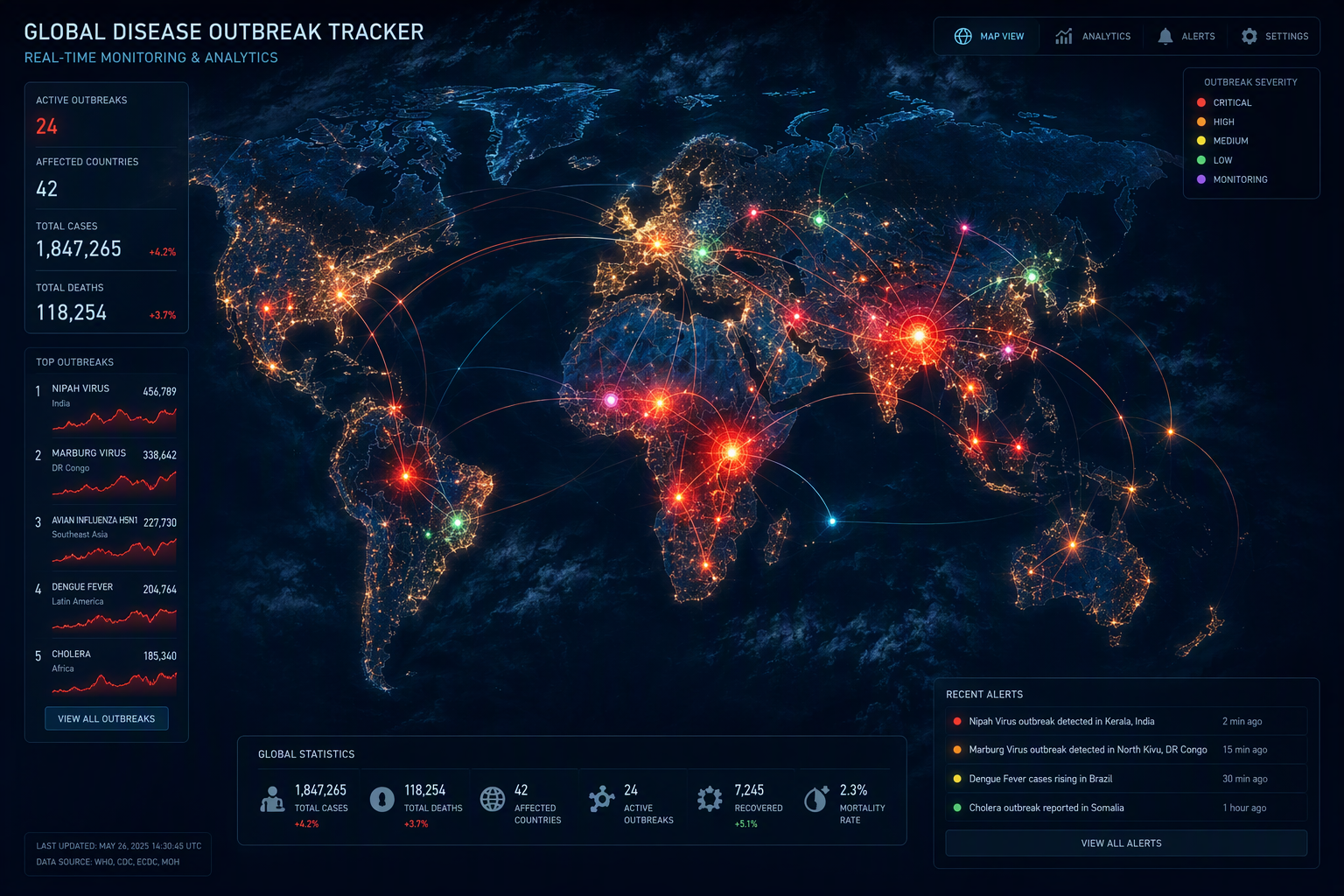
Key Highlights
- Public health surveillance helps health authorities find disease outbreaks early. It works by having steady disease surveillance and sharing health information.
- A strong surveillance system gets reports in real time from health care providers, laboratories, and health departments when it can.
- Early warning tools make disease control happen faster. They show strange patterns before disease outbreaks become bigger.
- There are different ways to track health, like syndromic and case-based methods. These help public health teams prove if health threats are real.
- Digital reporting makes things go faster. It also helps data quality and lets teams work together better when there are health emergencies.
Introduction
Public health surveillance is how health departments keep an eye on signs of infectious disease. It lets teams spot problems early and act fast. This work turns usual reports from clinics, hospitals, and labs into useful signals for action. A sharp jump in sickness shows up, and public health surveillance helps find outbreaks, follow how they move, and plan steps to stop them. If you wonder how officials know when a health issue is getting bad, the answer is organized reporting, careful study, and quick talk between workers.
Foundations of Public Health Surveillance in India
Public health surveillance is built on a clear thought. People collect health care details early. Then, they check it fast. After that, they act to stop health threats before they move far.
A disease surveillance system works well when local reports connect with bigger public health agencies. This helps them find and handle health threats before they get worse.
Surveillance activities help find and watch disease outbreaks in real time. Reports from doctors and labs go into connected information systems. These systems let teams look at illness patterns and see if they are different from normal. They notice strange changes fast. In the next sections, I will talk about what this means and how these systems came to be.
Definition and Scope of Public Health Surveillance
Public health surveillance is all about keeping track of health data to help keep people safe. Disease surveillance is more than just knowing how many people are sick. A good surveillance system lets health officials see patterns and notice when something is wrong in the community. It also helps with disease control.
Real-time surveillance in public health means the information gets to the right people fast. This helps them make quick choices. In many health care places, reports are sent through computers to public health agencies. That cuts down time and helps workers see unusual health events before it gets worse.
The scope covers a lot of things. It can be about confirmed cases, lab results, visits to the emergency room, medicine trends, and signs of sickness. When these sources are used together, health officials get a better idea of what is going on, where it is happening, and if action needs to be taken.
Historical Evolution of Disease Surveillance Systems
Disease surveillance started with doctors and labs reporting specific diseases. For many years, these surveillance activities were passive. That means providers reported cases when they had to, but things often moved slow. This made it hard to spot outbreaks early.
As health systems used more digital tools, disease surveillance got better. Electronic case reporting and electronic lab reporting made it easier to send data fast and safe. With integrated systems, people in each area can add what they get from case work and disease control tasks.
Over time, officials tried different ways to find new disease cases. They started to look at emergency departments and how people feel. They checked sales of medicine that you can buy over the counter. They watched how many children were not in school. They listened to calls on hotlines and saw other warning signs. This change mattered. A quick and flexible system can help us see strange sickness trends before a big outbreak happens.
Key Objectives and Principles
Surveillance is important in public health. Early detection lets teams act fast, so they can handle a small problem before it grows into something big. An early warning system helps officials get information in real time. This means they do not have to wait for reports to tell them what is happening.
Strong surveillance comes from having clear, practical goals. These goals help guide the way systems are made. They also show how people share information across places when public health threats come up.
- Help spot illness patterns early
- Give early warning system alerts if an outbreak may happen
- Make real time checks and plan how to respond
- Make sure there resources are used where the risk is highest
These ideas are important. If officials spot a problem soon, they can look into what caused it. They will start testing more people and move to fix it. This quick action can help stop the problem from getting worse. It can make care better for many. It can also keep more people safe from harm they did not need to face.
Types of Public Health Surveillance Systems
Public health surveillance systems use several ways to track health. A single disease surveillance system cannot find all signals. Some systems rely on confirmed diseases. Others watch for changes in patterns, symptoms, actions, or strange health events.
Health departments use information from hospitals, labs, clinics, and emergency departments to find new disease cases. This mixed way of working makes it easy to spot real outbreaks, not just random signals. In the next parts, you will read about the main types of these systems and how they work.
Passive and Active Surveillance Explained
Passive surveillance depends on routine reports from health care providers, hospitals, and labs. In this way, the surveillance system gets cases when providers send in their reports. This model is common and works well. But it can miss things if reporting is not fast or complete.
Active surveillance is when public health teams are more involved. They visit places, check records, or ask for updates to get health information straight from the source. This can help get faster and better details. It needs more people and extra support to keep it going.
Here is the basic difference:
- Passive surveillance waits until reports are sent in.
- Active surveillance looks for information from health care places.
- Passive systems are simple to use when there are many cases.
- Active systems can find cases faster and more completely.
Because each way has its own good and bad points, they often use both in public health. Regular passive reporting gives wide coverage. Active work is more useful during outbreaks and health emergencies. Officials know this mix helps them handle public health emergencies better.
Sentinel and Syndromic Surveillance
Sentinel surveillance is a system where some places or doctors watch for changes in disease patterns. These sites are picked by public health officials. They do not cover every place, but they help public health keep track of important changes early. This way of checking health is helpful when it is hard to get reports from everyone in the area.
Syndromic surveillance is not the same as other health tracking. It looks at signs or symptoms before there is a diagnosis. Emergency room visits, calls to hotlines, or buys of medicine can tell us when there is more illness going around. This early warning system helps us spot problems soon. However, syndromic surveillance does not give as clear a picture as tracking confirmed cases.
A quick comparison helps:
- Sentinel surveillance uses just a few chosen places to report.
- Syndromic surveillance looks at the symptoms people have.
- Case surveillance checks confirmed cases.
- Each way helps with disease control in its own style.
So, case surveillance is more focused. It works by keeping track of confirmed cases. The syndromic and sentinel ways are used to catch signals sooner and to see bigger patterns or trends.
Behavioral and Event-Based Surveillance
Behavioral surveillance tracks how people act when they feel sick. It looks at things like missing work or school, buying medicine without a prescription, and when they go see a doctor. These changes can tell us early if many people are getting sick in a community. Often, these signs show up before any lab tests say what illness they have.
Event-based surveillance keeps an eye on strange health events. It uses many kinds of signals, including informal reports and sudden changes spotted in data sources. A surveillance system can look at emergency visits, call data, or signs from the community. This helps it find something that is not expected.
This is a place where social media or looking at sewage fits into bigger event-based ways. These tools can give early signs when something odd is going on, but you still need to check these signals using stronger testing or lab work. You cannot use just these early clues on their own. When you mix them with other information, they help you get faster alerts.
Core Components of Disease Surveillance
Every disease surveillance program has some main steps. It begins with the systematic collection of health information. Clinics, hospitals, and laboratories are places that find sickness first. This is where the work starts.
After that, surveillance activities use reporting, review, and action. Officials gather reports. They watch trends, check for changes, and look at what this data means for public health. These steps work together to help us track virus outbreaks. The next parts show how each of these works in practice.
Data Collection and Notification Mechanisms
Data collection starts when someone gets sick. They go to the doctor and get a diagnosis or lab test. For notifiable diseases, hospitals, doctors, and labs send case details to the health department. This is done because reporting laws require it. This step is the first part of the surveillance system.
Public health authorities look at the report and check the details. If they need to, they start an investigation. They use what they find to help people who might have been exposed. They also work to stop the spread.
Public health authorities can send data without names into bigger systems. These systems help national programs watch for patterns. They keep an eye on things both during normal times and when there is an emergency.
Key steps include:
- Get the details of each case from providers and labs.
- Send reports of notifiable diseases to health departments.
- Check and keep data safe before letting others know.
- Give out records with no names or personal info for national monitoring.
During emergencies, groups like the CDC use a way of reporting cases and notifying others to help spot outbreaks. This system helps track diseases and plan how to respond.
Monitoring and Reporting Networks
Monitoring depends on strong health reporting networks. Local, regional, state, and territorial public health agencies collect disease data from care places and labs. These networks help us see how often a condition happens in an area. They also show if the number of cases is going up, down, or staying the same.
Information systems help make these networks better. Integrated platforms can get electronic case reports and lab results. They can add investigation details, then get case notifications ready to share. This helps public health agencies keep their data neat, up-to-date, and easy to use.
Case surveillance works in this system by looking at confirmed cases. It is not like other ways of tracking that depend on signs or clues. Case surveillance checks each confirmed case by using reports and notifications. This helps to measure how often the disease happens, compare places, and choose the right steps to control it.
Analysis and Interpretation of Health Data
Collecting reports is just the first step. Data analysis makes raw numbers easier to understand. Officials read health information to check if a disease is staying the same, going up, or showing up in a new place. This helps them see public health risk more clearly.
Disease surveillance lets us see how much illness is in a group of people. When you look at the number of cases, where they happen, and when they appear, officials can get a good idea of how often the illness shows up. This also helps to know which people, and what groups, get sick the most, and if things are changing as time goes on.
Interpretation is important in public health. A rise in numbers does not always mean the same thing for everyone. A spike could show a new outbreak. It could also happen because of better reporting or more testing. Public health teams look at new numbers and compare them with old trends and other data sources. They do this before making any choices about what it all means. This balanced review helps make better decisions. It also keeps false alarms down.
Real-Time Surveillance Technologies
Real time surveillance system lets people act faster. It sends reports right away from labs and electronic records. This cuts down the time between knowing what is wrong and what to do next.
This quick action helps with early warning and lets teams see public health risk faster. When something strange shows up, officials look at it right away. They check signals from different places and see if there should be an investigation. The next parts explain how alerts, digital platforms, and artificial intelligence help support this.
Early Warning Systems and Alerts
Early warning systems notice strange changes right away. A surveillance system can alert us to higher case counts, odd symptom groups, or things that do not seem normal in different places. These warnings help public health authorities spot possible problems. It lets them check what is happening before the issue spreads to more people. These systems work for public health and help health authorities act faster.
Early detection is important because health emergencies can move quickly. If officials get warnings early, they can begin looking into it right away. They can help with testing, support treatment, and let people know if they have been exposed. If there is any delay, the outbreak can grow and spread to more people.
Common early warning functions include:
- The system finds when there is a big jump in illness reports.
- It sends quick alerts to public health authorities.
- It gives support for fast checks during health emergencies.
- It helps teams choose which steps to take first in a public health emergency.
Alerts should not take the place of expert judgment. They act as prompts for the public health teams. The teams must check the signal, remove any mistakes, and pick a response that fits the situation well.
Digital Platforms for Outbreak Detection
Digital platforms help find diseases faster because they move data quickly and safely. Electronic case reporting lets information go from health records to public health agencies. Electronic laboratory reporting sends lab results to them too. Both help reduce delays and make follow-up happen sooner.
Real-time surveillance in this place means health information can be shared fast. This helps people act right away when something is happening. Officials do not have to wait for paper reports or slow, manual data entry. They can look at what is going on and act on a possible outbreak much faster.
Integrated information systems make the process better. They take reports and join together clinical and lab details. They also add case investigation results. After this, the system gets notifications ready in a set format. This helps local and national programs keep track of disease trends and watch data quality. They can act faster and in a good way when something strange happens.
Role of Artificial Intelligence in Tracking Diseases
Artificial intelligence can help teams go through big sets of health data much quicker. In times when disease spreads, the problem is not just getting reports. The real job is to spot strange patterns fast. This helps with early detection and action.
The compiled information shows that people now want systems to be better and faster. These new systems try to make the speed of sending data, the way we look at it, and how we match it between many data sources better. Artificial intelligence can help with this. It can sort signals, point out trends, and show if there is something strange going on. These things could help people see disease outbreaks early.
Used carefully, artificial intelligence may help:
- Go over large amounts of health data faster.
- Find patterns in many data sources.
- Help with early detection of sickness trends that stand out.
- Aid analysts in picking which outbreaks to focus on first.
Still, it should help public health experts, not take their place. People who know this field read the findings, look at the situation, keep things private, and choose what to do next.
Surveillance Data Sources in India
Disease surveillance needs strong data sources. It works best when the records come from health care, labs, registries, and the people who see cases first. These things help show where disease starts and how fast it is moving around.
These inputs let officials see how often a disease appears, where it is, and how it changes over time. Health workers and reporting systems bring together many bits of information to make a full picture of public health. The next parts talk about the main sources and explain why each one is important.
Healthcare Facility Records and Registries
Health care facility records are the base of a disease surveillance system. When people go to doctors, clinics, or hospitals, it is common for their illness, signs, and details to be kept. These records can help a public health team later on. The records show how sickness shows up during usual health care.
Registries offer more help for public health teams. They keep details about certain conditions that need to be watched or told to someone. This lets teams see how things change as time goes on. When you use registries instead of a single report, you can find out if a disease is staying the same, going up, or moving to new places.
These sources help spot new disease cases. They do this through real visits with doctors and nurses. When you connect these sources with electronic reporting tools, records at the facility and registries can send data faster to health departments. This process makes the surveillance system quicker. It helps with case investigations and makes the system work well when there is an outbreak.
Laboratory Testing and Reporting
Lab testing helps make tracking diseases more reliable. If someone shows signs of illness, it may point to a problem. Lab results, though, can show if a disease that must be reported is really there. This step is very important for checking outbreaks and counting how many people are sick.
Electronic laboratory reporting helps make things faster because it sends results right away to public health programs. These information systems cut down on time because people do not have to do these steps by hand. Local groups can get important reportable results sooner. Early detection is important for public health since finding things earlier gives people more time to check and stop the spread.
Lab data helps improve data quality. It can tell the difference between suspected sickness and cases that are actually confirmed. This helps people read trends in the right way. During outbreaks, fast lab reports help health departments confirm what is happening. They can also find out where people are getting sick. This lets health departments focus their disease control work with more trust in the facts they have.
Community-Based Monitoring and Participatory Tools
Not every helpful sign comes from hospitals. Checking things in the community is a good way to spot early changes. This can happen by watching what is going on near you, getting reports from people on the scene, and using other ways that are not common. This helps because, sometimes, doctors are not able to give answers or may take time to find out what is wrong.
Participatory tools help more people learn about health issues. They do this by letting health workers and communities report things like strange sicknesses or shifts in how people act. The material shows we can use signs like people missing work, more calls to hotlines, and buying medicine. These things may be useful for public health actions if we look at them closely.
Examples of community-linked inputs include:
- Reports from health workers about strange groups of sickness
- Patterns where people do not go to school or work
- Trends in calls to help lines or advice lines
- Local signs that show something is changing in the health of the community
Social media or checking sewage can also help by giving more signs. But, these ways work best when you use them with stronger information from the clinic and the lab before making any choices.
Steps in Tracking Disease Outbreaks
Tracking disease outbreaks happens in steps. Disease surveillance begins when there is a signal. It goes on to confirmation, investigation, and response. Every stage helps health officials to see if what looks small is routine. Or it could be the start of a big problem.
These surveillance activities may seem technical to some people. But the process is simple and practical. You notice if there is something unusual. After that, you check if the problem is real. Then you find out who it affects, and you act on it. The next parts show you each step. You can see how outbreak tracking works in practice.
Outbreak Detection and Initial Signals
Outbreak detection starts when a surveillance system notices something strange. It can be a sudden increase in confirmed cases, a group with the same symptoms, or more emergency visits than usual. With real-time surveillance, these signals reach the team quickly. This helps them take fast action.
At this point, the officials do not say there is an outbreak right away. They try to find patterns that are different from what they expect to see. Then, they check these patterns with other health events or other information they have. The goal is to find out if this needs fast follow-up.
Common initial signals include:
- Sudden rise in cases for diseases that must be reported
- Strange group of symptoms showing up in places where people get care
- Odd patterns from what labs share
- Surprising changes across many health events
Early warning helps because it gives more time to act. When a real sign is seen early, officials can check it fast. Then, they can start steps to keep people safe.
Case Confirmation and Validation
After they find a signal, case confirmation helps check if the event really happened. Health departments look at clinical details, lab results, and other health information. They do this to see if the reported cases match the rules for a confirmed condition. This step helps stop false alarms from starting a response.
Disease surveillance needs this step to work well. A simple rise in symptoms can be from many things. Having a confirmed diagnosis gives health departments a stronger reason to act. To feel sure about the real number of cases, health departments use several sources. They put together reports from providers, lab results, and what their own investigators find. This mix helps them feel more sure about what is going on.
During emergencies, groups like the CDC use this same case-based way of working. Local and state workers get cases first and check that the information is right. Then, they send these reports, which do not show people’s names, to bigger agencies at the national level. This process helps larger groups find out about outbreaks, watch how they spread, and help with response efforts.
Epidemiological Investigation and Mapping
Once the cases are found, health officials start looking into the details. They check who got sick. They see when each person showed signs of being ill. Health officials also look at where the cases are found, and what things the people may have been exposed to. This lets them do more than just count cases. They get a real idea of what is happening.
Mapping is very helpful. A location can show us where groups of cases are, where people may have been, and how things move in or across a place. The information says that strong systems should help us find out where people got exposed by using information systems that show places. They should also help people answer these problems faster.
Key investigation tasks often include:
- Finding out which people and which places have been affected
- Checking when the illness started for each person
- Seeing if people got sick after sharing the same exposures
- Drawing maps of the clusters to help with disease control
These steps are key in the way we track outbreaks. They let officials find where the problem started, know how it spreads, and aim disease control efforts where they will help the most.
Importance of Early Detection and Response
Early detection can make a big difference when there is an outbreak. If people notice health events early, officials can act right away. This can help them stop the spread before it gets hard to control.
That response can include testing, support for treatment, following up with those who are exposed, and other public health measures. To put it simply, if you find a threat early, you let disease control start sooner. The steps below show how acting fast helps keep people safe and reduces the bigger impact of illness.
Preventing Spread Through Timely Action
Fast action is one of the good things about surveillance. When an early warning is found, health officials can step in before more people get sick. This helps stop more people from being exposed and keeps the outbreak from getting bigger.
Public health interventions work best if they start early. When officials delay, the number of contacts rises, and more places may have cases. Also, the need for help can grow fast. Being quick does not fix all, but it helps make better choices.
Early action can support:
- You can find cases and follow up with them faster.
- Testing and treatment start earlier with this.
- People who have been around it get help and advice sooner.
- This makes it easier to target public health interventions.
This is why early detection is so important. It helps people in communities stop the spread, while there is still time to control it.
Protecting Vulnerable Populations
Disease surveillance is important for public health. It helps protect people who may be more at risk by showing who gets sick most and where problems can grow. When officials look at case numbers and see patterns, they can find which groups or places have a bigger public health risk.
This also helps to explain the burden of disease in people. Surveillance data does more than just count cases. It tells us how often illness shows up, how bad the event is, and if the effect is in certain communities or places.
That information helps make planning better. Public health teams can use it to know where health events are causing the most trouble. They can then send attention, resources, and information to those places. The good thing about this is that when teams see the problem more clearly, they can act faster and smarter. This is very important when their team has limits and hard choices need to be made right away.
Reducing the Burden of Disease
Surveillance helps bring down the number of people getting sick. It does this by using data to guide action in public health. When health systems find problems early, they can deal with public health threats right away. This means public health threats do not reach more people or push health systems over their limit.
This also helps the officials see how much the disease is spreading in a real way. Counting cases, seeing the trends, and looking at where the disease is found all show how big the problem is. This can also tell you if the disease control work is good or not.
Surveillance supports this by helping teams:
- Track how often the disease shows up in people
- Measure how the disease spreads at different times
- Guide which disease control steps to take first
- See how well response and prevention efforts work
In short, when there is better visibility, you get better results. Public health threats are easier to manage when health systems know what is going on, where the problem is, and how fast things are changing. This makes it easier for them to act fast and protect people. When public health threats come up, these health systems need good information to stop problems before they get worse.
Social Media, Environmental, and Innovative Surveillance
Public health surveillance now goes beyond just normal case reports. Today, there can be new ways to watch health trends. Some of these include signals from social media, checking the environment, looking at how many people are absent from work or school, and some other signs that do not follow old ways. These new public health methods may spot changes before doctors know the real cause.
These tools do not take the place of normal methods. They help health authorities spot strange patterns sooner. When they are used in a careful way and checked by better proof, they can help people find problems sooner and do something about them faster. The next parts show where these methods are useful and where we need to be careful.
Social Media Analysis for Health Trends
Social media is often a quick way to get health information. People talk about their symptoms, sickness, or what they do to feel better on these platforms. In an early warning system, this can help show if there is anything unusual going on before the regular reports are finished. Social media can give early warning and let us know about new health problems as they happen.
Social media works in an indirect way. It often shows fear, rumor, or stories that happen many times instead of what is really going on with disease. This is why it is helpful to use social media to spot health trends. But it should not be the only thing used as proof that there is an outbreak.
Used carefully, social media may help:
- Flag when people talk more than usual about being sick.
- Suggest that the health of people in a place may be changing.
- Help an early warning system by giving quick signs.
- Help people decide when to look deeper by using better data sources.
Speed is what gives the most value here. The main limit is how much you can trust it. Public health teams must have proof from a clinic, a lab, or a report about the case before they do something about the signals they get.
Wastewater and Sewage Surveillance
Wastewater surveillance and sewage surveillance are both ways to watch the environment. In these methods, people look for signs of sickness in things that everyone uses, like water or sewage. This means they do not have to wait for each person to feel sick or go for a test. These checks can give quick clues about how a sickness is spreading among a group.
In the broader look at surveillance, this type of monitoring helps pick up on signals that are not usual. These can sometimes point to disease outbreaks. The idea is much like what you see in new systems. People use more than one source. This way, they can compare what is happening and decide if a signal is real. This helps them find the start of disease outbreaks early.
Even though there are many good things about environmental surveillance, it still has some limits. It can tell us that a pathogen is in the area, but it does not show who is sick or how bad the sickness is. This is why it is best to use sewage signals together with laboratory reports, clinical data, and investigating each case. All of these help us get the full picture.
Mobile Health Reporting and Crowdsourcing
Mobile health reporting helps signals get from the community to public health teams faster. When people send information online, there be less delay. Local reports can be seen and checked more quickly. This is very important when things change fast during an outbreak.
Crowdsourcing brings in more data sources, as it collects reports from many people and not just from formal places. This can help give a better view, especially if routine reporting misses some things. In a disease surveillance system, these inputs can help show unusual places or highlight new concerns.
Still, crowdsourced reports need to be checked with care. These reports, much like what we see on social media or in other informal ways, can be unclear or not give all the needed details. Their main job is to help out. When we use them with things like provider reports, lab checks, and official case counting, these mobile health tools can boost early awareness. But they do not take the place of trusted ways to watch for cases.
Role of National and International Organizations
Disease surveillance is most effective when local reports are linked to national and international help. Public health authorities and health departments are often the first to notice problems. Larger groups, however, help make reporting the same everywhere. They watch for the problem to spread further and help organize the response.
The CDC helps with case watching by giving advice. It also gives people good systems, warnings, and ways to handle data. The World Health Organization works with countries to look at and share big world health risks. They all follow the same rules. These ways come together to help us talk during emergencies, and make the world health system stronger for everyone.
National Centre for Disease Control (NCDC) Initiatives
At the national level, disease control works best with good reports and quick checks of its serious issues. Public health authorities need systems that get reports from local areas. They must look at trends and help respond when infectious disease surveillance finds something unusual.
This keeps public health strong and helps us act fast on big health problems.
The gathered details show why it is important to track national notifiable diseases. With this, local and regional groups collect data on confirmed cases first. They then send information without names for larger checks. This helps build a clear picture of how notifiable diseases happen in several places.
During emergencies, there are national bodies that step in to help. They work to make standards better, improve how data moves, and support local teams who try to find and stop outbreaks. A big part of this is working together. Local groups find and say what is happening. National programs bring everything together, compare trends, and guide disease control for a bigger area.
World Health Organization (WHO) Collaborations
The World Health Organization has a key job when disease surveillance shows there may be a health problem that could move into other countries. The International Health Regulations say all member countries have to look at any unusual health emergencies. They must report any possible world health risks using the right formal channels.
The process must move fast. Countries look at the risk of a possible Public Health Emergency of International Concern. If the risk seems big, they tell the World Health Organization. This helps the review and action to be joined up when a public health threat could impact more than one country and the world health as a whole.
| WHO collaboration area | How it supports surveillance |
|---|---|
| International Health Regulations | Sets the framework for assessing and reporting major international risks |
| Potential PHEIC review | Helps countries evaluate whether an event may require global attention |
| Time-based notification steps | Encourages rapid assessment and reporting during health emergencies |
| Cross-border coordination | Supports shared awareness during international disease surveillance events |
These partnerships are important because diseases can spread and do not always stay in one place. When the world has clear rules, countries can tell others about an outbreak faster. This helps everyone work together better to stop it.
CDC Support and Global Surveillance Networks
The CDC helps health departments by getting information about cases with no names or personal details. It looks at the data, and then gives important facts about each disease to programs that watch what is happening across the country. It also gives health departments advice, helps with reports, gives money, and offers help during outbreaks.
This support makes the disease surveillance system stronger for both normal work and during emergencies. The CDC also sends out alerts using networks like the Health Alert Network and Epi-X. These alerts help officials share urgent updates fast when a rapid response is needed in the surveillance system.
CDC support often includes:
- Guidance to help with reporting and surveillance workflows
- Tools to keep data safe and review quality
- Alerts to make rapid response faster during outbreaks
- Help for local and state public health agencies
With bigger global watch groups, this kind of national help links local things going on to bigger trends. This makes it easier to spot how things spread and helps everyone work together.
Disease Surveillance During Public Health Emergencies
Public health emergencies can put a lot of stress on disease surveillance. Health officials need to find outbreaks faster. They also need better reporting and a rapid response. During these times, things can change quickly. If there are any delays, it can make a hard situation even worse and tougher to manage.
During emergencies, the same steps for watching and reporting still need to happen. But now, everything must go faster. Reports get gathered, checked, shared, and used right away. This helps people act in time and do what is needed. The next sections talk about the main things you need to do when you do not have much time to respond.
Protocols for Rapid Detection and Notification
Protocols for the fast detection of health events start when doctors, hospitals, and labs report things right away. When they see unusual health events, they need to send the information without delay to the health department. This way, people in charge can check fast if there is any bigger health problem happening.
Notification comes next. Local and state agencies look at reports. When they can, they make sure cases are real. Then, they send data without names up the chain. In public health emergencies, quick electronic reporting helps cut down on wait time. This makes decisions happen sooner.
These steps are important because tracking an outbreak works step by step. A warning shows up first. After that, officials check and confirm it. Then, they tell the right groups, look at other reports, and choose what steps to take. If there are not clear ways to let people know, fast detection does not help as much.
Public Communication and Containment
Once there is proof from surveillance about a big problem, health officials have to talk to the public. They must explain the risk in a clear way. They need to share what they know and tell people what steps to take. Good communication helps build trust and keeps confusion down.
Containment works best when action happens soon. Early detection helps people in charge use public health steps before the spread gets worse. If warnings come too late, more people can get exposed before anyone takes steps to protect them.
There is a direct link between surveillance and containment in public health. Surveillance helps to find the problem. Then, communication helps health officials share information in a way that leads to action. Whether people need testing, follow-up, or other public health measures, it is important that health officials share clear messages. This makes the response work better, and it is easier for people in the community to understand and follow what to do.
Coordination Among Stakeholders
Outbreak surveillance can only work if people work together well. Health officials, laboratories, hospitals, and health departments each do their own part. If even one part is slow or missing, it is much harder to understand what is really happening.
The main problems in surveillance are about being quick, finding the right things, getting to data, keeping people’s privacy, and being able to look at different reports from many places together. It can be good to use nontraditional data because it comes fast, but it is often unclear. Traditional data is clearer but takes more time to come in. Working together helps balance all these things.
Strong coordination usually requires:
- Clear reporting roles are set for all the people involved.
- Health departments and their partners use shared standards.
- Data is exchanged on time when investigations are happening.
- There is careful attention to privacy and data quality.
This is why connected systems are important. When people work well together, they can check signals, cut down on false warnings, and answer better when an outbreak starts.
Case Surveillance and Comparison With Other Methods
Case surveillance looks at confirmed diagnoses. This makes it one of the most sure parts of a disease surveillance system. It lets officials know how often a disease shows up. They can also use it to track the spread of illness better than with symptom-only ways. This is why having a good disease surveillance system is so important.
Syndromic surveillance and other methods help public health experts find health events early. Sometimes, these tools may not be very exact. This is why public health programs often use both ways together. One way catches signs of problems quickly, and the other checks to see what those signs really mean. The next part explains what case surveillance is in more detail.
What is Case Surveillance?
Case surveillance means watching and recording when there are cases of some diseases or conditions. There is a set way to report this. In a disease surveillance system, public health agencies in the area and around it gather information about each confirmed diagnosis. They use this information to find out how often the disease happens in their region. This way, the surveillance system helps them keep track of what is going on with public health, and to take steps if there is a problem. Disease surveillance is key for keeping people safe and healthy.
The process often starts when a doctor finds a health issue or when a lab confirms there is a problem. After this, hospitals, other health providers, or labs report the case to the right health department. They do this according to the laws about reporting. The health department looks over the case. After that, they might send the case information, without any names or details that show who someone is, for monitoring at the national level.
Case surveillance stands out because it is very specific. It does not use symptoms, actions, or things like that to track what’s going on. Instead, it looks at confirmed health information. This helps public health workers see how a disease spreads. It helps them notice outbreaks fast and make better choices for public health needs.
Differences Between Case and Syndromic Surveillance
Case surveillance tracks confirmed cases of specific diseases. It gives public health officials lots of detail about each person and the situation around them. This lets these officials see patterns in notifiable diseases. They can also spot any changes over time.
On the other hand, syndromic surveillance helps with early detection. It looks for signs and symptoms before there is a confirmed diagnosis. Health officials use information from emergency departments and health systems. This gives them a bigger picture about possible health threats. It also helps them act quickly when there are disease outbreaks.
Both case surveillance and syndromic surveillance work together. Using the two methods helps make public health surveillance stronger and more useful for keeping people safe.
Advantages and Limitations of Case Surveillance
Case surveillance is an important tool in public health. It gives detailed information about specific diseases. This helps health officials see patterns in diseases, find risk factors, and know which public health interventions to focus on. By using the systematic collection of clinical data, health agencies can spot outbreaks sooner. This helps with disease control. But there are some problems with case surveillance. It can take up a lot of resources. It may also miss some cases, especially if people do not get diagnosed or do not report their illness. The quality of information can also depend on the data sources used. This can make it harder to have a good public health response in some places.
Challenges in Public Health Surveillance in India
Public health surveillance in India has some big challenges. A main problem is that many cases are not reported. This hurts data quality, so it becomes hard for public health agencies to control disease. There are also problems with the current infrastructure, and some places do not have enough technology. This makes it tough to get health information quickly. A rapid response is needed in health emergencies, but these gaps slow things down.
Another issue is making sure people’s sensitive information is kept private and handled in an ethical way. All of these problems make it hard for public health agencies to put public health measures in place at the right time. This gets in the way of good health outcomes and keeps public health surveillance systems in India from being as effective as they could be.
Underreporting and Data Quality Issues
Underreporting is a big problem in public health surveillance. It can make it hard to handle disease outbreaks in the right way. A lot of health conditions do not get reported as they should. People may feel worried, scared, or may not know about the need to report. Because of this, data collection is left open without all the answers. The quality and trust in health information are also not as good as they could be.
Many data sources do not cover every type of communicable disease. Public health officials need good data if they are to do their work in disease control and public health interventions. This is why everyone needs to work on how to fix the issues around underreporting and data quality. Better data will help us get a clearer picture of what is really happening and help stop new problems before they get too big.
Infrastructure and Technological Gaps
Underfunded public health systems make it hard to keep up with disease surveillance, more so in developing areas. When health systems do not have enough new technology, health authorities find it tough to track outbreaks in real time. If information systems for health are not strong, it becomes hard to collect or look at health data. This might lead to delays in spotting health threats. Old and out-of-date infrastructure may not help people share or work together with public health agencies. This can block quick action when an emergency happens. All of this makes public health surveillance less able to keep people safe from communicable diseases and other health crises.
Ensuring Privacy and Ethical Considerations
Public health surveillance needs to find the right balance between data collection and the privacy of people’s information. When health authorities collect sensitive information, it can cause some worry and make it hard for communities to trust the system. To help with these issues, public health officials use ways to hide people’s names and details, so that it’s hard to know who the information is about. By doing this, individual health data stays private.
Public health officials also have to follow international health regulations and must always use this data in line with the right ways of doing things. By being open and clear about how data is used and why it is important for disease control, health officials can help keep the trust of people and make public health efforts strong. This sense of transparency helps everyone feel better about giving their information and supports the work done in public health.
Conclusion
Public health surveillance is important for watching over disease outbreaks. It helps keep our communities safe. Health officials collect and look at data from many places. They use things like syndromic surveillance and case reports. By doing this, they get a clear view of health threats around us. This planned way of working helps with early detection. It lets health authorities give a rapid response when new infectious diseases start.
There are still problems. Some diseases are not reported enough, and some places lack good infrastructure. Because of this, public health authorities need good and accurate data. This data helps them make strong intervention plans and act in time. When we talk about public health, it is important to focus on making these systems better all the time. A strong system will help us get ready for health emergencies in the future. By doing all this, we protect more people and answer health problems faster.
Frequently Asked Questions
How does real-time surveillance help control outbreaks in India?
Real-time surveillance helps spot disease outbreaks in India quickly. It helps with fast data collection and makes it easier to plan public health interventions. This way, the people in charge can use their resources better. In the end, this helps lower the number of cases and protects people who are most at risk.
What’s the difference between active and passive surveillance?
Active surveillance is when people go out and look for cases of a disease by talking directly to healthcare providers. This is done to help public health teams get information sooner and be sure is complete. On the other hand, passive surveillance waits for reports from hospitals and labs without doing extra work to find cases. The way these two systems work changes how fast and how complete the information is for public health.
Why is public health surveillance so important for early outbreak detection?
Public health surveillance is very important for spotting outbreaks early. It helps people find patterns in disease at the right time. With this, public health teams can step in quickly. They can use resources in the right way. They can also let the public know what is happening. This way, there will be less spread and impact of sickness on all of us.

