Key Highlights
- Foodborne illnesses can begin when there is food contamination, dirty water, or poor food hygiene.
- Many people get sick from foods that are not cooked enough, unpasteurized foods, and food that touches dirty food preparation surfaces.
- Salmonella, escherichia coli, listeria monocytogenes, norovirus, and hepatitis a are some of the biggest food safety problems.
- A person with a foodborne illness might get diarrhea, vomiting, abdominal cramps, and fever.
- Food safety habits are the way to help with disease control and also to protect public health.
- Clean hands, cooking food all the way through, and safe food storage will help keep your family safe.
Table of Contents
Introduction
Food poisoning can happen to anyone. It often catches people off guard. Food poisoning is a big public health problem. Food safety matters because the contamination of food can take place during production, when food is moved, where it is stored, or while cooking. A lot of people have an upset stomach, diarrhea, or feel like throwing up after they eat bad food. A few people get very sick. The good thing is that you can lower your chance of getting sick if you use simple food safety steps. When you know what causes contamination of food, you can make better choices at home and help protect the people you care about.
Main Causes of Foodborne Illnesses in India
Foodborne diseases often start when the food supply gets contaminated. Food contamination can happen at any point, from where people make the food to when it reaches your home kitchen. Storing food in an unsafe way, not processing it well, and having dirty water, soil, or air make the risk higher.
In a lot of cases of foodborne illness, bad food safety habits be one big reason. Food can get unsafe if people do not handle it the right way or use dirty areas and bad ingredients. This can make disease control harder for us. It is good to know more about these risks. We need to learn about the things that cause foodborne illness and how daily habits play a big part in it.
Common Foodborne Pathogens and How They Spread
Many foodborne pathogens are often found in the food we eat every day. The most common types of foodborne bacteria are salmonella, escherichia coli, campylobacter, and listeria monocytogenes. Viruses can be a problem too. Norovirus and hepatitis a are key worries. These germs can make you feel a little sick, but sometimes they lead to serious problems.
How do they spread? The spread can happen from dirty food, water, dirty surfaces, or by people who have the germ and touch meals. Raw food, shellfish, beef that isn’t cooked well, eggs, chicken, and unpasteurized dairy products are common ways the germs get to people. A long and complex food supply chain can also help these germs spread.
Some types of germs can be very bad for young children, pregnant women, older adults, and people whose immune systems are not strong. The signs of illness may not show right away. It can take hours or days for you to feel sick. This means it can be hard to know what made you sick at first.
Role of Contaminated Water and Improper Food Handling
Contaminated water is a big reason people get foodborne illness. The water can touch raw fruits, vegetables, shellfish, and other food items before they get to your kitchen. Water pollution can get into the food supply early. It often stays hidden until someone gets sick.
Improper food handling can make food unsafe. When you do food preparation, germs can move easily. This happens if raw meats touch fresh produce. Food workers who are sick can also spread germs when they make meals for other people. If you leave foods out for too long, harmful things can grow.
Better food hygiene can help stop germs from spreading. Wash all surfaces and utensils with soapy water. Keep raw foods away from foods that are ready to eat. Always use clean water. These simple steps make a big difference. You need to do this each time you handle food at home or, if you get food from outside.
Most Common Types of Foodborne Illnesses
The most common foodborne diseases can be from bacteria, viruses, or parasites. A lot of cases of food poisoning lead to problems in your stomach. You may feel sick, throw up, have diarrhea, or feel pain in your belly. Norovirus is the one that happens most. Salmonella and escherichia coli are two other well-known causes. Food poisoning and foodborne diseases often cause these gastrointestinal issues.
Some illnesses can affect more than just the stomach. In severe cases, the problem could lead to liver failure, kidney damage, or neural disorders. Sometimes, it may even be worse. If you know the main types, you can spot symptoms early. This helps you support better disease control at home.
Bacterial Infections: Salmonella, E. coli, and Listeria
Bacterial infections are well-known as foodborne pathogens. Salmonella is often found in undercooked poultry, raw eggs, and things made from raw milk that are not pasteurized. Escherichia coli can be found in undercooked beef, dirty water, raw produce, and raw milk products. Listeria monocytogenes usually lives in foods made from raw milk and items in your fridge that can last a long time.
These infections often start because of food contamination. This can happen while food is in the farm, being processed, during storage, or when you make it at home. When you get raw meats in the kitchen, bacteria from them can pass to other foods. That is why it is important to use separate tools and keep everything clean.
Symptoms can be different for each person. But many people get diarrhea, fever, feel sick to their stomach, and have bad stomach pain. Listeria monocytogenes can be very serious for pregnant women, older adults, and people with weak immune systems.
Viral and Parasitic Foodborne Diseases in India
Not every foodborne disease comes from bacteria. There are viruses, like hepatitis a and norovirus, that also cause foodborne diseases. Food contamination can happen when surfaces are dirty or people who handle the food are infected. Norovirus spreads fast. People often get it from eating raw food, shellfish, or when water is not clean.
These illnesses spread quickly in homes, care facilities, and places with lots of people. A person can get sick just by eating food made by someone who is not feeling well. So, keeping things clean and safe is very important to stop people from getting sick.
Many Foodborne diseases get better in a few days. But, some may turn bad and get worse. Hepatitis A is one sickness that harms the liver. Foodborne diseases can sometimes cause liver failure. In very bad cases, they can also lead to neural disorders. It is important to get care early if the symptoms of these get worse.
Foods Most Often Linked to Foodborne Illnesses
Some food products are more likely to cause outbreaks than others. The high risk foods are raw meats, undercooked poultry, eggs, shellfish, unpasteurized dairy products, and raw milk. These foods can have harmful germs if you do not handle them the right way.
Fresh produce can cause problems if it is grown or cleaned with unsafe water. Food can get dirty anywhere in the food supply. This is why you need to know which foods need extra care. How you store fresh produce is also very important.
High-Risk Foods in Indian Diets (Milk, Meats, Vegetables)
In many homes, the foods we use often can turn into a high risk if we do not handle them the right way. Dairy products made from raw milk, undercooked poultry, eggs, meats, and raw fruits or vegetables can have bacteria or viruses. Foods that are sold fresh are not always safe from getting germs either.
Temperature is also important. If you leave cooked foods, milk items, or cut produce at room temperature for a long time, harmful organisms can grow fast. This is a bigger problem in warm weather, as bacteria grow quicker.
You do not have to stop eating these foods all the time. You just need to use extra care with them. Be sure to wash the produce well. Cook meat all the way. Keep things that spoil in the fridge right away. These small steps can lower the risk in your home by a lot.
How Improper Food Storage Increases Disease Risk
Improper food storage can let germs grow. If food that can spoil sits out at room temperature for too long, it goes into the danger zone. In this zone, bacteria can increase fast. Food contamination can happen then, even if the meal looked fine before.
Safe food storage begins with keeping track of time and the right temperature. You should put leftovers in the fridge within two hours. Meats need to be cooked well, too. A food thermometer lets you check the internal temperature of your food before you serve it, and again when you reheat it.
| Food safety point | Why it matters |
|---|---|
| Refrigerate leftovers within two hours | Reduces bacterial growth |
| Avoid long holding at room temperature | Limits time in the danger zone |
| Check internal temperature with a food thermometer | Helps ensure meat is cooked safely |
| Store foods at recommended temperatures | Lowers the risk of spoilage and contamination |
Recognizing the Symptoms of Foodborne Illness
Food poisoning often shows up first with problems in the stomach and gut. You can feel sick to your stomach, want to throw up, have diarrhea, or feel pain in your belly. A lot of people with food poisoning also feel tired, get a headache, or have a fever. These signs of food poisoning can start in just a few hours, but sometimes, they don’t show up for days.
Most people get better with rest and drinking enough fluids. But not every illness will stay mild. A high fever or being low on fluids could mean you have a serious problem. If your symptoms last too long, that can be a warning sign too. Knowing these signs will help you know when it’s time to get medical attention.
Early Warning Signs in Children and Adults
Early signs of foodborne illness can feel like a small stomach problem. In adults and children, it often shows up in the digestive tract at first. Gastrointestinal issues may appear fast, mostly after you eat or drink something that is not clean.
Some groups need to be watched more closely. Young children, older adults, and people with weak immune systems can get sick quickly. Their bodies may find it hard to deal with dehydration, fever, and stomach pain like abdominal cramps.
Watch for warning signs such as:
- Sudden diarrhea or you keep throwing up
- Strong abdominal cramps or pain in your stomach
- Fever and you feel weak or your head hurts
- Hard time drinking or signs that you may be dehydrated
- Symptoms that stay for more than a few days
When to Seek Medical Attention for Foodborne Illness
Sometimes care at home may not be the answer. It is important to get medical attention if you keep throwing up and cannot drink anything. If your diarrhea goes on for more than three days, you should see a doctor. Signs of dehydration like a dry mouth, feeling dizzy, or not peeing much mean it is time to ask for help.
A high fever is another reason to see a doctor. Bloody diarrhea is also a big warning sign. While many illnesses get better on their own, bad infections can cause problems and need quick help.
You need to watch out for people who have weaker immune systems. This includes young children, older adults, and pregnant women. Foodborne illness can cause big issues like liver failure or harm other organs, but this happens rarely. If you are not sure what to do, it is a good idea to talk with a medical professional.
Strategies for Preventing Foodborne Illness at Home
Stopping illness at home begins with easy food safety steps. You need to wash your hands, use safe food preparation, cook food the right way, and keep food in the fridge quickly. The risk goes down when you follow these food safety habits. Food can get germs from the whole food supply, so there is always a need for good food safety practices in your kitchen.
Good food hygiene helps with disease control. Keep raw and cooked foods apart. Throw away any spoiled items. Use safe water when you wash food or clean kitchen tools. Next, we will talk about simple steps for cooking, storing food, and keeping your kitchen clean.
Safe Cooking, Storage, and Reheating Practices
Safe cooking starts with heat. If you eat undercooked poultry, ground meat, or other meats, you could get sick. It is important to check the internal temperature while you prepare food. A food thermometer shows you the right temperature and takes out the guesswork when making food.
It is important how you store food. Food that can spoil should not stay out at room temperature for a long time. You need to put leftovers in the fridge as soon as you can. Food that is frozen needs to be thawed the right way. When you reheat food, make sure it gets hot enough to be safe to eat.
Use these simple habits:
- Cook poultry to 165°F.
- Cook ground meat to 160°F.
- Cook other meats to at least 145°F.
- Put leftovers in the fridge within two hours.
These steps help reduce the risk of germs. They make food safer for your family.
Importance of Hand Washing and Kitchen Cleanliness
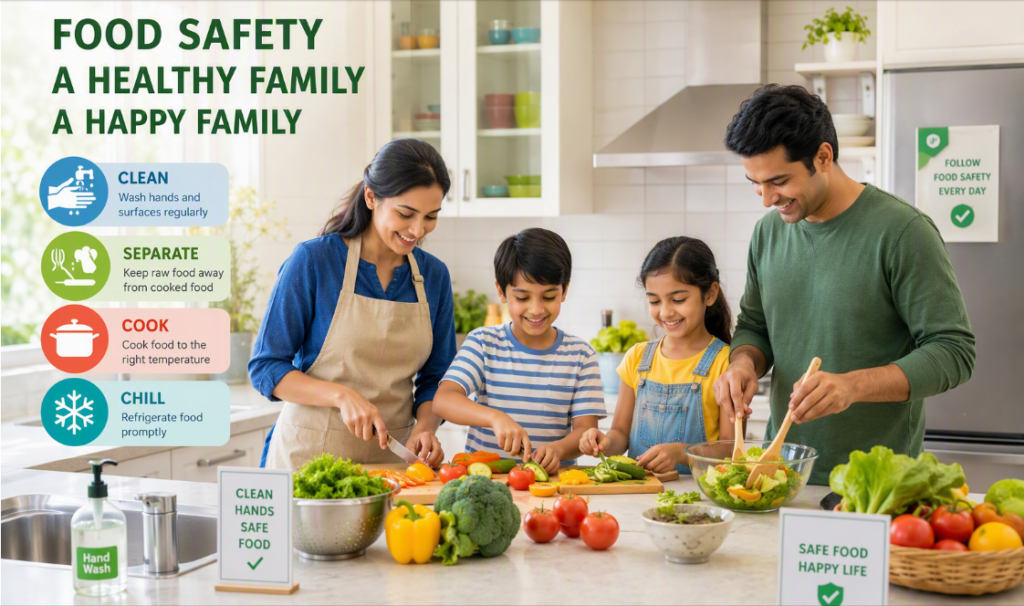
Hand washing is one good way to stop food contamination. Germs from raw meat, dirty surfaces, pets, or the bathroom can get on your food fast. If you wash hands well, you help stop foodborne pathogens from getting to your plate.
Use soapy water and wash hands for at least 20 seconds after you use the bathroom, handle raw meat, or before you eat and cook food. This is a good way to keep safe, and it is even more important when you take care of children or older adults.
Kitchen cleanliness matters too. You need to clean counters, cutting boards, knives, and sinks before and after food preparation. Good food hygiene stops germs from spreading between ingredients. It helps keep all people safe who eat your food.
Effective Cleaning Methods for Food Safety
Clean kitchens help with food safety every day. If you wash and care for surfaces the right way, you remove germs before they can move to food, hands, or tools. This brings down the chance of food contamination and is good for disease control at home.
You do not need hard-to-use tools to make food hygiene better. Soapy water, safe water, and cleaning places that get touched often will help a lot. The next parts talk about ways to clean surfaces, things you use for cooking, and places that touch water in a good way.
Best Practices for Cleaning Kitchen Surfaces and Utensils
A clean kitchen helps lower the chance of germs moving from one food item to another. When you do food preparation, things like counters, knives, boards, and sinks can get germs fast. Cleaning these areas often helps keep up good food hygiene. This also helps protect your food supply at home.
Begin by washing things before you cook and after you cook. Soapy water helps get rid of dirt and food bits you can see on your kitchen tools and surfaces. This easy step helps with disease control because it cuts down on where germs can stay.
Focus on these best practices:
- Always wash cutting boards and knives after they touch raw foods.
- Clean counters before you start food preparation, and clean them again once you finish.
- Use different tools for raw meat and for produce.
- Wash all reusable utensils really well with soapy water.
Consistent habits help make your kitchen safer each time you cook.
Using Safe Water and Disinfectants to Reduce Risks
Water quality is important for food safety. If water is not clean, it can get germs on food, tools, hands, and places where you cook. Using safe water helps lower food contamination when washing, cooking, and cleaning.
This is very important for raw foods that you do not cook. Food like fruits, vegetables, and shellfish may have harmful stuff if the water used before was not safe. Food hygiene starts with the water you use in your kitchen and trust for your food.
Cleaning food-contact areas is important, but disinfecting them gives even more safety. This is true, especially after you handle raw meat. When you use safe water with this step, you help with disease control. This lowers the chance that germs stay on surfaces. It also helps stop germs from getting into meals that are ready to eat.
What simple habits can help prevent food poisoning?
Simple habits can help a lot with food safety. I wash my hands often. I keep raw foods away from cooked foods. I clean the places where I prepare food. I put leftovers in the fridge right away. I cook foods until they reach a safe temperature. When we follow the steps for good food hygiene, it lowers the chance of food poisoning at home.
How can I protect my family from foodborne illness every day?
Protect your family by using food safety practice every day. Buy food with care. Store it fast and safe. Cook meats to their right internal temperature. Keep foods from touching in the kitchen to stop cross-contact. These steps help with disease control. They also lower exposure to sickness from the food supply.
Why is hand hygiene so crucial for food safety?
Hand hygiene is important for food safety. It keeps foodborne pathogens from getting on food, utensils, and surfaces. Wash your hands with soapy water after you use the bathroom, touch raw meat, or handle dirty things. Doing this helps lower food contamination. It makes meals safer for everyone in your home.
Conclusion
Knowing about foodborne illnesses helps to keep you and your loved ones safe and healthy. When you understand what causes these illnesses, what signs to look for, and how to prevent them, you can lower the chance that the people in your home get sick from food. Always use safe cooking and storage methods. Be careful to practice good hygiene in the kitchen, and learn which foods are more likely to cause problems. A few small changes in the way you work in your kitchen can protect your family. If you want more advice about food safety or have questions, you can ask for a consultation at any time.