Key Highlights
- Extreme heat can cause health risks for children and older adults very fast.
- Children’s health can be in danger because their body temperature goes up quickly in small bodies.
- Older adults feel more heat stress, mainly if they have heart or lung problems.
- Heat exhaustion may turn into heat stroke. This be a medical emergency.
- Dehydration, trouble sleeping, lower focus, and breathing problems are common issues.
- Quick action, enough water, shade, and air conditioning help lower heat exposure.
Introduction
Extreme heat is not just something that makes you feel uncomfortable in summer. It can lead to big health risks, mainly for children and older adults. These people usually find it hard to keep their body temperature at a good level during hot weather or a heat wave. This can make them lose too much water, feel heat stress, have trouble breathing, or even get heat stroke. Now, because climate change is causing more hot days and heat to last longer, it is important to know what signs to watch for and how you can help. Knowing what to do keeps the people who need it safe from the worst health risks.
Understanding Extreme Heat and Its Prevalence in India
Extreme heat happens when the temperature goes way above what is normal for a given place and season. In hot weather, the risk gets higher if there is high humidity. The heat index goes up in these conditions. This makes it harder for the body to cool itself.
Climate change leads to more hot days and makes heat waves worse. This is happening in many places, like Indian cities. There, there is less green space and more packed development. Because of that, people feel more heat exposure. This means the daily heat risk goes up, especially for those who may not be able to handle it well.
Defining Extreme Heat Events
Extreme heat events happen when it gets much hotter than usual in a place. This can last for short periods of time or sometimes for longer periods of time. The danger is not just the air getting hot. The heat index is also important. It adds the effects of heat and humidity together. This helps show how hot it really feels to people during extreme heat events.
When there is a lot of humidity in the air, sweat does not go away from the skin as fast. This makes the body’s ability to cool down less strong. Because of this, people can get dehydrated. They may feel tired from heating up. Their body temperature can go up, and they can get heat stroke. Children and older adults are most at risk. This is because they do not cool their bodies as well as others.
Global patterns show why this matters now. The World Meteorological Organization has said there have been record warmth in recent years. These higher temperatures increase the chance of more frequent and more intense extreme heat events.
Climatic Trends and Heatwaves in Indian Cities
Across the world, the warmest years are now mostly in the last ten years. This shows that there is a clear rise in higher temperatures and more days with heat wave conditions. For people who are more at risk, there is longer time to be in the heat. There are fewer safe times at night for recovery. Their health gets more stress because of this.
In Indian cities, climate change is making it feel warmer. The strong sun and crowded places are clear signs of this change. These effects of climate change can be tough for children, older adults, and people who have chronic conditions. It makes their daily life harder.
| Trend | What it means for vulnerable groups in Indian cities |
|---|---|
| More warmest years on record | Heat wave seasons may start earlier and last longer |
| Higher daytime temperatures | Faster dehydration and more heat stress during outdoor activities |
| Warmer nights | Less recovery time for the body during sleep |
| Repeated hot spells | Greater cumulative health impacts over periods of time |
The Impact of Urbanization on Local Temperatures
Urbanization can make local temperatures go up. This happens because natural surfaces get replaced by asphalt, concrete, and buildings, which can trap heat. These places feel hotter during the day. At night, they also let the heat out slowly. So, people have more heat exposure and not much time to cool off.
Another problem is air pollution. When cities get hotter, there can be higher levels of air pollution and bad air quality. This puts more stress on the lungs and heart. For older individuals and young children, this makes heat risk even bigger.
Green space helps bring down the issue of excessive heat. The trees, shade, and plants in these areas can make temperatures lower and feel better for people. If there is no green space, vulnerable neighborhoods may see more health impacts from climate change and too much heat.
Why Children and Older Adults Are Especially Vulnerable
Children and older adults are more likely to have problems during extreme heat. Their bodies are not able to deal with the heat as well as healthy younger adults. This increased risk comes from things like age, changes in the body, and needing help from others. All of these can add to their heat risk.
Children feel heat faster. They often do not see signs that can warn them. Older adults may have illness that does not go away, feel less thirsty, or have weaker blood flow. All of these things can make hot days harder for them. The next parts show the main reasons for this risk.
Age-Related Physical Characteristics and Risk Factors
Age affects how the body deals with high temperatures. In young children, body temperature rises more quickly. This is because their bodies are smaller and warm faster. They also do not sweat as well. In later years of age, the body may not cool down as well. It also reacts more slowly to heat stress.
Physical activity can make your body feel even hotter, no matter how old you are. A child who is playing outside, or an older person who walks in hot weather, will feel hot inside much faster. If you have heart disease, this extra strain is even harder on your body.
Key risk factors include:
- Young children have smaller bodies and sweat less.
- They may not feel thirsty or hot when they play.
- Older adults can’t handle heat as well.
- People with heart disease or other health problems have a higher risk.
These physical limits show why kids are more at risk from extreme heat than adults are.
Limited Coping Mechanisms in the Young and Elderly
Not everyone can act quickly when it’s hot outside. Young children need adults to give them shade, enough water, and make sure they stay indoors where it’s cooler. Older adults may live on their own. They can have trouble getting around. Some do not feel thirsty even when the body needs more water.
Heat can have an impact on how people feel and deal with daily life and mental health. If you get poor sleep, feel confused, have stress, or find it hard to focus, it can be tough to see danger or ask for help. If there are chronic conditions, the risk for issues with mental health can get even bigger.
Common limits include:
- Many people need help from caregivers to stay cool and drink water.
- It can take longer for them to notice when they feel sick from heat.
- They may find it hard to get health care when hot weather happens.
- Life gets harder for them when they have health problems every day.
This is one reason why extreme heat has such a big impact on older adults and their health.
Influence of Socioeconomic and Environmental Context
Heat does not hit every family in the same way. A family’s money problems can change whether they have air conditioning, steady electricity, homes with shade, safe schools, and health care close by. If these things are not there, some groups have to deal with more heat and find it harder to cool off.
The Environmental Protection Agency and public health groups say that people in lower-income areas often live in places that feel hotter. These neighborhoods have more pavement and less trees. There is also more air pollution in these areas. All of this can make their health problems worse.
Rural areas have their own problems. Some families live far from healthcare facilities or other help. Because of this, it can take longer to see and treat heat-related illness. Climate change makes hot days worse. It brings more risk. Also, people can have less help because there is already not enough support in these places.
Health Risks of Extreme Heat for Children
Extreme heat can harm the body and brain in children. There are many health risks—heat stress, dehydration, heat exhaustion, asthma getting worse, and having trouble sleeping. If things get bad, body temperature can go up to levels that are not safe.
Childhood health can change over time. If there is repeated heat exposure, kids may have trouble focusing. They may face learning problems. Changes in their mood can happen. Parents and people who take care of kids should know the short-term warning signs. They should also learn about the long-term effects. These are talked about below.
Heat Exhaustion and Heatstroke in Kids
Heat exhaustion in kids can happen quickly in hot weather. It is common during sports or when they play outside. It can also happen in rooms that are not cool. If the body keeps getting hot and cannot cool down, heat stroke may come next. Heat stroke is a medical emergency.
Parents need to look for the usual warning signs. The child may not talk about what they feel, so you may have to see the problem first. A very high body temperature, strong weakness, or strange behavior needs you to act fast.
Watch for:
- Headache, feeling sick, or throwing up
- Muscle cramps or feeling more tired than now
- Feeling dizzy, sleepy, or having trouble walking
- Hot skin and body temperature going up
- Feeling confused or passing out, which can mean heat stroke
Severe heat illness can harm organs. It could be life-threatening if you do not get care right away.
Dehydration and Its Effects on Childhood Health
Dehydration is a common problem when kids are in heat exposure. Children lose fluids as they sweat, but they may not ask for enough water. Babies and younger children are at higher risk for this. They depend on adults to give them enough water and keep them cool.
When a child does not have the right amount of fluids, it can cause problems very fast. The child may feel tired. It gets harder to focus. The body also cannot keep its temperature steady. Dehydration can lead to headaches, dizziness, and heat exhaustion.
To keep children’s health safe during extreme heat, families need to give drinks to kids often. Do not wait until they say they feel thirsty. Make sure there is water around. Give them places with shade. Let them take lots of rest breaks. Try to keep outside time short when the sun is hottest. All these steps help lower the risk from extreme heat.
Effects on Child Growth and Cognitive Development
Extreme heat does more than make us feel hot. It can be a problem when kids’ bodies and brains are growing fast. Heat risk can change how they learn, pay attention, sleep, and feel. This matters, because these changes can affect their health and happiness later in life.
Research shown in the compiled information says that high temperatures can lead to lower thinking development in people. On very hot school days, students also find it hard to focus and may lose out on learning. When there are heat waves, people do not sleep well. For young kids, sleeping badly can later hurt how they act, use language, and solve problems.
Children are at higher risk than adults when it comes to heat, because their bodies are still growing. Their way of keeping cool is not as strong. A lot of heat can also cut down the safe time for physical activity outdoors. This can change play, movement, and normal healthy habits each day.
Health Risks of Extreme Heat for Older Adults
Older adults that be in extreme heat can face big health risks. The body’s ability to cool down gets lower as people get older. Heat stress can come on fast, and it can be worse if they, or anyone, have a long-lasting sickness or trouble moving.
The body can feel many problems. The heart has to work harder, and breathing can get worse. A person might get dehydrated, feel confused, or be more likely to get sick from the heat. For many older people, the risk gets higher because the heat mixes with their health issues and things they do every day.
Cardiovascular Strain and Extreme Heat Exposure
High temperature makes the body work extra to keep cool. Blood moves toward the skin. The heart has to pump harder to let heat out. In older adults, this can be tough, mainly when there is long heat exposure.
For people who have cardiovascular disease or heart disease, hot days can be risky. The heat may cause weakness and dizziness. It can also lead to irregular heart rhythm and other health problems. That is why seniors with heart conditions must be extra careful when it is hot.
Higher-risk conditions include:
- Cardiovascular disease
- Heart disease
- Reduced circulation with aging
- Other long-lasting conditions that can raise heat stress
These are some medical problems that make extreme heat more risky for older people.
Respiratory Disorders Worsened by High Temperatures
Heat does not impact just the heart. Hot weather and high temperatures can make breathing harder, especially when the air quality is poor because of air pollution. Older individuals may feel breathing get hard when there is both heat and bad air.
The information shows that heat can make problems with the lungs worse, like asthma. When it gets hotter, there can also be more wildfire smoke or other things that pollute the air. This can be hard for the body to handle. It can lead to problems like shortness of breath, tiredness, and the need to see a doctor.
This shows how extreme heat can hurt the health of older adults. If the lungs are already having a hard time, the body has less strength to deal with heat exposure, lose water, and the extra effort to keep body temperature steady.
Increased Vulnerability Due to Chronic Illness
Many older adults have long-term health issues. On hot days, these health problems change how people feel and react. A person with heart or lung troubles, or who gets tired fast, be at more risk. Heat risk goes up even more if you have more than one old health problem all at once.
Access to health care is important. A person who cannot get care on time, refill medicine, or find a way to a cooler spot may have a much higher risk of getting very sick. Sometimes, heat exposure can make a problem that can be controlled turn into a medical emergency.
The biggest worry is about how heat adds more stress. Chronic conditions make it harder for the body to adjust. Even a short time of excessive heat can cause big health impacts for older adults.
Recognizing Signs of Heat-Related Illness in the Vulnerable
Spotting heat-related illness early can keep someone safe. The warning signs are often not easy to notice at first. A child might feel tired or act grumpy. An older adult may seem weak, confused, or more quiet than usual.
If the symptoms get worse, heat stroke can show up quickly and it can be a medical emergency. This is why you and your family or anyone who looks after people need to know what warning signs there are in every age group. The next parts will point out the main signs and tell you when to get help at once.
Key Symptoms in Children
Kids can act differently when they get sick from heat before they even say they feel bad. When it is hot outside, keep an eye on them after they play, take part in sports, ride in a car for a while, or spend time in a place with no cool air. The signs may not look serious at first, but things can get bad fast in hot weather.
Heat exhaustion is usually the first step when a heat problem starts. If you do not catch it early, the health impacts can get worse. Parents need to look at changes in energy, mood, and body temperature.
Look for:
- Headache or feeling sick
- Muscle cramps
- Feeling very tired or low on energy
- Feeling dizzy or hard to think straight
- Hot skin or body temperature going up
These are signs of heat-related illness that parents should keep an eye on in kids. If you see confusion, fainting, or very bad overheating, get urgent care right away.
Warning Signs for Older Adults
In older adults, heat stress might cause weakness, poor balance, or strange confusion. Because the signs look like other health problems, families may not see the connection to heat. A delay like this can be bad during long hot spells.
Heat stroke can be very dangerous for older adults. The warning signs are not just physical problems. A person can also show changes in how they think or act. If someone seems mixed up, is not sweating, or gets very weak, you need to take this seriously. These problems can get worse fast.
Watch for:
- Confusion or a quick change in how someone acts
- Feeling dizzy, fainting, or being very weak
- Skin that feels very hot or signs that the body is too hot
- Hard time breathing or any chest pain
These signs show heatstroke in kids and older people. The symptoms can look a bit different depending on age. A fast answer is important.
When to Seek Immediate Medical Attention
You have to get help fast if you feel more than a little pain after heat exposure on hot days. Signs like confusion, fainting, throwing up, very high body temperature, or feeling very weak show something is wrong. You should not ignore these signs.
Heat stroke is a medical emergency. A child or older adult who cannot stay awake, cannot drink, is confused, or shows signs of organ stress needs quick health care. If there is bad breathing trouble or chest symptoms, this also needs emergency care.
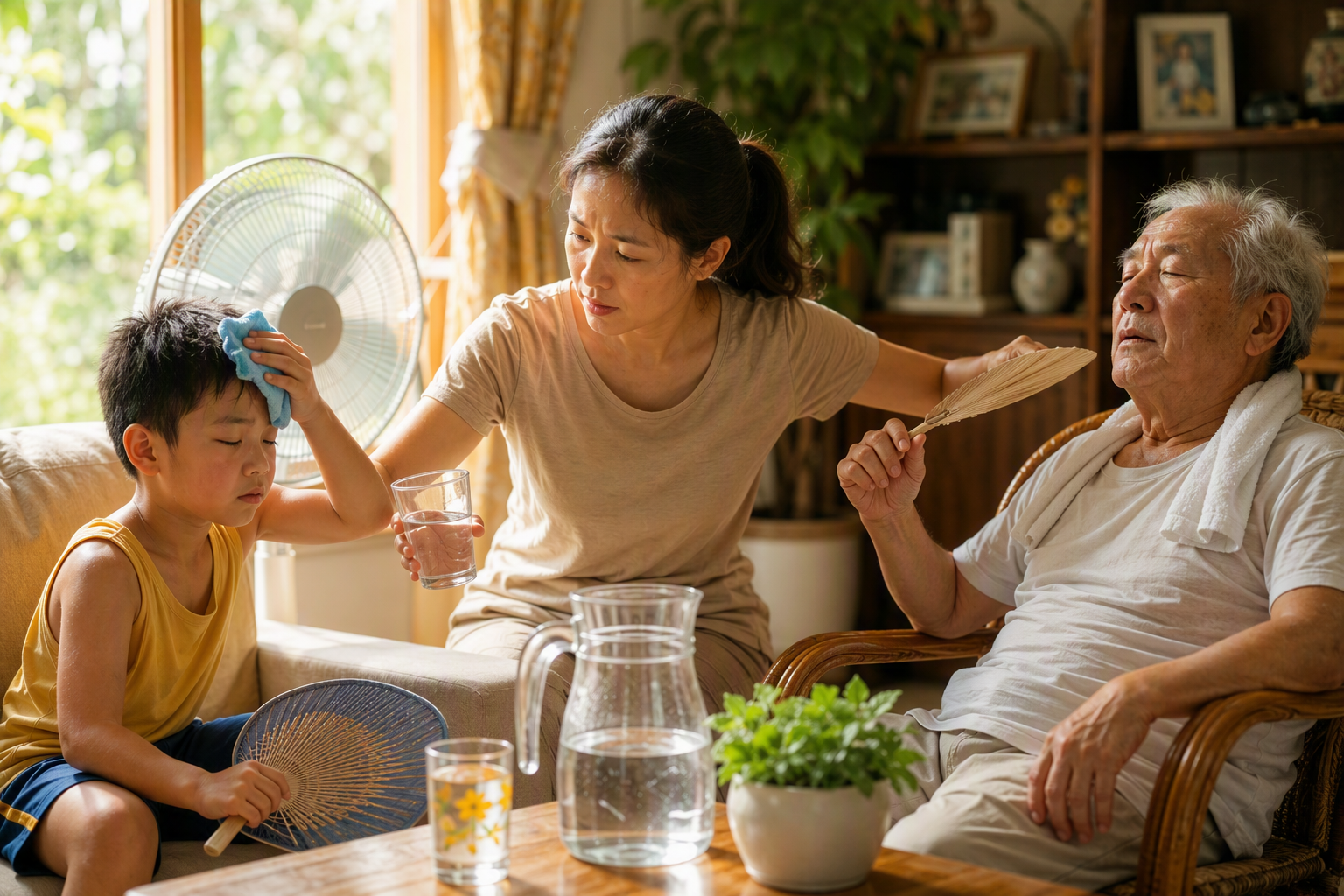
While you wait for help, move the person to a place that is cooler. Try to cut down on their heat exposure. You can use shade, fans, cool cloths, or air conditioning if you have any of these. Quick steps like these can lower the chance of serious problems from strong heat illness.
Preventive Steps for Families and Caregivers
Good prevention starts before any signs of trouble show. Families and caregivers can lower the risk if they plan for the cooler parts of the day. They should check forecasts for the heat index, and stay inside if the heat index is high. Do not go outside much during these times.
Air conditioning, shade, water, and rest can make a big difference. These are easy things to use that help people feel better in the heat. Community heat action plans are also important. They help people find cool places, get alerts, and get help from others nearby.
The next parts will show how to use these steps for kids and older adults.
Hydration Strategies for Children and Seniors
Hydration is key for children and older adults when they deal with heat exposure. The body loses fluids with heat. This makes it harder to stay cool. The risk of feeling dizzy, weak, or getting sick from heat goes up. You should not wait for strong thirst. That may be too late.
Children may not remember to drink water when they play. Older adults may feel that they do not need to drink much. They may also try to drink less for reasons in their day. It is important to give reminders for both groups. Make sure they can reach enough water when they need it.
Helpful strategies include:
- Give water many times in the day.
- Give more fluids when there are outdoor activities.
- Set some times for drink breaks before, during, and after heat exposure.
- Always keep water nearby at home, at school, and when you travel.
Drinking water often helps keep body temperature steady, especially when the weather is hot. This makes it safer for the body to deal with high heat.
Cooling Techniques and Safe Indoor Practices
Cooling the environment is a good way to lower heat risk. Air conditioning can help, especially when it is very hot. Other safe indoor ways can also work well. It is best to start using these methods early and keep using them.
Caregivers can plan to do things in the cooler parts of the day. This could be morning walks instead of going out later. Children can play inside when it is hot. You can check on older adults before rooms get too warm. A green space or shaded area is a good place for safer relief.
Useful steps include:
- Stay inside when it is hottest in the afternoon.
- Use air conditioning or go to places that are cool.
- Close your curtains. Do not let heat build up in your home.
- If you need to go out for a short time, pick spots with shade or more plants.
These simple things that we do can keep older adults safe when the weather gets very hot.
Community-Level Measures and Emergency Preparedness
Families do not have to deal with extreme heat by themselves. A community helps make extreme heat safety better when the people help each other and share what they have. Good heat action plans link things like public alerts, cooling centers, transport help, and outreach to reach the ones who are in the most need.
Emergency preparedness also needs help from local groups. Healthcare facilities, schools, places for kids, and neighborhood groups can work as one. This way, children and older adults get early help when there is a heat wave. Good local planning can keep people safe and stop harm before it starts.
Important community measures include:
- There are early warning systems and public heat alerts.
- Cooling centers are put in different neighborhoods.
- People reach out to families who need help and to older people.
- Groups in the area work together with healthcare facilities.
These steps make it easier for people to take action and be safe when there is very hot weather.
Conclusion
To sum up, knowing how extreme heat can affect children and older adults is very important for their health and safety. These two groups have special needs. They can face serious health risks during extreme heat events if people do not pay attention.
Caregivers and families should learn the signs of problems caused by heat. It helps to use preventive steps like making sure everyone drinks enough water and spends time in safe indoor places. These things can really cut down the health risks of extreme heat.
Extreme heat events are happening more often now. So it is important to stay aware and be ready. We can work together to keep the people we love safe during the hottest times of the year. If you feel worried about heat exposure in your home, feel free to ask for help or advice.
Extreme heat can cause many health risks for children and older adults, but knowing what to do can make a big difference.
Frequently Asked Questions
Which medical conditions make extreme heat most dangerous for seniors?
Cardiovascular disease, heart disease, and other long-term health issues can raise health risks for older adults during times of extreme heat. These problems can make it hard for the body to deal with heat stress. Because of this, there is a greater chance for dehydration, confusion, or heat stroke to happen. These can get worse quickly and become dangerous for older adults.
What symptoms indicate heatstroke in children and older adults?
Heat stroke can be very serious, especially for children and older adults. A person may have a very high body temperature and feel hot to the touch. There can be confusion, fainting, or odd behavior. A person may feel very weak and may even have trouble breathing or staying awake.
Heat stroke is a medical emergency. Get help right away if you see these signs.
How does climate change increase the risk of heat-related problems for vulnerable groups?
Climate change causes more extreme heat and more hot days. It makes heat waves worse and last longer. Because of this, there are stronger health impacts for children and older adults. In many cities, heat comes with air pollution. This puts extra stress on the lungs and the heart.