
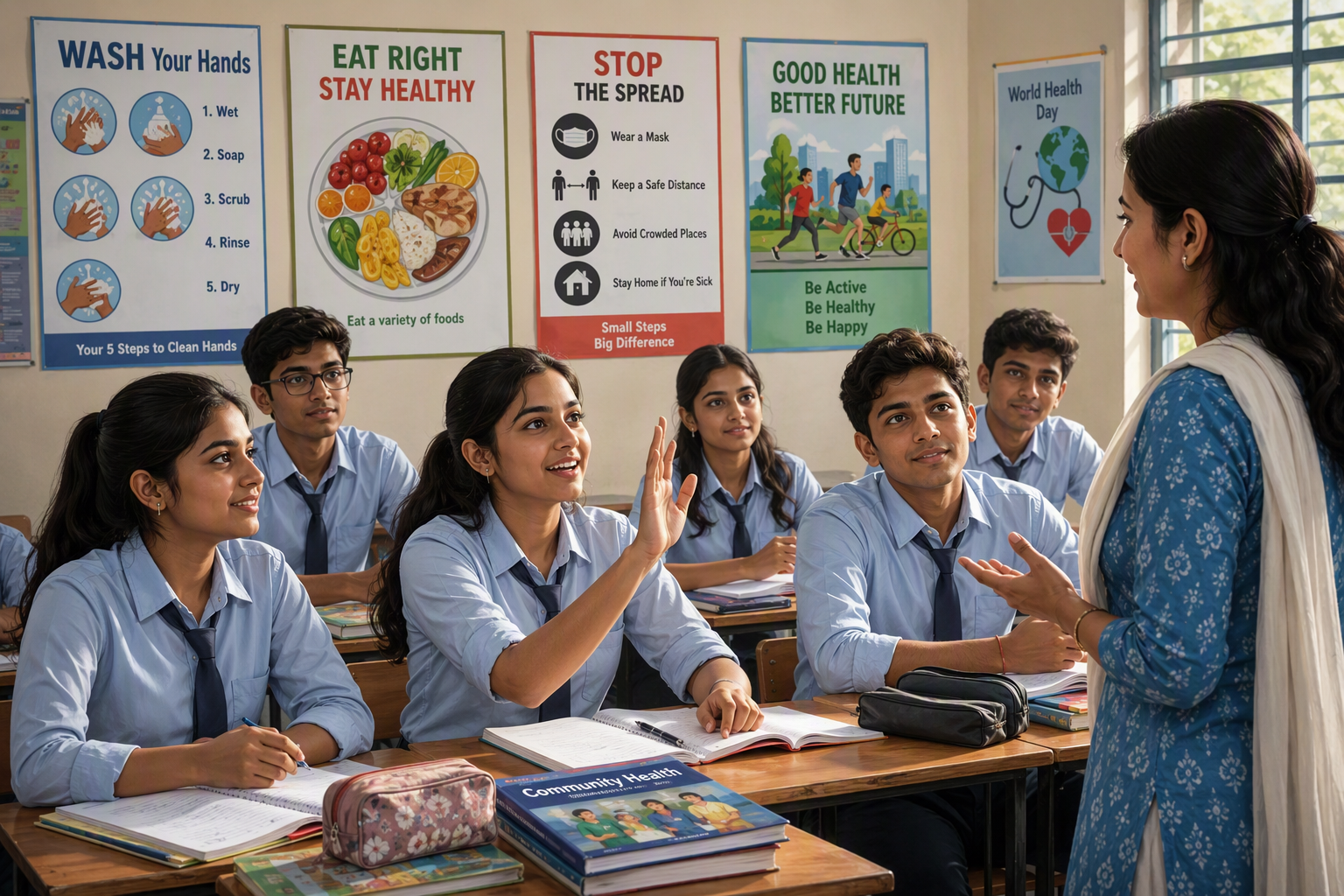
Key Highlights
- Public health education helps young people understand health before risky habits start.
- Strong school health programs help stop disease, keep safety, and guide better choices each day.
- Learning early gets kids to practice healthy behaviors that can last into adult life.
- School health efforts show how learning, well-being, and academic progress work together.
- A clear plan teaches young people to read and feel sure about health information.
- Beginning early makes public health education feel like a normal and helpful part of school.
Introduction
Public health education should be in schools. Learning and health promotion need to be together. When students know about their bodies, minds, and the choices they make, they do better in life. They learn more, grow well, and keep safe. Good school health teaching does not take away from school work. It helps students do better in the classroom. A country like India, where there are many young people and different backgrounds, needs health education early. That way, schools can help students build good habits, be more aware, and have better lives in the long run.
The Importance of Starting Public Health Education Early in Indian Schools
Health education should start when young people are still kids. They build beliefs, habits, and ways to deal with things at that time. If school health is taught early, students can get health literacy before any confusion or bad information gets to them. That way, they learn good habits from the start.
Early teaching plays a big part in disease prevention. It lets schools help students with real problems like stress, bullying, ongoing sickness, and bad habits. These issues can change how students learn. In the next sections, you will read about what goes into public health education and why it is best to start health education in childhood.
Understanding Public Health Education
Public health education helps people know the best ways to stay healthy. It is not only about fixing health problems after they start. In schools, public health education gives students health knowledge. They learn what to do for their health day-to-day. This helps them make smart choices and feel good.
Public health helps everyone at school feel and do better. It does not just help one child at one time. It looks at how groups of students act and feel every day. The goal is to find out what makes students healthy. This includes caring about their bodies, minds, feelings, and how they get along with others. All these things are important for school success.
When schools give lessons about these topics in a clear way, health outcomes can get better as time goes on. Students in the school see how their choices in life link to safety, good learning, and their quality of life. This is one big reason why public health education needs to be in the school curriculum. It helps young people get a strong understanding early. As they grow, they will know how to use health information the right way.
Key Reasons to Begin in Childhood
Childhood is a good time to help kids learn about health because they are still making their habits. School health education can show them how to make good choices. It can help them avoid picking up bad habits. This way, health literacy, school health, and school health education can make a real difference for them.
You can also see how helpful it is in disease prevention. Early learning shows kids that what they do every day will affect them later. This is important when schools work on stress, bullying, tobacco use, bad eating habits, and not enough physical activity.
- Children pick up healthy behaviors when habits are still new.
- Schools help stop confusion about health issues and risk factors.
- Students learn how to make safer choices before their teen years bring more pressure.
- Early lessons help with disease prevention and keep students more involved in school.
Starting young does not mean you make students feel scared. It is about giving simple and useful things they can use to help themselves, now and in the future.
The Growing Need for Health Awareness Among Youth
Today’s young people deal with many health issues. They may feel stress, get bullied, go hungry, have safety worries, face chronic illness, or see substance use. These problems do not stop when students enter the classroom. The issues can make it hard to pay attention, show up for school, and feel confident.
At the same time, young people see health information come at them quickly. Without help, it is hard to know what is useful, what is not true, and what matters most right now. Schools can help students find real facts in a way that fits their age.
This is important for good health and being fair with everyone. Some students feel more risk because of health disparities or hard social conditions at their home or around them. Public health education helps all students learn more. This can help them make better choices. It also helps close the gap in what people know about health over time.
Core Components of Public Health Education in School Curriculums
A good health education program gives students knowledge they can use in real life. It helps school health, grows their health literacy, and teaches health promoting habits. These habits should fit into what they do every day, not just help raise test scores.
Schools need to be organized. Tools like a health education curriculum analysis tool can help leaders check what teachers are covering. They can see if it matches the goals for school health. The following sections show the main things that a balanced curriculum should have.
Physical Health and Hygiene Topics
Physical health and hygiene are the base for students to learn about wellness at school. Students must get clear lessons about daily ways to keep themselves and others safe. These lessons are easy to follow, but they can help many people in big ways.
In many schools, teaching about hygiene can help with disease prevention. It can lower some common health challenges. These are the issues that often make students miss school or lose focus in class. Hygiene lessons also help students see that caring for themselves is part of a health promoting space. It is not only something you do at home or just for yourself.
- Handwashing and basic habits help to stop illness from spreading.
- Knowing how to take care of your body can help you feel sure about yourself and stay safe each day.
- Learning early about health helps people take care of themself for many years.
Quality teaching in this area can change health outcomes over time. Children take these habits with them as they grow up. Small things learned when they are young can help them for years.
Mental Health and Emotional Well-being
Mental health needs to be a clear part of school health. Emotional strain can make it hard to learn, just like being sick does. Students who feel anxiety, get bullied, have sleep trouble, or feel sadness may not take part in class as much as others.
Public health education helps students use the right words to talk about their feelings. This lets them know when they or someone else may need help. It also makes it easier to talk about health issues that are often kept secret. By doing this, public health education can stop people from staying quiet about some health problems until they get worse.
When schools talk about mental health in daily lessons, students feel these changes. They feel safer when asking for help. They start to know how to deal with tough times in a healthy way. They can even support other kids. With time, all this can give better health outcomes. It makes the school feel like a stronger place. The harm caused by stigma or not getting help soon can go down.
Nutrition, Diet, and Lifestyle Choices
Nutrition education teaches students about food, energy, and long-term health. The goal is not just to remember names of food groups. It is to learn how what you eat can change how you feel, grow, and do your work each day.
Schools are good places for health promotion. Kids start making food choices when they are young. They make these choices many times each day. When you use simple examples to teach a healthy lifestyle, it makes healthy choices feel real. It helps kids understand what to do, not just think about it.
- The students get to know how the food they eat can change the way they feel, focus, and use strength.
- The lessons may help them see why it is good to eat balanced meals and keep up with regular physical activity.
- Easy tips give them the confidence to make better choices every day.
These lessons help students read and understand health topics better. When students learn why nutrition is important, they can ask about bad habits. They also make better choices as they get older.
Benefits of Public Health Education for Students
Public health education helps students in the classroom and in their lives. It builds health literacy. It encourages healthy behaviors. It helps children see how their daily choices can affect disease prevention and safety. Teaching health education in schools makes a real difference for kids and their future.
These benefits are not just about wellness. Good health habits can help with attendance, focus, and doing well in school. These things all play a part in better health outcomes later in life. The next sections talk about these gains. You will learn more about decision-making and school success.
Improved Health Literacy and Informed Decision Making
Health literacy in school health helps students read and use health information every day. Students can read a label, spot a warning sign, or know when to ask for help from someone they trust. This skill is important for all of us.
Once students see things more clearly, they find it easier to make the right choices. They can link what they do to what happens next. This helps them not just guess. This is very important when they hear things about tobacco use, substance use, what they eat, stress, or staying safe.
A simple way to see this is below:
| School health topic | How health literacy helps |
|---|---|
| Hygiene | Students understand why daily habits reduce illness |
| Nutrition | Students make healthier food choices with more confidence |
| Mental health | Students recognize signs of stress and seek support earlier |
| Risk behaviors | Students judge consequences before acting |
That kind of health promoting learning helps people feel better. It also helps you take care of yourself.
Development of Lifelong Healthy Behaviors
Children say what they learn and practice. That is why schools are good places to build healthy behaviors before their adult life starts. A lesson given early can turn into a habit that feels normal for many years.
This is the place where health promotion works in real life. When students know about sleep, movement, hygiene, balanced eating, and taking care of feelings, they start to use these ideas to build healthy habits. After some time, doing these things again and again makes patterns that help them stay healthy for all their years.
The long-term value is clear. When kids learn better habits, they can avoid risks that they do not need to face. This helps them have good health later on. Public health education does not make sure you will choose right every day. But it does give a strong base. With this base, children and teens can keep good routines as they go into higher education, work, family, and when they grow up.
Enhanced Academic Achievement and Attendance
Healthy students learn better. Kids who feel sick, stressed, bullied, hungry, or have health conditions that are not managed well often do not do as well in class. Health education and public health programs help schools solve these problems early.
It helps students do well at school by building health literacy. When students know what they need, they may tell someone about symptoms, use support from the school, and do things that help them stay in class. Being active and taking care of yourself can help students keep their focus and feel strong during the school day.
Attendance is important because when students miss days, they often have lower academic achievement. Schools can show students how health and learning are linked. This helps to stop missed days that could be avoided and makes students more involved at school. Over time, this keeps students on top with their school work. It also helps them create good habits for their well-being and work in the future.
The Role of Schools in Promoting Healthy Behaviors
Schools are not just places to learn from books. They also help students build healthy behaviors. This happens through school health lessons, routines every day, and clear rules that students can see. It is easy for students to copy the good habits that are taught at school. Because of this, schools are a strong health promoting space for all.
School staff, classroom practices, and school health programs can shape how students feel about being healthy. When there is a clear message from the people in the school and the programs, students get the idea of health from more than one source. The next parts will show how schools may help students with these things in real and simple ways.
Creating a Supportive School Environment
A supportive place at school helps students feel safe and respected. It lets them feel ready to learn. In school health, it is not just one lesson each week. It means the whole school should show that wellness matters and that everyone should expect it.
The whole child model helps us see why all this is important. Students do better in school when they feel healthy, safe, part of things, supported, and pushed to grow. School staff help a lot by how they talk with students every day, set routines, and handle what students need.
- When the school has clear rules, bullying goes down and kids feel safer with their feelings.
- When support is the same every day, students feel okay to talk about health worries early.
- If there are good routines, it is easier for kids to make healthy choices during school.
When schools make this kind of space, it can help outside of the campus, too. Students take what they learn back to their homes. This helps their families. It also makes the whole community feel better as time goes on.
Integrating Health Programs with Academics
Health programs help the most when they are tied to what students learn and not just added as extras. Schools understand that how students feel affects how well they pay attention, if they come to class, and how they act. When you bring those thoughts together, it is easier for schools to have good health programs.
This way helps boost academic success. If students feel healthy, safe, and know more, they can join class better. School health programs work to support this. They do it by matching wellness goals with school goals, not by going against them.
There are some strategies that work well for this. Health education that is good, teachers who are trained, and a plan that everyone follows all play a part. Schools can also try ways that make learning fun and connect with how students learn now. If health promotion is added to what a school believes in, it feels right, is well set up, and is simpler to keep going for years.
Involving Teachers and Staff as Role Models
Students notice what adults do and say. This is why school staff are important in health education. A teacher’s words, actions, and how they talk about health can help students feel wellness matters. It can also make students feel it is not something to care about.
Role models can be strong. This happens when they share clear and respectful messages. Staff do not need to know everything. But it is good if they help with health promotion. They should be consistent. They should show empathy. They should give the right information.
Schools can bring in health professionals. This can help make lessons better. They can add good guidance to what students learn.
This work helps more than just each student. When school staff show good habits and give students useful information, schools can be stronger partners in community health. Their help can also reach families, local talks, and build more trust in health messages that come from the school.
Strategies for Effective Public Health Education Implementation
Good intentions by themselves do not change much. Health education needs to be planned well and the teaching must be clear. Schools also need support to help build health literacy in students, in ways they can use. This helps health education programs work for real. It also makes school health more than just a symbol.
Professional development, picking the right curriculum, and teaming up with community partners can really help. Schools do not have to do it by themselves. The next sections show simple ways to make health education and public health education better and stronger as time goes on.
Age-Appropriate and Culturally Relevant Content
Students learn better when the lessons fit their age and what is going on in their lives. Health education should be easy for kids to understand. The lessons should not give too much to younger children. At the same time, they should not make it too simple for older students who need more information.
It also needs content that fits the cultures of the people. Schools teach students from many communities, languages, and social conditions. If lessons leave out social determinants, they can miss the things that block real choices. Seeing those differences helps health equity. It also makes learning more helpful for all.
- Lessons made for the right age help students know what is going on and feel less confused.
- Content that fits with a person’s culture shows students that health is important for them.
- Teaching that shows social determinants can help support health equity.
These steps help make programs stronger. Students are more likely to trust what they learn, remember it, and use it later. Effective school health begins with content that respects development and fits the setting.
Use of Interactive and Experiential Activities
Students remember things better when they take part and do things. Doing interactive activities helps make health ideas feel real. It turns these topics into skills you can use every day. In school health, this is good because using what you learn for real life is important.
Experiential learning means getting to do things, not just listening. It can use things like guided talks, problem-solving, thinking and looking back, and showing how something works in a way that fits the age of the students. These ways are good for students in the 21st century who feel connected all the time. They work better than just sitting and listening. They also help health promoting ideas feel important and real right now.
This way of teaching helps with better health outcomes. A student gets to use and practice their own decision-making instead of just memorizing facts. They find out how to answer someone, ask questions, and use what they know when something happens. A school that wants health education and public health to work well can use active learning as one of the best ways. It makes students want to join in and helps them remember healthy ideas.
Collaboration with Local Public Health Organizations
Schools can make health education better if they bring in people from outside who know about community health. Public health professionals have real know-how. They give extra help for programs, and see local risk factors in a bigger way. They help us understand what students may face and make health education stronger for all.
This kind of partnership can help schools work better with the department of education and other groups that shape plans and rules. When schools and community partners join forces, students get clear and steady messages from everyone.
- Public health professionals can help make lessons better and train staff.
- Community partners can help schools deal with health issues in the area.
- Shared planning can link school goals to bigger community health needs.
Collaboration matters because no school can do everything on its own. Working together makes school-based education stronger and more useful. It also helps schools keep things going when resources are low or when student needs are complex.
Challenges Faced When Introducing Public Health Education in Schools
Introducing public health education helps students. But schools often have problems that make it hard. They deal with other important things. Some people support school health, but some do not. Also, students come to school with many health challenges. These issues can make school health education take longer to get started.
Health disparities and social determinants of health play a big part in what schools can offer and how students act. If there is no planning and professional development, even the best ideas might not work well. The following sections show the most common problems schools face and tell you why these issues are so important.
Limited Resources and Trained Staff
Many schools want better health education. But the resources can be limited. Time, staff, and money are often tight. Because of this, school health can drop in importance. This happens, even when students’ needs are obvious.
Another problem is the quality of people on staff. Health education is often taught by adults who have not learned about this subject in detail. If schools do not have trained staff, they may teach lessons that are not the same or leave out key topics. Professional development gives help to these adults, but it needs time and support.
- Limited resources can make it hard to keep programs good and steady.
- When there are not enough trained staff, people feel less sure about teaching health topics.
- Professional development helps make teaching better and supports success for a long time.
These gaps do not mean that schools should give up. Schools and their leaders need to see good school health as something everyone should have, not something extra. This is how they can make a real and long-lasting change.
Diverse Socioeconomic Backgrounds of Students
Students do not go to school with the same chance to grow, help, or care. A student’s family income can change things like nutrition, safety, stress, and the way they follow health tips outside class.
That is why the things around a student matter in school health. A child might get what is taught. Still, they may find it hard to do it because they do not have enough money, feel family stress, or face problems in their area. Schools must not ignore this. If they do, health differences will get bigger, not smaller.
A better way is to teach thinking about health equity. Schools can give clear facts and see that students face different problems. This does not lower the bar for anyone. It makes teaching more real, more helpful, and more likely to reach those students who need help the most.
Overcoming Stigma Around Health Topics
Some health issues can be tough to talk about in schools. Students may feel embarrassed or worry that others will judge them. Topics like mental health, substance abuse, sexual health, or family problems often have strong stigma. This makes students stay quiet about them.
That being quiet can get in the way of learning. If students feel that some topics are shameful, they will not get good lessons or ask questions about sensitive information. A health promoting school health plan has to build trust first. Only then can real learning take place.
- By using respectful language, we help cut down the shame that comes with hard topics.
- When there are clear classroom rules, students feel safe to ask questions.
- Correct teaching can trade wrong ideas for helpful knowledge.
Schools cannot get rid of stigma right away. They can start to break it down with slow, clear teaching. When students feel respected, they take part more, ask for help, and show more care for others.
Long-Term Impact of School-Based Public Health Education
School health education keeps going as students move to higher grades. The things students learn stay with them. They use health education in their daily life, family, and at work. This helps with disease prevention. School health education is important for everyone, not just kids.
Learning about health at a young age can help kids be better prepared for long-term illnesses later on. This can lead to better health outcomes for them. It also helps make the community health stronger. So, when kids learn about health in school, it does more than change how they act now. The next parts will talk about how it can help in other ways too.
Reducing Chronic Diseases in the Indian Population
Many chronic diseases start from habits picked up early in life. A poor diet, not moving enough, tobacco use, and not much health knowledge can make risk higher as time goes on. That is why disease prevention taught in schools is a good and smart way to help for the long run.
When students see how the things they do every day can lead to illness in the future, they start to understand how actions can make a difference. It may not solve every problem, since determinants of health still affect what happens. But it helps them learn and make better choices early in life.
- Early lessons help cut down time with preventable risk factors.
- Better habits can lower the chances of chronic diseases in the future.
- Knowing more leads to better choices and good health outcomes later on.
India has a huge and growing group of people, so these gains in public health are important. Schools may not fix every public health problem, but they can help. By teaching students how to take care of their health early, schools make the future better and take some pressure off.
Building a Health-Conscious Generation
A health-conscious group does not just happen. It starts when kids learn to see how what they do impacts their body, mind, and the people around them. School is one place where almost everyone can hear that message.
Through health promotion, students get real health knowledge. They learn facts that help them, not rumors or guesses. They see healthy behaviors as things we do every day. It should not feel like a hard task. This change is strong. It makes healthy choices feel normal.
Over time, students who learn about wellness are more likely to make healthy choices for themselves and for others. People like this may grow up to care about prevention. They can build homes that are healthy. They also answer better to public health messages. This is one way school learning can help make a more aware society.
Supporting National Public Health Goals
School-based public health education helps the country do better by getting students ready to learn about health early. Kids are taught about how to stop problems, stay safe, and be responsible for themselves. This makes health promotion in the future easier. It also helps these efforts work well and reach more people.
It also helps build a strong link between schools and the groups they work with. Public health professionals, educators, and a government organization can team up to reach the same goals. This happens when health education is seen as important for everyone and not just something extra.
This is important for disease control and public health. A group of people with good health literacy can better follow health advice. They help lower risks and make their communities healthy. School programs help students learn, but they also support the country’s public health goals for the long run.
Conclusion
Health education is very important for students. Putting public health education in school plans helps students learn more about health from a young age. When kids know about health early, they can make better choices for their bodies and minds. This leads to better grades and good healthy habits that last all their lives.
Schools play a big part in helping students. A school gives help, and lets students learn about health in a fun way. Some kids have less, and some come from different places, so schools must work hard to give every child the chance to learn about public health education.
If we do this together, health awareness will be a big part of our communities. Want to know more or need help to do this in your school? Book a free talk with our team. We are here to help you.
Frequently Asked Questions
How can parents support public health education at home?
Parents can help health literacy grow by talking with their kids about daily routines. They can share easy-to-understand health information and keep healthy habits strong at home. Simple things like talking about food, sleep, hygiene, and stress make health promotion feel like a normal part of life. This support from parents can help kids feel better about themselves, act in good ways, and do well at school.
What are the most effective methods for teaching health topics to children?
The best way to teach health education is to use simple words, let people join in, and share real-life stories. In school health classes, hands-on activities help kids remember the things they learn. It also lets them use what they know in every day life. This makes health literacy better. It helps students learn about healthy behaviors in a way that is easy to follow, practice, and keep doing.
How does school-based health education contribute to community well-being?
School health helps the whole community feel better. It teaches students real skills they take home. Health education in public schools can help people feel good, show ways to stop problems before they start, and clear up common worries. After some time, school health gives more kids good health tips. It makes it fairer for everyone to get care and feel well.

