Key Highlights
- Excessive screen time can hurt both mental health and physical health in teens.
- Common short-term problems from screen use are eye strain, dry eyes, headaches, and blurry vision.
- Long hours in front of screens can change sleep patterns and take away good rest.
- Too much screen use means less movement, less outdoor time, and less time with people face-to-face.
- Poor posture, neck pain, and less physical activity can make people feel less good each day and lower their quality of life.
- Healthy habits, taking breaks, and having screen time limits can help make digital life safer.
Table of Contents
Introduction
Screen time has become a big part of school, fun, and friendships for many teens. But when teens spend too much time on digital devices, they can face health issues that are not always easy to see right away. You might notice tired eyes, not sleeping well, or changes in mood. At first, you may not know these come from screen use. When teens are online a lot, it can affect how they learn, move, and live each day. That is why it is important to know what screen use and spending much time on screens is doing to teen health.
Understanding Screen Time Among Indian Teens
For lots of Indian teens, screen time is a big part of their day. They use digital devices like phones, tablets, laptops, and TVs to do their schoolwork. They also use them for fun and to keep in touch with friends. Because these devices are always near, media use can add up fast. Many do not even notice how much time they spend on screens.
At the same time, social media and games keep teens on their screens for long periods. This is why it is important to see what things count as screen time. We also need to know which devices people use the most. Using screens more each day can change how people do normal things and affect their habits in the long run.
Defining Screen Time in Today’s Digital Age
Screen time is the hours teens spend in front of screens. These screens can be digital devices like phones, tablets, computers, and televisions. Screen time can be for school work, chatting with people, streaming videos, playing games, or scrolling through online stuff. In short, it is the time you use digital devices during the day.
Today, media use is everywhere. Teens use screens to learn, to relax, and to keep in touch with others. Because of this, much screen time can feel normal to them. It may even last most of the day.
The main physical health problems that can come from long periods of screen use include eye strain, dry eyes, headaches, blurry vision, and poor posture. Spending too much time in front of screens can also cause neck pain and lower the amount of physical activity that people get. Over time, excessive screen use can lead to weight gain or problems with sleep. This is more likely when time outside and moving around is not a big part of the day.
Popular Devices and Platforms Used by Teens
Teens often use different electronic devices during the day. They might text with a phone, use a laptop for school, and watch shows on a TV. Because of this, digital media gets to them in many ways, not only in one way.
Some of the most common screen activities include:
- Using social media platforms to chat, share posts, and follow friends
- Playing video games for fun or to compete with others
- Watching shows or quick videos on streaming apps
- Doing homework, looking up things, or taking online classes on computers
This is important because too much screen time can affect the way children grow and learn. If screen time takes the place of outdoor play, sleep, and talking face-to-face, teens can have a hard time with things like social skills, paying attention, and having good daily habits. The problem is not about just one device. It is the pattern of how much people use screens every day.
Current Trends and Statistics on Teen Screen Use in India
Screen use has gone up in recent years, as more of learning, fun, and social time now happens online. The information shows that even outside of school, many teens spend a lot of time on screens every day. This is why many families now think more about screen time and want to set time limits for it.
The source shares data from the United States. It talks about the national health interview, not facts about India. But this pattern can still help us see how teens act.
| Screen use trend | What it suggests |
|---|---|
| Many teenagers spend 4 or more hours daily on non-school screens | Recreational screen habits can grow quickly |
| Screen exposure often begins early | Daily routines may become screen-centered |
| No universal limit exists for older children | Families need practical boundaries |
| More near work means less outdoor time | Long-term lifestyle changes may follow |
Yes, spending too much time in front of screens can make changes to the way you live for a long time. It can feel normal to sit for long periods. This might lead to less physical activity. It can also change when you go to sleep. You may get less time to play outside or talk face-to-face with people.
Physical Health Risks Linked to Excessive Screen Time
Spending too much time on screens can slowly hurt a teen’s physical health. What may feel like a small problem, like a bit of soreness, can turn into bigger health issues if most of the day is taken up by screen time or screen use. A teen may feel tired eyes, headaches, sore shoulders, or feel stiff. These are warning signs that the body gives to let you know something is not right with screen time.
Another concern is what screens take the place of. When teens sit more and move less, physical activity goes down. This change can affect how you sit, feel in your body, and have energy each day. The next sections talk about how screen time can impact muscles, weight, and eye health.
Effects on Posture and Musculoskeletal Health
One of the most obvious things to happen from heavy screen use is poor posture. Teens often bend forward on their phones or sit over laptops for long periods. This can put stress on the neck, shoulders, and upper back.
Some experts call this “tech neck.” It is not just a small ache that goes away. If you get this strain over and over, it can change how your neck and muscles feel. Everyday movement may get less easy because of this. A teen might often feel neck pain. They may also feel that their shoulders are tight or feel sore, especially after studying or long times of gaming.
These are some important physical health problems linked to too much screen time. Besides eye strain and less movement, sitting in a bad way can hurt how teens sit, sleep, and pay attention. A better way to sit, taking regular breaks, and spending less time in the same spot can help take away some of the strain.
Challenges Like Childhood Obesity and Reduced Physical Activity
When screen time goes up, teens often move less. They can spend a lot of time sitting down to stream shows, scroll online, or play games. This means they get less physical activity each day. Over time, this can lead to weight gain and raise the risk of obesity.
The pattern gets stronger when screen use starts to change other habits. Some common problems are:
- There is less outdoor play and exercise for most people.
- Many sit for long periods at a time.
- Unhealthy eating habits happen when people use the TV or phone.
- People take fewer breaks to move between things they do.
Yes, too much screen time can change the way someone lives for a long time. A teen can get used to spending a lot of time sitting, eating snacks, and staying inside. This can hurt overall health not only now, but also later in life. The goal is not to take away all screen time, but to help make sure screens do not stop people from having an active and balanced life every day.
Common Eye Problems: Digital Eye Strain, Myopia, and Blue Light Exposure
Eye problems are common when people have a lot of screen use. Digital eye strain can happen if you look at a screen for too long and do not take breaks. When this happens, you may blink less. That leaves your eyes dry and can make them feel more sore or cause eye strain. This is a problem for many teens who spend a lot of time in front of screens.
Common eye health concerns include:
- Eye strain and tired eyes
- Dry eyes, headaches, and blurry vision
- Myopia linked with long periods of near work
- Blue light exposure that may disturb natural sleep cycles
These problems do not always cause lasting damage, but you should not ignore them. Screens make the eye muscles work harder when you look at them for a long time. This is true during long study or gaming sessions. You can use the 20-20-20 rule, keep a good screen distance, spend time outside, and get a yearly eye exam. These steps help protect eye health and lower digital eye strain.
Mental Health Implications of Extended Screen Use
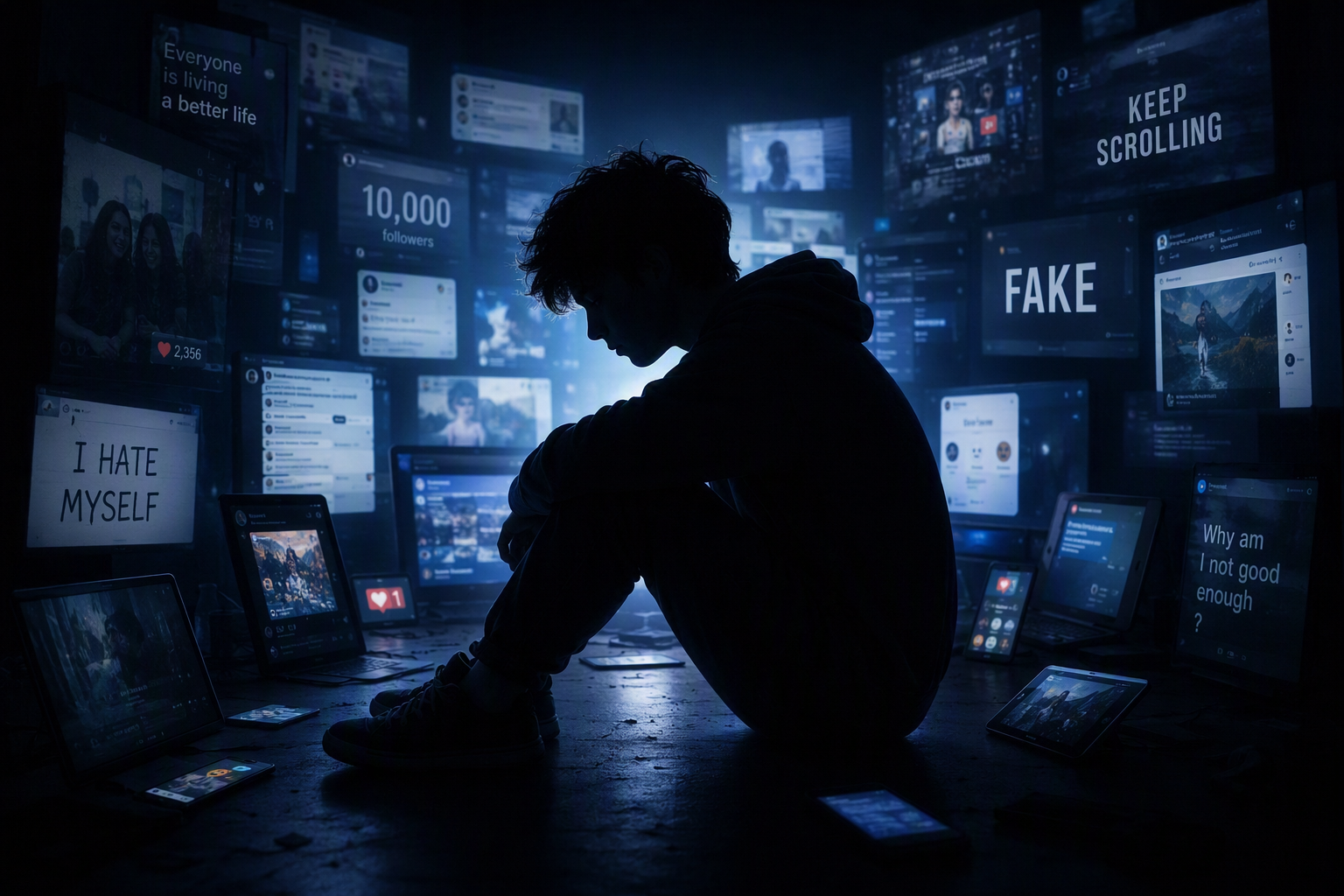
Extended screen use can affect teen mental health as much as it does their physical health. The constant pings from notifications, too much happening online, and spending a lot of time on screens can make teens feel tense or restless. They may feel worn out too. In some cases, excessive screen time can lead to mental health disorders like anxiety or depression.
Another problem is social isolation. A teen might feel like they talk to people on the internet but still feel alone in real life. If screens mess with sleep, normal habits, and time with people face-to-face, the feelings that come can be tough to handle. The next parts talk about this topic more.
Anxiety, Depression, and Mood Swings Among Teens
Too much screen time can be bad for mental health. When there is a lot of screen time, you always feel busy in your mind and do not get time to relax. Notifications, online pressure, and a stream of content can make teens feel like they always have to be alert. This can make anxiety and irritability go up.
As time goes by, some teens can have mood swings. They may feel more touchy when small things go wrong. It can also be hard for them to handle how they feel. The changes can be small at the start. Some signs of this are getting frustrated, feeling restless, or being unable to deal with things after spending a long time looking at screens.
Too much screen use can make mental health worse, especially if it messes up normal routines. You might get less sleep, spend less time outside, or have fewer real talks with people. All of these things add up. Mental health problems don’t come from just one thing, but screen use that takes up too much time can add to them or make people feel less balanced. This is how excessive screen use can cause health problems for teens.
Impact on Attention Span and Cognitive Development
Heavy screen use can make it hard for teens to keep their mind on one thing for a long time. Fast content and always moving from one app to another may make their attention span shorter. It can feel tougher to really focus. This is important for school and day-to-day life.
Cognitive development needs good sleep, movement, and real-world time with people. If screens take the place of these things, teens may not get the habits that help with brain health. While you can still learn on the internet, it is important to keep a balance.
Using screens a lot can impact children’s mental health. It can make them feel too stimulated and take away the routines that help them feel steady. A tired or distracted teen may get more upset, feel less present, and feel worn out in their mind.
To help with focus, it’s good to make time for breaks, sleep, and time with no screens during the day.
Social Isolation and Reduced Face-to-Face Communication
Digital contact can be good, but it is not like seeing people in person. If teens have much time online, they may not talk face-to-face as much. This can make their social interactions weaker and can hurt how they feel about themselves and others.
Possible effects include:
- There is less practice with real-life social skills.
- People feel more isolated, even if they are online.
- Many feel less comfortable when having face-to-face talks.
- There are not as many times to read tone, body language, and emotions.
This is one way that too much screen time can change how children grow. Kids need to spend time with family, friends, and in the world to help their social growth. When screen time takes up most of their free time, teens may feel like they are close to people. But they can still feel social isolation inside, even with all that online contact.
Influence of Screen Time on Sleep Quality
Sleep quality can go down if screen time gets too long at night. A lot of teens use their phones or other devices before bed. This can make it hard for the body to calm down. Because of that, sleep patterns might be later and feel less steady.
Blue light is one big reason for sleep problems. When people see blue light in the evening, it can lower melatonin. Melatonin is a hormone that helps the body get ready to rest. If teens miss out on deep restorative sleep, it can change their mood. They may also lose focus and feel tired through the day.
How Screen Exposure Disrupts Sleep Patterns
Prolonged screen time can change how the body gets ready to sleep. When teens use electronic devices late in the day, their brains stay active. This keeps them from winding down. It can push bedtime later. This also messes up normal sleep patterns. That can affect overall sleep quality.
Looking at screens in the evening can bring down the level of melatonin in your body. This is the sleep hormone you need to help you fall asleep. Without it, you might find it takes more time to get to sleep. A teen may be in bed but may have trouble falling asleep. They can also wake up feeling tired.
This can cause a person to not get enough sleep during the week. When this happens, it can make it hard to focus, feel good, or want to get things done the next day. If you use screens before bed, try changing your habits a bit. Setting an earlier time to stop using your phone or tablet and having some time without devices before sleep can help make your sleep duration better and more regular.
The Role of Blue Light and Night-Time Device Usage
Blue light that comes from screens can mess with the body’s signals that tell us when to sleep. This can matter a lot at night because teens need to feel calm to fall asleep. If you use a screen at this time, your eyes and brain stay active. This makes it hard for the body to slow down and get ready for rest.
Common ways this affects quality sleep include:
- Waiting longer for the body to release melatonin
- Making it tough for people to fall asleep when they want to
- Cutting down on deep and good sleep
- Making the mind stay awake and active late at night in teens
So, how does screen time for a long period change sleep quality? It can make people go to bed later, sleep less, and feel tired after rest. It is not just about the time spent looking at screens. When you use screens matters as well. Using devices right before bed can hurt sleep more than using them during the day.
Long-Term Consequences of Poor Sleep on Teen Wellbeing
Poor sleep is not just a nighttime problem. If sleep duration keeps being too short, a teen can feel tired, unfocused, and upset during the day. This can change the way they learn, move, and talk to other people.
There is a strong connection between poor sleep and mental health problems. A teen who does not get enough sleep can feel more stressed. You may feel and act more emotional. It will be harder to handle day-to-day things. This makes life feel harder than it should, and affects mental health.
Yes, too much screen time can change the way we live, especially when it keeps us from sleeping well. If you scroll late at night, it can turn into a regular practice. This practice may take away from your quality of life as the years go by. Good sleep helps your mood, makes you feel stronger, helps you do well at school, and keeps your life on track.
Effects on Academic Performance and Learning
Screen use helps teens with study, research, and going to classes. But it can also stop them from learning well. When messages, alerts, and fun things are next to school tasks, it is tough to ignore digital distractions. These distractions can hurt academic performance as time goes on.
The answer is not to keep teens away from screens. Instead, they need healthy habits that let them know the difference between focused learning and just scrolling or doing too many things at once. The next parts talk about concentration, good parts of digital tools, and ways to build better school routines.
Relationship Between Screen Use and Concentration Levels
Screen use can make it tough for teens to focus. When they jump from schoolwork to messages and then to fun stuff, their brains don’t get a break. A fast look at one app may turn into being off-task for a long time. This makes finishing work well much harder.
Social media use can interrupt what you are doing because it makes you want to keep checking it. Even short times away from work to look at social media can make it hard to focus and can make teens feel scattered in their minds. If they keep using social media this way, over time it may change the way they do homework and read. Media use like this can get in the way of good study habits.
This is one way that too much screen time can change how kids grow. Focus is something you get by practice, having a routine, and not many breaks. Putting easy time limits when kids do homework can help them keep their attention. It makes their screen use more helpful and less something they do without thinking.
Digital Distractions vs. Educational Benefits
Not every kind of screen time is the same. Some types of media use can help with learning. Other kinds mostly just keep you busy. Teens can get real educational benefits from screen time when they use it for school work, guided lessons, or good learning content.
You can put screen activities into two main groups.
- Schoolwork, research, and interactive educational content
- Video streaming, endless scrolling, and non-stop app switching
- Planned use with a clear purpose
- Unstructured screen time that keeps stretching longer
Some types of screen time are better for teens than others. Using screens for learning or a clear reason is usually better than just scrolling or watching things that do not help you. But, it is still important to take breaks, set limits, and make sure there is plenty of time without screens for things like moving around or getting rest. Healthy screen time is about balance.
Strategies to Ensure Balanced Screen Use for Schoolwork
Balanced screen use begins with having a plan. Teens use screens for school, but we want to stop school tasks from mixing with hours of scrolling for fun. A clear routine helps them focus and supports a better quality of life.
Helpful strategies include:
- Set time limits for apps that are not for school when doing homework.
- Make sure to have short breaks to move and rest your eyes during study time.
- Keep screens at the right distance and lower than eye level.
- Have some time without devices after school or before you go to bed.
Yes, some screen activities can be better for you. It’s good to plan, use screens for something useful, and pair them with healthy habits. Screen time for school is safer if teens do not try to do many things at once, take breaks often, and turn off their devices when the task is finished. This helps them get the right balance for learning and feeling good.
Guidelines and Recommendations for Healthy Screen Habits
Healthy screen habits do not come from fear. They come from balance. People who know about health say kids and teens should use devices in ways that help with sleep, movement, learning, and being comfy for the eyes. This means you can set screen time limits that work for a person’s age and daily life. When you set good time limits, it helps everyone feel better about screen time.
Families do not have to find a perfect plan. They just need one that works for them and that they can stick to. The next parts talk about expert tips, age-specific help, and easy ways to limit screen time. With these ideas, you will not feel like everyday life is a struggle.
Indian and Global Health Expert Recommendations
Health experts want people to lower stress and keep their routines in balance. The advice brings together tips from the American Academy of Ophthalmology, the American Optometric Association, the World Health Organization, and some sources related to disease control. These sources often come up when people talk about using screens for a long time.
Key recommendations include:
- Use the 20-20-20 rule to help lower eye strain.
- Keep screens a bit away from you, about an arm’s length. Place them just below your eye level.
- Try to spend time outside. Take breaks between tasks that need you to look at things up close.
- Make sure to plan regular full eye exams.
So, what do health experts say about children and screen use? They suggest that very young kids should have little or no time with screens. For preschoolers, parents should pick good content and watch it with them. Older children need clear limits. Experts believe that families should focus on habits that fit their daily life. It is better to not have strict rules but to find what works for you.
Age-Appropriate Limits for Screen Time
Age-appropriate limits can help families understand screen time. For kids under 1 year, experts say there should be no screen use, except for video chatting. For kids age 1 to 2, screens should be kept away as much as possible. They should only be used for short times with a caregiver and be interactive.
For kids who are 2 to 5 years old, daily screen time should be kept under 1 hour. It is better to pick good quality shows or apps. If you watch with them, they can get more from what they see. These time limits help kids grow well and are not there to stop them from learning or asking questions.
For kids who are 6 years old and up, there is not just one set number for how much screen time they should have each day. The main thing is to set steady limits for screen time. Families need to make sure their kids get enough sleep, spend time outdoors, be active, and enjoy moments with no screens. This is the big idea from health experts about daily screen time and physical activity.
Practical Tips for Families to Reduce Daily Screen Exposure
Families can lower the amount of screen time each day by making small, easy changes. You do not have to get rid of every device in the house. The best way is to add good screen habits into your everyday life. This way, screens do not take up all of your free time.
Useful tips include:
- Make bedrooms or meal times free of screens.
- Get kids to play outside, move more, or do hobbies without screens.
- Use short breaks with the 20-20-20 rule when you work or do long tasks.
- Set easy rules each day. This helps everyone spend less time online.
These ideas are good for adults as well. If you want to limit screen time, try to make one change first. You can use fewer screens before bed. You can take more breaks while you work. You can have family times with no devices. It is better to take small steps that you can stick with than to follow strict plans that are hard to keep up.
Conclusion
Excessive screen time can cause many health problems for teens. Some of these problems are poor posture, eye strain, and mental health issues like anxiety and social isolation. The digital world is a big part of their lives, but it’s important that they also spend time with people and do real-life activities.
Parents need to help teens balance their screen use. Set limits that fit your teen’s age and work to build healthy screen habits. A good balance means you pay attention to how much time your teen spends on screens and what they do when they take breaks. Quality activities matter, not just the time spent away from screens.
If you want advice made just for your family, feel free to reach out for a free consultation.
What are the most common health concerns from screen time in teens?
The most common health problems that teens get from too much screen time are eye strain, dry eyes, headaches, poor sleep, neck pain, and moving less. Using screens too much can hurt mental health. You may feel more anxiety, get irritable, or feel social isolation. Physical health can get worse too, with poor posture and lower activity.
How can parents help limit their child’s screen time without conflict?
Parents can make it easier to limit screen time by setting clear rules for device use. It helps to build device-free routines and focus on healthy habits instead of punishment. Make sure daily screen time does not take time away from sleep, outdoor play, or family time. Using simple and steady rules for screen time limits often leads to better quality of life. Sudden changes or very strict time limits can cause problems, so being clear and calm works best.
Are certain types of screen activities safer or healthier for teens?
Yes. Some screen activities, like schoolwork or learning, can help you more than just scrolling or watching for fun. But, no matter what you do online, you need to take breaks. Make sure to move around and get enough sleep. When thinking about safe screen time, healthy habits are just as important as the kind of digital media you use.