Key Highlights
- Malnutrition is still a big public health problem in India. It slows child development and makes nutritional status weaker.
- Child malnutrition happens mostly because there are food security issues, people live in poverty, sanitation is poor, and health care is hard to get in rural areas.
- A lot of underweight children and childhood malnutrition keep causing problems for child nutrition, mainly in families that are vulnerable.
- The burden of malnutrition slows down economic growth and puts more pressure on families and systems.
- The Indian government deals with this using nutrition programs, awareness campaigns, school children support, and an action plan.
Table of Contents
Introduction
Malnutrition in India is not only about being hungry. It is a big public health problem that impacts children, women, families, and the country’s future. Even though the country has seen some growth in the economy, many people still do not get enough nutritious food. At the same time, some people have unhealthy weight gain because their diets are not good. This situation places a lot of stress on health care, and on the people in the communities. To know why this problem still matters so much, you need to know what malnutrition means for India.
Understanding Malnutrition in India
Malnutrition in India is when there is not enough healthy food or too much unhealthy food. It is a big public health problem because the rates are high for all ages. This is true for young children and pregnant women especially. Child malnutrition harms child health, slows growth, and affects how they learn. Adults may also get sick from eating the wrong foods.
The prevalence of malnutrition comes from bad dietary intake, poverty, and poor living conditions. The world health organization uses body mass index to talk about nutritional status. In India, there are many underweight children. There is also a double burden of malnutrition because some people are underweight while others are overweight. To understand this problem, you have to check its forms, how bad it is, and how it has happened over time.
Definition and Types of Malnutrition
Malnutrition is when the body does not get enough of the right nutrients. This can cause low weight, slow growth, weakness, or sickness. Sometimes malnutrition can show up as being overweight or having obesity, when dietary intake has a lot of calories but not much nutrition.
In India, there is a double burden of malnutrition. Some families do not get enough food and their nutritional status is poor. At the same time, others deal with being overweight and have health problems because of that. Sometimes, both issues can be found in the same community. There are cases where even people in the same household face this double burden.
Body mass and overall health are two ways to look at these patterns. The global hunger index has shown that India faces big problems, especially with child wasting and undernutrition. So when people ask what malnutrition is in India, there is not just one answer. It is a large issue with many forms and risks.
Distinguishing Severe Acute Malnutrition and Chronic Malnutrition
Severe acute malnutrition is the most serious kind. It can develop very quickly. You often see it in children who have low weight for their height, or you can see their bodies wasting away. These children are in real danger. They need fast help to protect their lives and bring back their good nutritional status.
Chronic malnutrition happens slowly over years of age. It comes from not getting enough good food, being sick often, and not getting strong care. When this happens in the first years of age, it can cause stunted growth, poor development, and lasting damage to the body.
The difference between acute malnutrition and chronic malnutrition is important because the way to handle them is not the same. Acute malnutrition needs fast help. But, chronic malnutrition needs slow and steady changes. People must get better food, more care, and better places to live. In India, both types add to the prevalence of malnutrition. These can start early, especially in children who are born with low birth weight or when the mother’s health is not good.
Historical Context of Malnutrition in India
Malnutrition in India is a problem that goes back a long way. For many years, huge numbers of people have lived at or near the poverty line. This made it hard for them to get enough food, or food that is good for them. Because of this, child health has been affected, and these effects have lasted for many years.
Economic growth has helped many people earn more. But not everyone has had the same benefits. This is why the burden of malnutrition is still a problem, even as the country grows. History shows that rising income alone does not fix poor nutrition.
The public distribution system was made to help people get enough food. It gives wheat and rice. Still, this does not always have what people need, like protein or different foods. The way the public distribution system worked in the past shows why many people in India do not get the things they need to stay healthy. This is not a new problem. It comes from unfair treatment, poor diets, and not enough help for all.
Current Malnutrition Status and Data
Malnutrition in India is still a big problem, that affects children and women the most. The family health survey shares worries about the nutritional status of children. It also points to problems like anemia, underweight women, and wasting. These results are close to what the global hunger index shows.
At the same time, the prevalence of malnutrition is not equal everywhere. Some states like Uttar Pradesh and Madhya Pradesh still have high rates. The story is different in rural areas compared to urban areas. To understand childhood malnutrition today, you need to look at the national numbers first. After that, check the gaps between each region.
Recent National Surveys and Statistics
Recent national data shows both good and tough news. India has moved ahead in some things. Still, a lot of young children and women have malnutrition. The family health survey says many women are underweight. Anemia is common too. There are still problems with child nutrition in the first five years of age.
The global hunger index shows that there is a problem, mostly with child wasting. Poor nutrition in young children leads to more child mortality. It also gets in the way of growth and brings health issues later. The national averages are useful, but they should not cover up how big the problem is.
| Indicator | Snapshot from compiled information |
|---|---|
| Children under five underweight | 44% mentioned in historical data |
| Children under five wasted | At least 1 in 5 in reported GHI findings |
| Women 15–49 with anemia | 57% in NFHS-5 |
| Pregnant women with anemia | 52% in NFHS-5 |
| Breast-feeding women with anemia | 61% in NFHS-5 |
| Underweight women | 18.7% in NFHS-5 |
| Overweight or obese women | 24% in NFHS-5 |
Geographic Variations in Malnutrition Rates
Malnutrition is not the same everywhere. Some states in India have higher rates of it, while others do not. This causes the nutritional status of children to be different in each region. The uneven spread is a big problem for the whole country.
Information collected shows that Madhya Pradesh, Bihar, Jharkhand, and Andhra Pradesh have very high rates of undernutrition. There is also a big problem with anemia in several states, like Uttar Pradesh and Madhya Pradesh. These facts make it clear why state-level plans are needed to fight child malnutrition and high rates of related problems.
Some states, like Kerala, Goa, Mizoram, Sikkim, and Manipur, have fewer cases of undernutrition in children. Still, there are worries about this issue in these places. A higher number of children in urban areas like Punjab, Kerala, and Delhi are overweight or have obesity. So, child nutrition in India looks different from one place to another. It is not the same everywhere.
Differences Among Rural and Urban Populations
Rural areas often have more problems with undernutrition than urban areas. People in rural areas may have lower incomes, and there are not enough good services for the family. Food insecurity is also higher, and this makes it hard for them to keep their nutritional status in good shape. Child health gets worse when the diet is not varied and everyday living conditions are bad.
The compiled information shows that anemia is more common in rural areas than in urban areas. Access to health care is not the same in all places. Mothers and young children in rural areas do not always get the regular help they need during pregnancy and early childhood.
Urban areas are not safe from nutrition issues. Cities have more cases of overweight and obesity. This brings a different kind of risk. India’s nutrition crisis has two sides. Rural areas deal with undernutrition. Urban areas have problems from eating too much or poor food choices.
Causes of Malnutrition in India
What causes malnutrition in India? There are some main reasons. Most people do not have enough money. Food insecurity is also a big issue. A lot of places have poor sanitation. Many people cannot get good quality food. Some do not have equal access to services. Living under the poverty line makes it hard to buy and eat enough nutritious food.
Economic growth on its own does not fix everything. Gains do not reach all people. Some families are left with poor child nutrition and fragile nutritional status. The next parts talk about how income, caregiving, and living conditions affect this crisis in daily life.
Poverty and Food Insecurity
Poverty is one of the main reasons for malnutrition in India. When families are near or below the poverty line, they do not have enough money to get good or enough food. They eat less, and their food does not have variety. This harms their nutritional status over time.
Food insecurity gets worse when families have less money and when prices go up. A lot of poor families eat mainly cereals to get protein. This can be a problem. A diet like that might not give children all the nutrients they need.
Public distribution has helped many homes get staple foods. But staple foods are not enough to fix child malnutrition. Economic growth has made more chances for people. But inequality stops many families from taking part. So when you ask why child malnutrition stays, it often starts with food insecurity from poverty and not enough variety in what people eat.
Inadequate Maternal and Child Care Practices
Maternal health is important for a child’s future. A pregnant woman who does not get enough food might not have a healthy baby. Poor nutrition during pregnancy can make diseases, slower growth, and weak child development more likely. This starts before birth, not after.
Care in the first years of age is important for child health. The first thousand days matter a lot. If feeding is not good in this time, there may be stunting. Children can get sick. School performance may go down. Child mortality rates could be higher.
Antenatal care, exclusive breastfeeding, and giving extra nutrition at the right time help a lot. This is why many nutrition programs focus on mothers and babies. When these supports are not there, harm can stay for a long time. This is how poor care for mothers and kids makes malnutrition worse through the years.
Poor Access to Clean Water and Sanitation
Food is not the only thing that matters. Poor sanitation can harm child health, as it lets disease spread more easily. When children get sick often, the body cannot use the food they eat well. This leads to lower nutritional status, even when they have enough meals.
This is why communicable diseases stay linked to malnutrition. People who do not get enough food get sick more often. They catch illnesses like diarrhea, pneumonia, and tuberculosis. These can be worse and more risky if their bodies are weak. When health care is hard to get, they do not feel better fast. They can get worse instead of getting well.
- Poor sanitation can make infection risk go up and stop the body from taking in nutrients well.
- Getting sick many times can hurt a child’s growth and make their health worse.
- Not having good health care slows down getting treatment and getting better.
So, if you want to know the causes of malnutrition in India, water, hygiene, and sanitation are some key points you should look at.
Social and Economic Determinants
Malnutrition is shaped by who gets food, care, and power to make choices. The way people are grouped by social class, caste, and gender can change family health. These things often change family health in ways you may not see right away. They stop some people from getting food, school, and care.
Even when the economy grows, not everyone gets good care. Unequal ways people live still harm public health. This impact is felt most in rural areas. Women’s health and child nutrition are the ones that suffer the most. The next parts will show how gender, schooling, and social position affect child nutrition across India.
Gender Inequality and Women’s Health
Gender inequality can hurt nutrition for the baby before it is born. When pregnant women do not get good care for their health, they can be undernourished or have anemia. This can make it more likely for their baby to have low birth weight. A baby born with low birth weight may face challenges in life that last a long time.
The burden starts early for adolescent girls. If they go into adulthood without enough good food, they have a higher chance of health problems when they are pregnant. This keeps the cycle of not getting enough nutrients going from one generation to another.
This is why it is so important to give support to adolescent girls and mothers. When there is supplementary nutrition and better care for mothers, it can help both women and their kids be healthier. To put it simply, gender inequality is not just unfair. It also changes the way people get good food, survive, and grow.
Educational Attainment and Awareness
Education affects the way people choose what to eat in real life. The gathered info points out that women tend to have less anemia with more years in school. This shows that learning more helps people pick better foods, take better care of themselves, and know when to look for help.
This is important for child development. The way the child is fed and cared for will be learned over time. Mothers who know why exclusive breastfeeding, early care, and good meals matter will help child nutrition. This matters most in the first years.
That is why nutrition programs and awareness campaigns matter so much. They do more than tell the facts. They help families change how they live for good health every day. In places where there are services but not enough knowledge, good information can help people get better results.
Impact of Social Class and Caste Structures
Social class has a big impact on who gets enough food and who has good places to live. It also affects who can get help. Families that do not have much money often face more risk of not eating enough, mainly in rural areas. This trend can be seen clearly in child malnutrition numbers.
Caste systems can make things harder for people who are already left out. Social barriers can stop them from getting education, health care, and help in their area. The data does not show every result by caste. Still, it shows us that there is inequality in communities. This makes the risk of poor nutrition bigger for those left out.
The public distribution system helps cut down on hunger. But it works well only if families can use it and if the food given is right for their health. In the case of people who need help most, just having access is not all that matters. Fair reach, steady help, and giving a better kind of food are key things that count with public distribution.
The Impact of Malnutrition on Health and Development
Malnutrition does not just change body size. It hurts child health. It also slows brain development. It lowers cognitive ability. Malnutrition leads to higher child mortality. A young child can feel the effects in many ways. This will change how they grow and learn. It can also affect how well they do in school.
The effects also spread across the wider economy. It can lead to lost productivity. You may also see slower economic growth. Another thing is that it can make healthcare costs go up. If you want to know the most common consequences of malnutrition in India, it is important to look at both what happens to people and what happens to the whole country.
Effects on Child Growth and Cognitive Development
Good nutrition is important for healthy growth. If children do not have enough nutrients in their early years of age, their bodies may not grow well. A poor nutritional status can cause stunting and weakness. It can also slow down how their bodies develop.
The brain can also be hurt. The gathered facts show that bad diet during pregnancy or early years can lead to lower cognitive ability. This can cause problems with learning, memory, and how well a child does in school. It is not just about the body. It also affects the mind and may make disease more likely later on.
This is why child development relies so much on early feeding and care. A child’s brain development happens very fast in the first years. If they do not get enough good nutrition at this time, it can have lasting effects. In simple words, not eating well as a child can change the rest of their life even before they grow up.
Increased Risk of Infection and Disease
Malnutrition makes it harder for the body to fight infections. A child with low weight can get sick more easily. This happens because their immune system is not as strong. When someone gets sick, their nutrition can get worse. Bad nutrition then makes them feel more sick. This cycle is risky for their health.
The gathered facts show that when children do not get enough food, they are more likely to get communicable diseases like pneumonia and tuberculosis. Another big danger is diarrhea, especially in places with poor sanitation. These problems can get much worse very fast in kids who are not eating well.
This shows how malnutrition and child mortality are connected. A lot of kids under five in India die because they do not get enough good food. Malnutrition does not just lead to sickness, it also makes normal infections much more dangerous for them. Kids can get sick with something small, but because of malnutrition, it can turn into a big problem that can lead to death.
Long-term Effects on Productivity and Economic Growth
Malnutrition can hurt child development and brain development in a big way. It does not just affect kids. It can make problems last for years into adulthood. People may not do well in school later in life. They may not be able to work as well. This can lead to more health issues for them. These losses start within families. Over time, they reach out and impact the whole economy.
People who do not get enough nutrition often do not work as well. This can keep families stuck with little money and bad food. It can also slow down economic growth. When there are many people sick because of poor nutrition, public health systems feel more pressure.
- Lower productivity makes earnings go down. This can keep families stuck in a cycle of not having enough.
- Higher healthcare costs come from things like infections, chronic illness, and long-term weakness.
India also loses a good amount of its GDP and work output because of child malnutrition. This means that taking steps for better nutrition is not just important for people, but also for the country’s economy.
Age and Population Groups Most Affected
Some people are at higher risk than others. Young children, adolescent girls, and pregnant women can be more affected. The bodies of these groups need more nutrition when they grow and change fast. Child malnutrition is most dangerous in the first years of age.
Risk goes up in areas where people face poverty and lack of good services. Bad living conditions also make things worse. Malnutrition is a big problem, especially in India.
Children under five get hit the most by malnutrition. Women also suffer. Some places face higher danger than others. These high-risk regions need more care and help.
Children Under Five Years
Children under five years of age face the highest risks. At this time, growth is quick and their bodies are still building strong defenses. The way you feed them is very important. In India, child malnutrition in these years often means there are more underweight children, poor growth, and problems like wasting. These lead to deaths that could be stopped.
The information tells us that many young kids do not get enough good food. Early nutrition that is not strong leads to higher child mortality. A lot of kids under five die because of malnutrition. This makes this time very important for their health.
- The first thousand days are key for growth, learning, and survival.
- The poor nutritional status of children under five can lead to setbacks that last a lifetime.
If you want to see where help makes the most change, begin here. Help given in the first years gives the biggest results.
Adolescent Girls and Women
Adolescent girls are very important. They are still growing at this age. If they grow up with low weight or poor nutritional status, it can affect family health. This is why their nutrition matters so much. The health of adolescent girls helps build a good base for family health.
Women’s health in India is still under a lot of pressure, and one big reason is that so many people have anemia. A lot of women who are able to have kids are affected, and this includes pregnant women and mothers who are breast-feeding. This makes their energy and health go down, and it can also cause problems during pregnancy.
Supplementary nutrition can help. However, the need starts before a woman is pregnant. If girls and women are healthy, their babies have a better start. Birth outcomes and early growth get stronger. That makes nutrition support for females important. It is not an extra step. It stands at the center of breaking the cycle.
Vulnerable Communities and Regions
Risk is not just about how old people are. It also has to do with where they live and the help they can get. In rural areas, there are many communities that are at risk. People in these places often have less money, less support, and do not eat different kinds of food. Because of this, child malnutrition is higher in rural areas.
Poor sanitation makes things harder, especially for kids who have low weight. When children get sick again and again, and they live in tough places, it is hard for them to get better. That is why the nutrition gap can be seen more in places where there is poverty and weak infrastructure.
The gathered information shows that uttar pradesh and madhya pradesh have big problems with nutrition. There are some other places that also deal with this issue a lot. These areas need special help. The numbers for the whole country can hide how uneven the issue is.
Government Initiatives to Address Malnutrition
The Indian government started several nutrition programs to help fight malnutrition, mostly for children and mothers. The main efforts are child development services, public distribution system, school meal support, and the national nutrition mission. These programs work to give people better food, care, and tracking.
They show that nutrition is important for public health. It’s not just about food. Awareness campaigns and an action plan help with this. The next parts will talk about key government actions and show where they made a clear difference.
Integrated Child Development Services (ICDS)
Integrated child development services is one of the oldest steps for child development in India. It started in 1975. The aim is to support mothers and children who are younger than six years. The program is not just about food. It brings together health, early learning, and care in one system.
The program gives extra nutrition to children. It also teaches families about health and nutrition. People get health services and preschool help too. The program helps women who are pregnant or breastfeeding. It is key for child health before and after the baby is born. Antenatal care and early help are a part of the bigger plan.
ICDS has helped a great number of children and mothers in villages, towns, and tribal areas. It works with the public distribution system and health missions. Together, these are some of the largest government programs that help to change nutrition in India.
Midday Meal Scheme and School Nutrition Programs
The midday meal scheme is a well-known way to help child nutrition in India. It began in 1995. This scheme gives fresh meals to many school children in government and government-aided schools. It is both a nutrition program and helps keep children in school.
For many children, the meal helps them eat better every day. It protects child nutrition while they are in school. This meal is also part of the action plan to lower hunger and make health stronger. Kids get this food often, so they have better days at school.
NGO partners work in many places to help this effort grow. They give meals to many children. These meals follow government rules about what food is good for kids. The outline shows how Tamil Nadu stands out when it comes to school nutrition programs. It tells us that planning at the state level can make big programs like this stronger.
National Nutrition Mission (Poshan Abhiyaan)
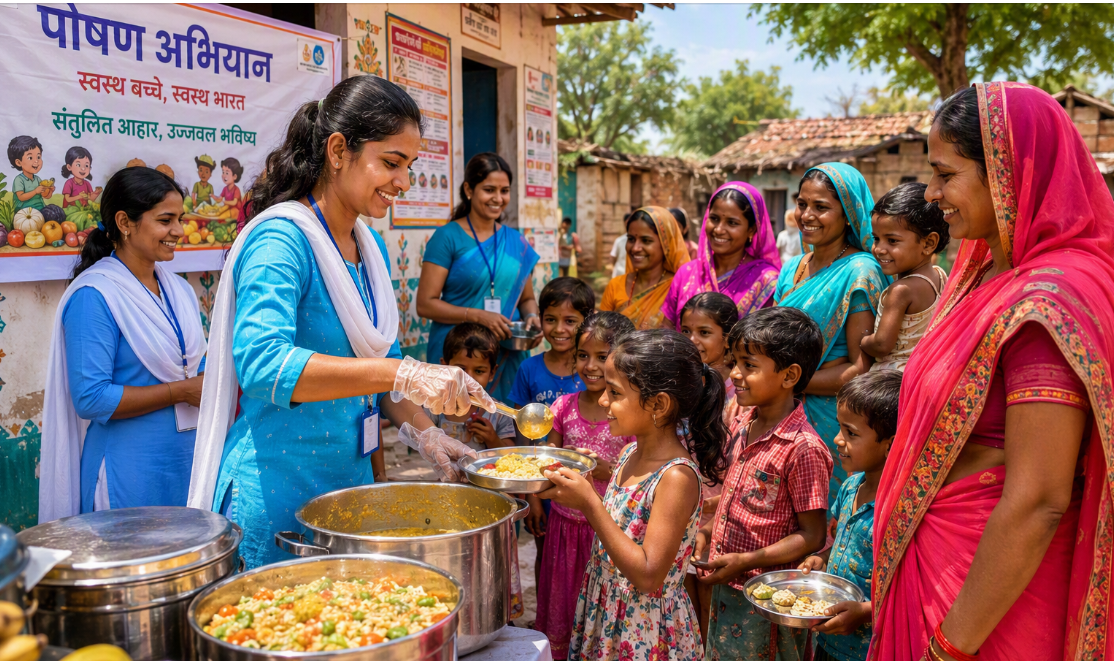
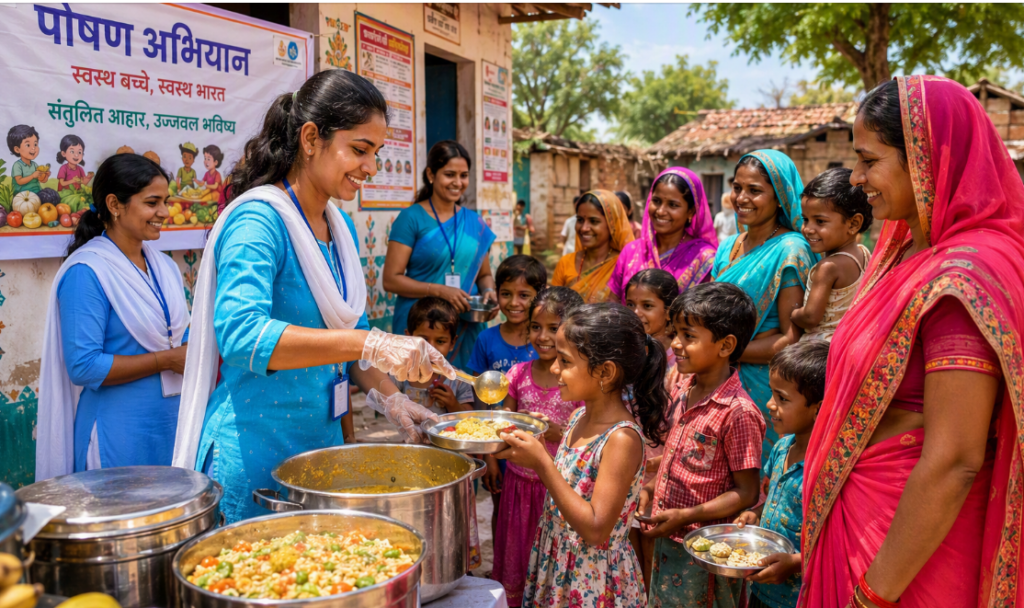
The national nutrition mission, called Poshan Abhiyaan, is a big step by India to help lower child malnutrition. It works by bringing different groups together and making sure help is given the right way. The mission is part of a bigger plan the government has. That plan aims to improve health for kids by connecting services, setting goals, and changing how people act and think about food.
This kind of mission is important because there can be many reasons for malnutrition. One food program is not enough to help with weak care, bad feeding habits, or when services are missing. That is why awareness campaigns are used together with help that goes straight to the people.
- Poshan Abhiyaan puts more focus on child malnutrition by running nutrition programs that work together.
- It helps with awareness campaigns. These campaigns teach people about better ways to feed and care for their kids.
The mission shows a move toward working together instead of acting alone.
Community and NGO-led Interventions
Government action is important, but work in the local area matters too. NGOs, community nutrition projects, and public health partnerships often reach families in ways that big systems do not. They help family health by giving food, teaching, and checking in on people in places they use every day.
Community participation matters a lot because people start to eat better when they change their daily habits, not just because there are programs. Awareness campaigns, local kitchens, and groups of volunteers show that when the community leads the way, it can help lower bad nutrition in India.
Successful Community Nutrition Projects
Community nutrition projects have better results when the local people take part. They should not just receive help but help make things better. The information shows examples like community kitchens, where people can cook and eat together. The Bal Kuposhan Mukta Bihar campaign also helped. This campaign used changes in how people act and strong support from everyone around to fight malnutrition.
These projects show that nutrition programs get better when they match what people go through every day. Families do more when answers fit their way of life, ideas, and what they can use. That is why community participation helps improve child development and household nutrition.
- Community kitchens help give food security to families that may be in need.
- Behavior change campaigns can make feeding and care habits better.
- Local coordination links homes to health care and support services.
This kind of work does not take the place of national policy. It helps to make the policy real and useful in people’s lives.
Role of Non-Governmental Organizations
NGOs help a lot in nutrition work in India. They often go to places where regular services do not reach. They can act fast to help children, mothers, and schools. Their work brings public health goals closer to the people who need help.
Some NGO groups work hard to help school meals. Big groups have given cooked meals to children in government schools. They use partnerships, donations, and state support to do this work. The help from these groups makes life better for families. It takes away stress about food at home. This is good for family health and helps school children get what they need.
NGOs help by running awareness campaigns, offering supplementary nutrition, and connecting people to health care. The value of NGOs is in their flexibility. They can talk to families, give support to people working in the field, and help fill local gaps. NGOs also make other big nutrition efforts stronger.
How Individuals Can Help Combat Malnutrition
You do not need to be part of a big group to help. You can do your part for child nutrition by joining awareness campaigns. You can also help schools or local groups. Try to support plans that make things better for kids’ nutrition in simple ways. Even small steps help the bigger system work well.
People can help families find the right services. This is important in areas where health care is not the same for everyone. When communities share what they know and support mothers and children early, nutrition programs work better. This helps more people get the care they need.
- Support local drives that offer supplementary nutrition, school meals, or keep community kitchens running.
- Encourage community participation by talking about trusted ways for child feeding and care.
Individual effort works best when it builds on local networks that are already there. This is where everyday help can make a real difference for people.
Conclusion
Addressing malnutrition in India is key for both the well-being of people and the development of the country. The problem comes from many things, like poverty and poor healthcare. Because of this, we need strong and wide-ranging plans. The government and community groups help by spreading understanding and giving support. Still, everyone must get involved. People can help by backing local nutrition efforts or speaking up for better policies. If we all work together, things can get better. If you want to find out how you can help fight malnutrition, you can ask for a free consultation today.
What are the most effective ways to reduce malnutrition in India?
The best ways to cut child malnutrition in India use public health action, food security, and strong nutrition programs. It is also important to support mothers and kids, keep living conditions clean, and make sure young people have good meals. A good public health plan should help children get better diets early, offer school meals, and include the local people in the process
Which government programs have shown the biggest impact on malnutrition rates?
Major nutrition programs from the Indian government help with child development in many ways. The Indian government runs several nutrition programs like integrated child development services, the midday meal scheme, and the public distribution system. These programs focus on child nutrition by offering extra food, meals in schools, and ways for families to get food at home. These efforts help people in low-income families the most.