Key Highlights
- Electronic waste is growing quickly. This brings real human health and public health worries.
- A lot of used devices have toxic substances in them. These can be bad for workers, families, and the communities that are near them.
- Ways of informal recycling such as open burning or acid baths raise health risks. They also pollute the air, soil, and water.
- Lead, mercury, cadmium, POPs, and flame retardants are some of the most dangerous chemicals found in electronic waste.
- Children, pregnant women, and people who do informal recycling face the highest exposure. They also feel the most serious harm.
- Better collection, safer recycling, and stronger awareness can help lower health risks.
Table of Contents
Introduction
Electronic waste is not just old phones, broken chargers, and tossed computers. It has become a big health problem because there are toxic materials in the devices we use every day. When these things are thrown away, burned, or broken apart in unsafe places, bad substances can get into air, water, soil, and even the human body. This makes electronic waste important for not only cleaning up, but for human health too. To know how dangerous it is, you should see how much electronic waste we have now.
Overview of E-Waste in India
India plays a big role in the world’s electronic waste story. Electronic devices are now in almost all parts of daily life, business, and education. People also use them to talk with others. When use of electronic devices goes up, electronic waste from homes, workplaces, and the industrial sector increases too.
Waste management systems are facing a lot of pressure now. A big part of equipment people throw away still goes through informal channels. In these places, people try to get valuable materials from the waste, but safety rules are often weak. This is why India is a good place to look at when we want to learn about the scale, risks, and possible solutions for waste management.
Definition and Classification of E-Waste
The United Nations says electronic waste is anything you throw away that has a battery or a plug. In simple words, it means old electronic devices that you do not want anymore. This can be things like mobile phones, computers, televisions, batteries, and other accessories. People either donate, throw away, or send these electronic devices to be recycled.
E-waste is part of solid waste, but it is different. It has valuable materials like precious metals, cobalt, and other parts you can use again. This makes it good for people to recycle. But e-waste can also have toxic substances and hazardous waste. There is lead, mercury, cadmium, and flame retardants in it. These things can be bad for us and the environment.
This mix leads to e-waste being a public health problem. The most harmful chemicals and toxic metals can hurt the brain, lungs, kidneys, hormones, and nerves if not handled safely.
Growing Volume of Electronic Waste
Look at your home or at work. You likely have more electronic devices now than you did some years back. This is true for many people. It leads to fast and large growth in old, unused electronics in the world. E-waste has become one of the biggest and hardest solid waste streams to handle.
Global numbers show how big the problem is. In 2019, people made 53.6 million tonnes. In 2022, it was 62 billion kilograms. By 2025, the total will be near 65.3 million tonnes. Formal recycling has not kept up with this growth.
This gap effects electronic waste management and public health. A small part of electronic waste gets collected and treated in the right way. The rest may be left undocumented, dumped, or handled in ways that are not safe. When the amount of electronic waste grows faster than the safe systems, workers and people in communities face more risk from toxic substances.
Key Sources of E-Waste in Everyday Life
Most e-waste is not only made in faraway factories. A lot of it starts with the electronic devices you use every day. People often swap out old phones, computers, and tablets for new ones. Homes, offices, schools, shops, and the industrial sector all add to this rise in e-waste.
Common everyday sources include:
- Mobile phones and chargers that have been damaged or changed after getting an upgrade
- Laptops, desktop computers, and computer parts
- Televisions, flat screens, and more products used for home fun
- Batteries, cables, and small appliances that use a plug
- Equipment thrown away by offices, stores, and service companies
When these things break or feel old, they usually go to the informal sector. The reason is that devices have valuable materials in them, like metals and parts you can use again. The problem comes when people try to get these things out without safe controls. That can make people be around dangerous chemicals while trying to get those valuable materials.
Trends and Data on E-Waste Generation
Recent numbers show that e-waste is going up. People are making more waste, but the safe collection systems can’t keep up. Reports by the International Telecommunication Union and global monitoring partnerships say there are high levels of e-waste growth everywhere. This is not just some solid waste issue for a small group. It is something we all need to think about.
Here is a basic text table made by looking at the numbers seen all over the world:
| Year / Estimate | Global e-waste volume | Properly collected and recycled |
|---|---|---|
| 2019 | 53.6 million tonnes | 9.3 million tonnes, about 17% |
| 2022 | 62 billion kg | 13.8 billion kg, about 22.3% |
| 2025 projection | 65.3 million tonnes | Not keeping pace with growth |
These trends are important because the health risk grows each time a shipment is not managed, waste is dumped, or there is an unsafe place where things are taken apart. When there is more waste made and no better ways to handle it, there are more ways for families, workers, and people living nearby to get sick.
Indian Context in Global E-Waste Landscape
India is talked about with other big countries when people discuss electronic waste worldwide. This is because India is large, growing fast with digital technology, and plays a big part in reuse, repair, breaking down, and recycling old electronics. So, India has both great chances and real risks when it comes to electronic waste.
The global view shows the problem with e-waste. A lot of it be moved, traded, handled, or dumped, and not always in the right way. This is not done in proper systems. International rules are important. The Basel Convention sees much e-waste as hazardous waste and works to protect human health. It controls how e-waste crosses borders and fights illegal movement.
For India, the main concern is not just within the country. It is also shaped by global markets, the way used equipment moves across borders, and talks about rules at the worldwide level. India is at the middle of a big problem. This problem ties together how people use things, how items are recycled, work, and environmental protection.
Why E-Waste Is a Human Health Concern
Electronic waste can be bad for human health. It comes from hazardous materials and weak handling in many places. When a device gets burned, broken, or soaked in chemicals, toxic substances can get into homes, jobs, and neighborhoods.
This is an environmental health issue. It is also a public health issue. Big groups of people can be affected by exposure over the year.
The next parts tell you why health risks are going up. They also show why people are thinking about this more now and why there is more awareness.
Emerging Health Threats Linked With Electronic Waste
E-waste is a rising problem for human health. The number of electronics that people throw away keeps going up. At the same time, there are not enough safe ways to deal with this waste. When these devices end up in trash piles, more people are exposed to toxic materials as they collect, take apart, burn, or dump these items.
The health risks are serious. A lot of electronic parts have substances that stay in the environment and in the human body. They do not disappear. When people burn these parts outside or use acid baths, contaminants get out into the air, soil, and water. This leads to environmental health problems. These problems go beyond the worksite and can affect many people.
The reason these threats from electronic waste are new is because digital technology is growing fast. More use of informal ways to handle these products also adds to the problem. Places that used to have little contact with these things now see it all the time. People can now be near dangerous leftover materials, dirty dust, and unsafe food or water because of electronic waste jobs.
Evolution of E-Waste Issues in Public Awareness
Public awareness of e-waste is growing. Global agencies and health bodies show that unsafe recycling links to health consequences. People now know old electronics are not just clutter. The items can make a waste management problem if handled without care. It can lead to dangerous health consequences for us all.
International groups are helping to move things forward. The International Labour Organization talks about the need for good jobs in this area. The World Health Organization points out the dangers that children, teens, and pregnant women face in places where people work with little support.
This growing awareness is important because it changes the way people talk about recycling. Before, most people just talked about getting back resources. Now, there is more focus on keeping workers safe, stopping unsafe exposure, and making sure the community stays healthy. This new way of looking at things is needed if we want safer systems to start and succeed.
Environmental Health Impacts in Urban and Rural Areas
E-waste is bad for environmental health and public health in cities and villages. The way it spreads is not the same in each place. In cities, recycling shops, garbage dumps, and places where people take things apart can be close to homes, schools, and markets. That means toxic dust, bad fumes, and dirty water can build up there. So, people living nearby face real public health risks.
Rural areas have this problem too. Waste often gets taken there to be dumped, burnt, or crudely recycled. The rules tend to be looser, and it’s not watched closely. If the soil or water gets dirty, that pollution can go into farms, foods used by locals, and what people use day-to-day in their homes.
Air pollution is a clear problem for all of us. Open burning lets out small harmful bits and chemicals that people breathe. When electronic waste mixes in with solid waste, health problems can spread. It does not just stay where the devices are thrown out. The trouble often moves out to other solid waste streams and can touch more people.
Challenges in Managing E-Waste Safely
Safe e-waste management has its problems. Devices are made up of many parts. Recycling often costs a lot. Not all places have good ways to collect old items. There are useful metals and hazardous materials inside many products. People want to make money from the metal, but this can put them at risk because the process is not always safe.
Key challenges include:
- There are informal recycling ways like open burning and acid leaching.
- Some people get rid of waste in the wrong way by dumping it or mixing it with other garbage.
- The formal system for collecting and treating waste is limited.
- The links between fixing devices, collecting old items, and recycling them safely are weak.
These gaps in waste management raise health risks for both workers and people living nearby. If the waste management system does not work well, unsafe ways of getting rid of waste start to show up. This is why e-waste is a big health risk in many places. When money is tight, people feel pushed to handle dangerous materials without safety.
Toxic Substances Found in E-Waste
Inside electronic waste, there is a mix of toxic substances and useful metals in small parts. This mix makes electronic waste hard to handle in a safe way. Simple dumping or burning electronic waste can cause harm that lasts for a long time.
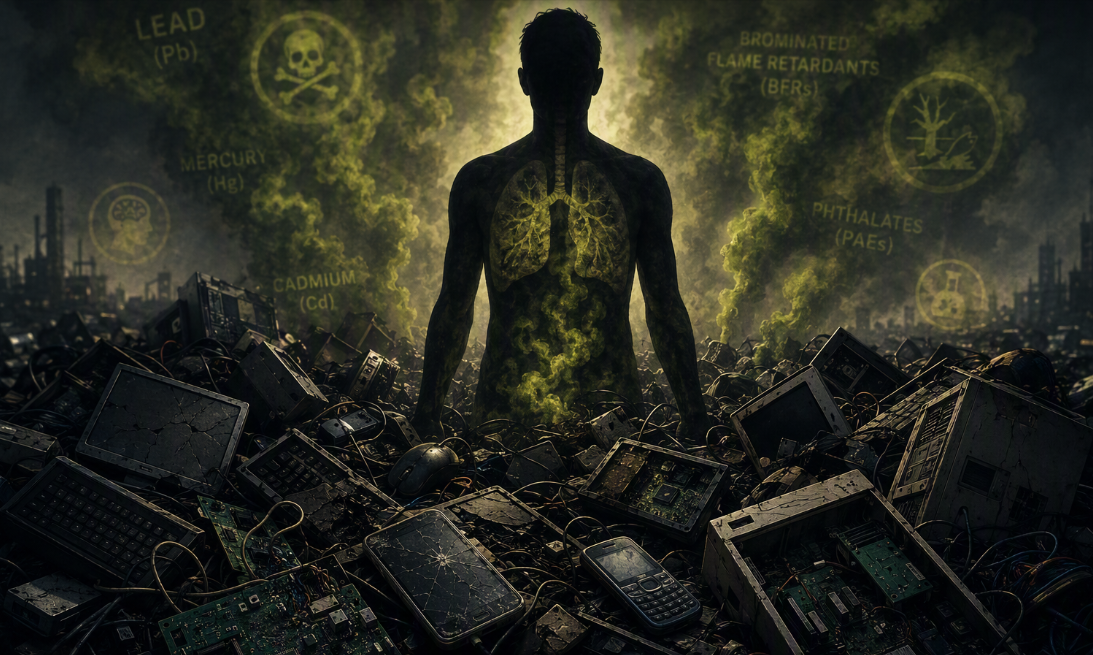
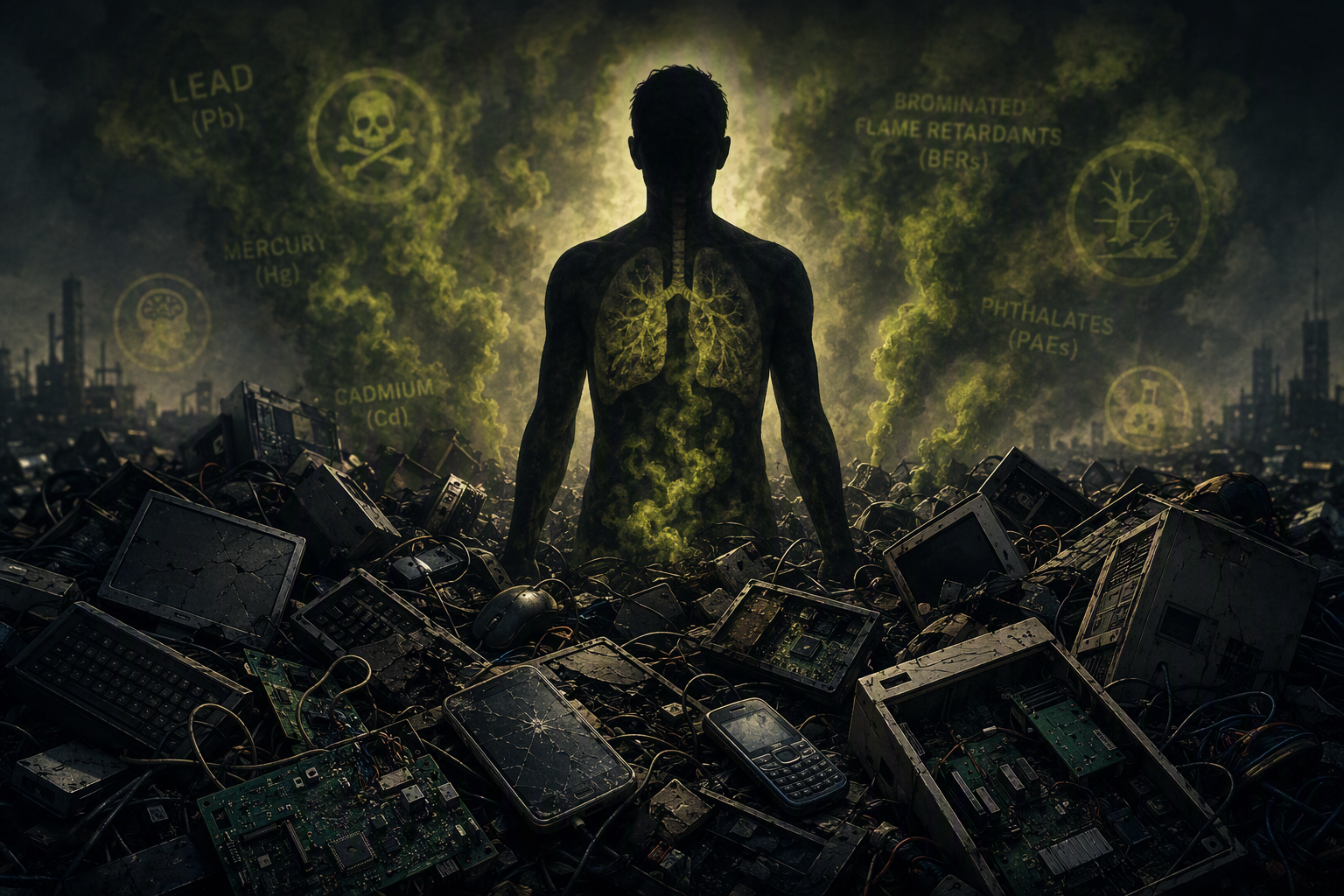
Some of the most talked about hazardous substances are lead, mercury, cadmium, POPs, and flame retardants. These toxic chemicals can hurt things like your brain, lungs, kidneys, hormones, and can also cause problems with how you have kids. Let’s take a closer look at each of them.
Lead and Its Health Effects
Lead is one of the most risky things found in hazardous waste from old electronics. This is true, especially in circuit boards and other parts around them. When people take things apart, burn them, or use simple ways to get parts, lead can get into dust and smoke. It also gets into soil and water. This means there are many ways for people to get lead exposure.
The health impacts from lead are big. Lead can cause nerve problems and stop the brain from working well. It hurts learning and development, and it can cause nerve injury. These harms can stay for a long time. Children are at more risk. A small amount of lead can make blood lead levels go up in kids. It can change how they learn and grow.
This is why lead stays at the center of worries about e-waste and health. People who live near informal recycling sites can come in contact with it again and again. It can get into the air, dust in homes, or even into food. If this happens a lot, the harm can be hard to fix. Young children feel the impact the most.
Mercury in Electronics
Mercury is a big problem when it comes to e-waste. You can find it in some screens, switches, and electronic pieces. If these devices break, burn, or the, not handled right, mercury can get out into the earth. This can be bad for environmental health.
Exposure levels are important because mercury can hurt the brain and the breathing system. It does not have to be a big amount to cause harm. Being around mercury in air, dust, or places that have it again and again can lead to health consequences over time.
For that reason, mercury is one of the most dangerous toxic substances in e-waste. It is a big problem in spots where people do not have good air flow, safety gear, or something to keep it contained. In these places, the workers and people living nearby can get exposed.
Cadmium Exposure Risks
Cadmium is a toxic metal that is tied to electronic waste. When people take apart gadgets, dump parts, or burn them, cadmium can go into the air or soil. This metal stays in dirty places for a long time, just like other heavy metals.
Cadmium exposure is linked to health risks. It builds up toxic metals in the body. In places where recycling is not safe, cadmium mixes with other pollutants in the dust, water, and soil. That can lead to more environmental health issues. It also makes it tougher to find the cause when people get sick.
Cadmium is important because it is not just toxic. It also stays in the environment for a long time. When electronic waste pollutes a place, people may come in contact with cadmium again and again as they go about their day. This is why cadmium is still talked about a lot when discussing electronic waste over time.
Persistent Organic Pollutants (POPs)
Persistent Organic Pollutants, called POPs, are harmful chemicals. They get out into the air or water during bad waste processing of electronics and plastics. This is a big worry because they stay in the environment for a long time. POPs also build up in people, animals, and other living things.
In places where e-waste is handled, toxic substances can show up when things are burned or heated without proper safety steps. Dioxins and some related compounds are examples of these toxic substances. They move in the air, land on the ground, and can get into food and water.
The health issues tied to POPs can be very serious. Unsafe e-waste handling has been linked to risks like cancer, problems with having children, and other effects that last a long time. These chemicals stay in the environment and move from place to place. People can get exposed to them even if they do not work with old devices directly.
Flame Retardants and Their Impact
Flame retardants are added to electronic devices to lower fire risk. The worry comes in when these products get thrown away. If the devices are taken apart or burned without care, hazardous materials can go into dust and smoke. This means people can be exposed to these harmful substances.
Brominated flame retardants get attention because they can mess with how hormones work in the body. A big worry is what they do to thyroid hormones. These hormones help control things like how you grow, how your body uses energy, and how you develop. This is why being exposed to flame retardants is a problem for children and pregnant women.
Their health impacts are important because these chemicals stay around in homes, workshops, and the nearby area. This happens even after recycling is done. So, the risk is not just during the work. It can go on with long-term contact by touching dust and surfaces that are contaminated.
Pathways of Human Exposure to E-Waste
How do e-waste pollutants get into the human body? They often enter in several ways at the same time. People may touch things that are dirty from e-waste, breathe harmful dust, drink water that is not clean, or eat food that grew in places touched by e-waste. Exposure levels to these pollutants can go up over time.
These pathways show why electronic waste can cause health problems for many people. You do not have to work at a recycling site to be at risk. The next parts explain the main ways this can happen in daily life.
Direct Contact During Recycling and Disposal
Direct contact is one of the ways that pollutants get into the body. In informal recycling, workers sort and break devices by hand. They also strip and take apart old parts. Most of them do not use gloves, masks, or safe setups. Skin touches dust, waste, and sharp parts that are dirty often.
Acid leaching and some other rough ways to get metals bring extra risks. People use these methods to pull metals out of hazardous waste. The chemicals can get on skin if they splash. They may also stay on tools, clothes, and things close by. That makes exposure levels go up fast.
The result is that workers and families living close to these activities can have many health issues. Pollutants can go from hands to food. They can also move from work clothes to homes. Contaminated surfaces can touch children. Direct handling is often the first step in a bigger chain of exposure.
Inhalation of Toxic Dust and Fumes
Breathing polluted air is another big way for people to get exposed. When electronic waste is crushed, stripped, or burned, tiny bits and fumes come out. These can have hazardous substances from plastics, metals, and treated parts, mostly when there is not enough ventilation.
Open burning is very risky. It causes strong air pollution near where people live and work. Cables, circuit boards, and mixed plastics give off toxic chemicals in the smoke. People can breathe in these chemicals while working, cooking, walking, or even sleeping.
This hurts how the lungs work and can cause both fast and slow health problems. Workers might feel cough, chest pain, or have trouble with breathing at first. If this keeps happening, it may lead to more health issues. Breathing in bad dust and fumes is a quick way for toxins to get into the body.
Food Chain Contamination
Not all exposure happens at the recycling site. Pollutants from e-waste can move into the food chain and reach people through their meals. Toxic metals and other chemicals can spread into soil and water bodies. After this, they can get into crops, fish, and livestock.
This pathway often works through:
- Polluted water used for farm work can reach the fields.
- Toxic metals can get into the soil where food crops grow.
- Dirty rivers, ponds, or other water bodies can hurt fish.
- When chemicals pass through the food chain, they get stronger.
That is why people can have higher exposure levels, even if they do not touch electronic waste. Food pollution can make a local electronic waste issue bigger. From an environmental health view, it can put many people at risk and keep causing problems for years.
Water and Soil Pollution Routes
Water pollution and soil pollution can take more time to show. Still, they be as harmful as other ways. When devices are left out, burned, or hit with chemicals, toxic substances can get out and go into the land and water near them. As time goes on, the contamination spreads.
Hazardous materials released when crude is recovered do not stay at their point of release. Acid baths, ash, and residues from taking things apart can move into the ground. Runoff can carry these things into drains, ponds, and streams. When this happens, the environmental health risks get bigger than where they first started.
These routes are important. They lead to many small contacts over time. People might drink dirty water. Some live on soil that is not clean. Others eat food grown in places with pollution. You may not see this exposure, but the human body still takes in the bad stuff as time passes.
Common Health Problems Linked to E-Waste Exposure
Electronic waste can be bad for your body in many ways. The health issues you get from it depend on what chemicals are in the waste. It also matters how long you are near it. If you are a child, a worker, or someone living close to it, your risk can be different.
Some health problems show up often when people deal with electronic waste. Reports say electronic waste can cause respiratory problems, hurt the brain and nerves, cause skin issues, and affect hormones. The next sections talk about the main health issues that come from being around electronic waste in an unsafe way.
Respiratory and Lung Disorders
Respiratory problems are some of the first health impacts you get from being around e-waste. When people breathe in smoke, dust, and chemicals from taking apart or burning devices, their lungs feel it right away. Coughing, irritation, and trouble breathing can happen all the time.
Air pollution from open burning is a big problem. Burning wires, plastics, and other things puts bad particles and gases in the air. These often go into the air near places where people live and work. When people breathe this air all the time, it can make their lungs work less well. It can also make breathing problems worse.
The risk is greater for children and older adults. Their bodies are not as strong when it comes to handling polluted air. Breathing this air again and again can lead to worse lung problems. It can also cause breathing trouble that lasts a long time. This can be a big problem in places where people get exposed to bad air.
Neurological and Cognitive Effects
The nervous system can be hurt by things found in e-waste. Heavy metal, like lead and mercury, may cause neurological damage. This can change how you remember things. It can also make learning and behavior harder. There are problems with attention. The brain may not work well.
Cognitive effects can be a big problem for kids because their brains are growing. Even small exposure levels can stop the brain from growing well and hurt their chances later in life. Reports about kids living near recycling places show that it can affect how they learn and use their brain.
This is one of the biggest risks for human health from e-waste. Neurological damage may not show right away. But the impact can stay for years. If brain development is stopped early, the price we pay as people and as a group can be very high.
Skin Diseases and Allergies
Skin contact with e-waste residues can cause health issues that you can see. Workers may get irritation, burns, rashes, and other skin diseases as time goes on. This happens more if they handle broken electronics, ash, or chemicals without any protection. The risk goes up when dismantling is done by hand.
Allergies may start when you often touch dust and toxic chemicals. Contaminated surfaces, tools, and your work clothes can carry these harmful bits outside of the workshop. This means skin problems may reach family members. It happens more if where you live and work are close together or mix.
These problems might look less serious than damage to the lungs or nerves. But they are clear warning signs. They show that hazardous materials can get into the body. In many places, skin problems are the first real sign that safety steps are not in place.
Endocrine Disruption and Reproductive Issues
Some chemicals in e-waste mess with the body’s hormone system. This problem is called endocrine disruption. Hormones play a big part in growth, metabolism, development, and reproduction. Brominated flame retardants are a key issue for this problem.
Thyroid hormones play a big part in the body. When hazardous substances mess with how these hormones work, their effects can reach many parts of the body. In children, this problem can change how they grow and develop. In adults, it can affect energy levels, metabolism, and also impact their reproductive health.
Electronic waste does not just hurt people who touch it. It can also cause problems with having babies. In high-risk places, it can lead to lost pregnancies and harm unborn children. This shows electronic waste can be bad for pregnancy, babies, and even for kids in the future.
Vulnerable Groups and E-Waste Hazards
E-waste is not the same for all. Some people feel bigger health risks. This can be because of their age, biology, work, or where they live. Children feel it more. Pregnant women feel it more, too. Older adults and informal recycling workers also feel higher health risks.
Why is this important? A plan to help that leaves out groups that need help the most will not work well for all. The next parts show how being exposed hurts each group. Each group is hurt in a way that matters and is not the same as others.
Children’s Unique Risks
Children are at higher risk from e-waste than adults. Their bodies and organs are still growing. They take in more toxic substances compared to their size. They also find it harder to get rid of harmful stuff in their bodies. So, the same exposure levels are more dangerous for them.
Child health can also get affected by what young children do. They crawl, play in dust, and put their hands in their mouths much more than adults. If they live, study, or play close to places where things are processed, they might take in contaminated particles all day. Most of the time, they do not even know this is happening.
Reports show that there be higher blood levels of lead in children who get exposed to it. These health impacts often hit their thinking and memory. Kids with these high levels can face trouble with breathing, harm to nerves, and problems as they grow up. Because of all this, children get seen as the group that is most at risk.
Impacts on Pregnant Women and Infants
Pregnant women can be at risk because toxic metals in e-waste can harm both the mother and the baby. These chemicals can go through the placental barrier. This lets the unborn child be exposed during important times as it grows. So, harm may start even before the baby is born.
The health consequences are serious. People may have miscarriages, early births, smaller babies, and signs of dna damage. These problems are more common in communities where women do informal recycling. They also happen when people live near processing areas with poor controls.
Infants be at risk after birth too. Toxic substances can get to them in dust, air, and breast milk. Their bodies are not ready to fight off these things yet. Even low exposure levels of toxic substances can affect their growth, health, and development a lot.
Informal Recycling Workers’ Health Challenges
Workers in informal recycling have the most direct exposure. They often dismantle devices by hand. Many burn wires or handle ash. Some use simple chemical methods with no protective gear. This puts them in contact with hazardous materials every day.
The health risks can be many since waste processing often happens in homes, small shops, or open areas. These places usually have little air flow or ways to keep things safe. Pollutants get on the skin, in the lungs, in food, and spread to the community at the same time. Because of this, it gets much harder to handle environmental health problems.
Many workers need this job for their income. That makes it hard to change how things work. Safer ways should keep people’s jobs safe while also protecting their bodies. If that balance is not there, risky ways stay common. People keep getting exposed to these dangers in their homes and nearby areas.
Elderly Population Susceptibility
The elderly can be at risk from e-waste pollution. As people get older, their bodies may not handle stress as well. Some older adults face long-term health issues in the lungs, heart, kidneys, or immune system. If they get exposed to toxic stuff, it can make these problems get worse.
This is important for human health. The same amount of pollution can cause stronger adverse effects in a person who has trouble moving or already has a disease. If older people live close to recycling or dumping sites, they may face these risks for a long time. It is harder for them to move away from the area.
Health risks for older people can be hard. They may have trouble breathing. It can be hard for them to feel better after they get sick. They might feel the effects of chemicals more than others. In areas where people face these problems again and again, the elderly often get missed. They carry the hidden weight of these risks.
Long-Term Effects of E-Waste on Human Health
The danger from e-waste stays with us, even after symptoms go away. A lot of its long-term problems grow over time. This happens when people have repeated contact with toxic substances in the air, dust, food, or water. That is why even low exposure levels are still important.
Over time, the health impacts can build up. This may lead to DNA damage. People may be at risk for long-term illness, cancer, and growth problems. The next parts show how being exposed for a long time can hurt both people and whole groups.
Cancer Risks Associated With Toxic Exposure
Unsafe waste processing, like open burning, lets hazardous substances get out into the air. These things can hurt cells and tissues. When people burn old electronics or use chemicals to get parts, it makes toxic fumes. Some of these dangerous items stay in the environment after the job is done. This can make cancer risk go up.
The health impacts are not just for workers who stand next to the fire or acid bath. Families who live nearby can get sick over time from polluted dust, water, and food. This makes it more than an issue at work. It becomes a public health problem.
Cancer risk is a big worry because it may not show up right away. It can take many years to see any signs. By the time someone finds out about the sickness, they may have been living with pollution for a long time. This long wait makes it so important to stop problems early and watch for them. It’s better to act early than to wait until there is clear harm.
Chronic Illnesses Linked With Heavy Metals
Heavy metals found in old electronics can lead to slow sickness if you keep getting exposed to them over time. Lead exposure, cadmium exposure, and touch with other toxic metals might slowly put stress on organs and the whole body. You may not see strong signs right away or they may look mild. But their effects can build up and cause problems.
The health consequences can affect the nervous system, kidneys, lungs, and hormone balance. Heavy metals build up in the body. The harm can stay with you for years. This is why long-term exposure is often more dangerous than just one high-contact event.
Communities close to informal recycling areas feel the impact in many ways at the same time. The air, the soil, dust in homes, and even food can all be touched by pollution. This can lead to long-term illness. It shows that there is ongoing exposure to environmental risks.
Potential for Genetic and Developmental Disorders
One big concern with e-waste is that it may lead to dna damage and problems in how kids grow and develop. Global health reports say there is proof that people exposed to e-waste may have dna damage. This is bad for early growth, mostly for children and babies.
Exposure levels do not have to be very high to be a problem. If you come in contact with something over and over during pregnancy, childhood, or early teen years, it can affect how the body grows. This is because the body is changing fast at these times and it is more sensitive. So, long-term exposure is a big public health concern.
These risks are important because they can carry over to other generations. When toxic substances affect a baby before birth, its ability to learn or the health of its cells, the effect can stay for a long time. The problems may stay even after the exposure stops. Prevention matters a lot because some damage that happens early in development cannot be fixed later.
Community-Level Health Outcomes
E-waste pollution goes beyond one person or one family. In a community, ongoing exposure can cause groups to face health issues. This happens because people share the same air, water, soil, and food. So, single cases become a bigger problem for all.
From a public health point, people need to know how much bad stuff is in the air or ground in every area, not just at work. If schools, houses, and shops are close to recycling places, the whole group will feel the bad effects. Environmental health and human health are tied together.
These results can cause slower growth in kids, more breathing issues, the chance of coming in contact with more harmful chemicals, and to put extra pressure on care services. When pollution becomes a common part of living, the costs are not only for health but reach many parts of life. It can make work, school, and how feel in the area harder for everyone.
Regulations and Policies on E-Waste Management in India
Regulations and rules are important for electronic waste management. People cannot just rely on good intentions to deal with waste. There need to be clear rules for safe collection, tracking, recycling, and disposal. This is needed to protect public health.
India’s way of handling waste connects with global rules too. The Basel Convention guides how countries deal with moving dangerous e-waste. Waste management policy in India affects what happens within the country. The next parts talk about the main policy ideas and issues with them.
Rules and Guidelines for Safe Disposal
Yes, there are rules to keep people safe from the dangers of electronic waste. The way we get rid of waste relies on the rules. These rules make sure electronic waste is kept away from normal trash. They also guide electronic waste to places that can handle it the right way. This matters because electronic waste has hazardous materials. These need to be treated with care.
Global examples show how good systems can work. In Switzerland, retailers, makers, and importers have to take back used electronic equipment for free. Consumers must return their used items and not put them in city waste bins. This way, formal recycling gets support and materials are separated more safely.
The main thing for India to know is simple. E-waste rules should make collection easy. Rules need to tell people exactly what they need to do. Facilities should be able to handle all the parts in a safe way. A good policy keeps dangerous items from being dumped in the open or burned in places that are not safe. This helps with environmental protection.
Enforcement of E-Waste Pollution Standards
Rules only work if people follow them. Pollution standards for electronic waste help stop unsafe dumping, burning, and dangerous chemicals. But, it can be hard to make sure these rules are used. A lot of electronic waste goes through informal ways or moves without papers. This makes it tough to keep track and enforce the rules.
This is important for waste management. If rules are not watched closely, risky actions can happen near homes and jobs. When rules are not applied the same way, public health gets hurt first. Workers come in contact with the risk, and people nearby feel the effects from the pollution later.
Better enforcement needs more than fines. It needs tracking, approved places, collection networks, and real options that are safer than bad recycling. If these things are missing, electronic waste will stay out of the main system, even if rules are there.
International Policy Influences
International policy has a big impact on how countries deal with e-waste. The Basel Convention is very important in this. It works to keep human health safe and protect the environment from hazardous waste. This policy also limits illegal transboundary movement of waste.
This is important because e-waste moves from one place to another as used electronic equipment, scrap, or as trash dumped in other countries. The Basel rules help make it clear when electronic equipment should be seen as waste. They also show when sending these items turns into illegal action. This can help stop harmful stuff from getting into systems that are not strong enough.
The International Telecommunication Union helps guide policy with rules, ways to measure progress, and world e-waste facts and figures. Better data lets governments know how big the problem is, so they can plan systems and check what they have done. This helps international telecommunication union support better local steps and safer ways to handle the waste.
Challenges in Regulation Implementation
Even though rules are there, it can still be tough to make them work. Electronic waste goes fast between repair shops, scrap markets, homes, and small places that take things apart. The informal sector is strong in collecting and getting things out of electronic waste. This makes it hard to make sure all rules are followed.
Common implementation challenges include:
- There is not much watching of what the informal sector does.
- The rules for collecting do not match how people actually return things.
- Many depend on ways to recover that do not cost much but can be unsafe.
- Some places can enforce rules well, but others cannot.
These problems keep health risks around. When the main systems to process waste are not easy for people to use, or are not good for making money, people stick to informal ways that can be unsafe. Because of this, good regulation must be strong with clear rules and give real chances for better and safer recycling that people can use in their daily work.
Community Action To Reduce E-Waste Health Risks
Community action can help cut e-waste health risks. Policies play a part, but what people do in their area also changes where devices end up. It affects how people deal with them after they use them.
When communities help with responsible recycling, safer collection, and good awareness, electronic waste management gets better from the start. Public health stays stronger when people, schools, businesses, and local groups know what safer choices are.
Promoting Safe and Responsible Electronics Recycling
Communities can help cut down harm by making recycling easy to find and easy to do. A lot of people want to give away old electronic devices the right way, but they need clear places to drop them off. They also want trusted people to handle it, and simple help with what not to put in mixed waste.
Useful local actions include:
- Running take-back drives to collect unwanted electronic waste.
- Showing people where to take stuff for approved recycling.
- Telling people to repair, reuse, and fix items before they throw them away.
- Making sure electronic waste stays out of normal trash and dumping sites.
These steps help with waste management. They also help the community stay healthy. With these steps, less stuff ends up at unsafe sites. When people see that old electronics still have value, they know these need careful handling. This makes it more easy for everyone to act safely.
Public Health Education Initiatives
Public health education can help people a lot. Many unsafe things still happen, and there is not enough knowledge about them. People do not know that old electronics can have toxic materials. Bad waste disposal is not only a problem for now, but also may hurt children, water, air, and food we all use.
Education can help people see the link between informal recycling and health risks. Schools, local campaigns, retailers, and community groups can teach why it is important to return batteries, screens, cables, and other electronics using safe ways. This keeps them from being burned or thrown away in a wrong place.
This kind of awareness helps make the environment better. It also helps people make smarter choices. When buyers know what’s going on, they see that they have a role in both the problem and the fix. If homes and buyers are not informed, even good collection rules may not get to enough people.
Conclusion
To sum up, it is important to know about the risks from electronic waste to protect human health. The amount of electronic waste is going up. It can be toxic. People need to be aware of this to stop problems before they start. If we know what harmful things are in electronic waste and how people can be exposed, then we can help ourselves and the people around us.
We should focus on keeping people safe by recycling the right way. Teaching others in the community is also important. If we all work together, we can lower the health risks and have a healthier future.
If you want to learn more or find ways to help, you can get a consultation to discover good steps to reduce health impacts from electronic waste.
What are the most dangerous substances in e-waste for human health?
E-waste has harmful substances, like lead, mercury, cadmium, and flame retardants. These chemicals can cause health risks. People might face neurological damage, breathing problems, and even risks for cancer. It is important to know about these dangers. We need to have proper disposal methods to reduce them.
How does e-waste exposure affect children in India?
E-waste exposure in India brings serious health risks to children. Kids can face developmental delays, breathing issues, and damage to their nerves. Toxic substances, such as lead and mercury, are in e-waste. These can hurt their growing bodies. Over time, this can lead to health consequences that last. It may also cause children to lose some of their thinking abilities.
What steps can individuals take to minimize e-waste related health risks?
People can lower health risks from e-waste by throwing away old electronics in the right way. They should recycle gadgets at approved places. If you buy fewer new devices, that helps too. You can sell or give away old items to others. This lets the device be used for more time and leads to less waste. A clean and healthy place to live is good for all of us.