Key Highlights
- Healthcare waste management is facing more pressure now. Healthcare facilities have to deal with more medical waste. They must also follow stricter rules.
- A small part of healthcare waste can be very dangerous. This causes big worries about public health and safety.
- Poor waste disposal can lead to more infection risks and injuries. It can also cause air pollution and hurt the environment.
- In India, healthcare waste management is harder. The country has uneven infrastructure and gaps in training. Hospitals see waste volumes growing all the time.
- New medical waste management practices are coming up. They focus on being more sustainable. People now use smart tracking and want better segregation.
- Better training and safer waste disposal matter a lot. Practical steps for compliance can help get good outcomes for people and the environment.
Table of Contents
Introduction
Healthcare waste is now a big concern for hospitals and clinics. It is at the heart of waste management, safety, and public health. As healthcare services grow, people use more disposable items. This means that waste volumes go up. With more waste, it gets harder for busy places to handle it the right way. The problem is more than just cleaning up. It is about keeping workers, patients, and communities safe. It is also about caring for the environment. To see the whole picture of healthcare waste in India, it is best to start with the basics.
Understanding Healthcare Waste Management in India
In India, waste management is now a big concern in health care. Health care facilities keep making more healthcare waste. This is because they are growing and using many disposable items. During COVID-19, the challenge got even bigger. Protective things and single-use items made healthcare waste from health care facilities go up every day.
This makes the management of medical waste and medical waste disposal more than a small job. It is an important thing for all hospitals and clinics. If systems do not keep up, the risks get big. To see why, you have to know what healthcare waste is and why it must be handled with care.
Definition and Types of Healthcare Waste
Healthcare waste covers all waste made by medical work in hospitals, clinics, and other care places. It is not just one kind of waste. This is why medical waste is harder to deal with than solid waste. Some items are common, but some hold serious risks.
A big part of it is general waste. A smaller share is much more risky. This can be hazardous waste, infectious waste, pharmaceutical waste, or toxic and radioactive materials. Sharps waste, like needles and blades, needs to be handled with care. It can hurt people and spread infection.
One big problem in healthcare waste management today is the mix of waste materials. Staff need to find, separate, collect, and send each kind of waste to the right place. If this first step does not go well, the whole waste management process can be unsafe. It can also cost more money and be bad for human health and for environmental protection.
Importance of Proper Healthcare Waste Handling
Proper waste management is important for healthcare workers, patients, and waste handlers. If mistakes happen, people can be exposed to infectious waste and other dangers. Needle injuries, cross-contamination, and touching infectious waste are big worries. In busy places, even small errors can make the risk of infection go up.
Good health care waste management starts with waste segregation. It is key for staff to put waste in the right container at the right time. This makes all later steps in waste management safer and easier. It also helps with compliance and can lower treatment costs that are not needed. In the end, this puts less strain on waste management systems used in health care.
Healthcare waste is now a bigger problem than before. There is more waste generation, and people want higher environmental health standards. You do not just keep the facility safe. You also help protect the community, slow down pollution, and stop harm that comes from poor disposal methods. The next section will talk about the biggest problems that we face today.
Major Challenges in Modern Healthcare Waste Management
Modern healthcare waste management deals with many key challenges. There are more waste volumes now. The types of healthcare waste have become different and varied. Facilities need to follow stricter rules for handling and reporting. But the waste management systems do not keep up. Many still have problems with how they sort healthcare waste. They find it hard to collect waste the right way. Their capacity for safe treatment is not enough.
These gaps in healthcare facilities raise worries about safety and the environment. When healthcare facilities do not take care of waste the right way, workers can get exposed and disposal can be bad. This can also make running the place harder. The biggest problems are weak systems for keeping waste apart and gaps in how things work overall.
Inadequate Segregation and Collection Systems
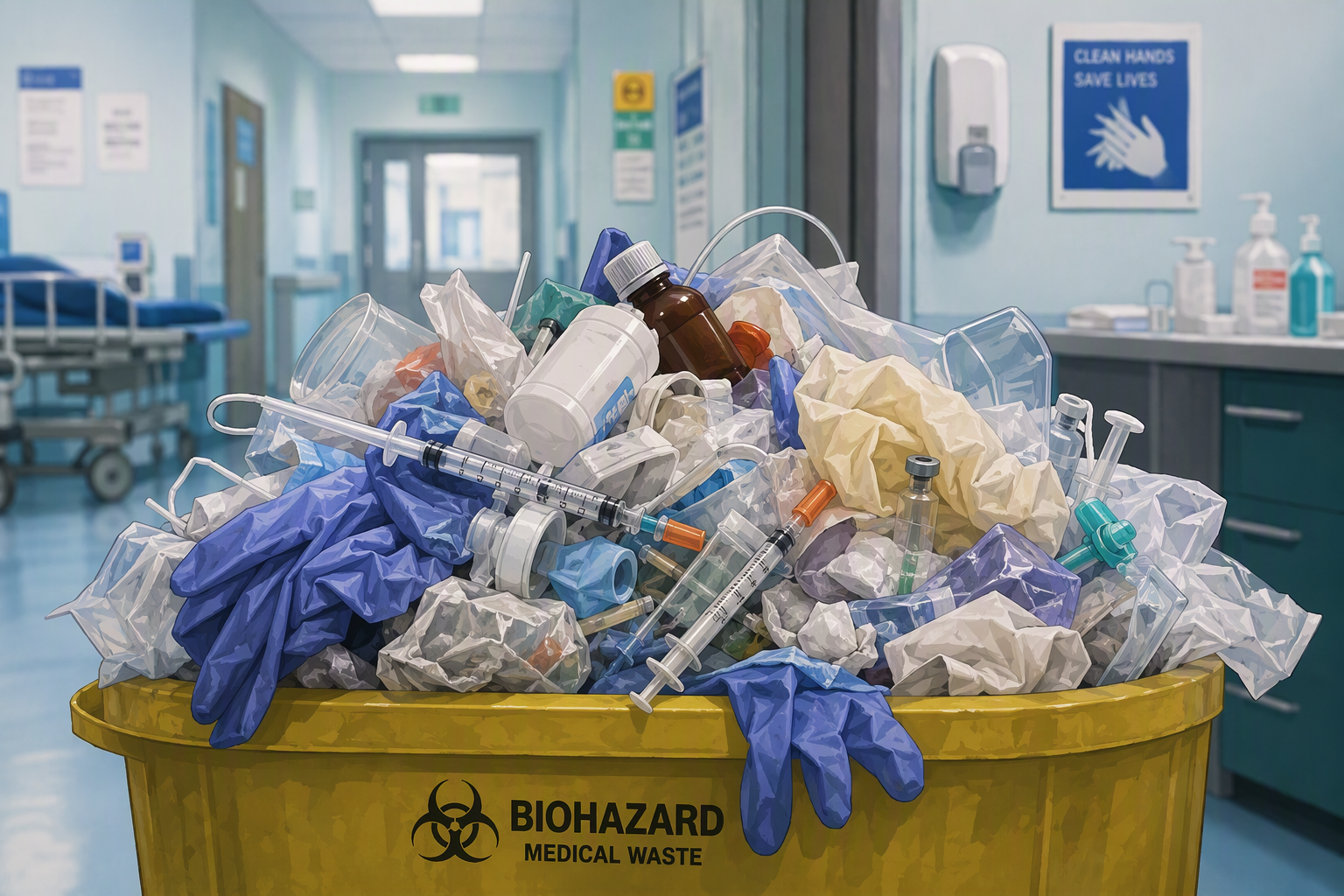
One of the biggest problems in healthcare waste management is poor waste segregation at the source. If general waste gets mixed with infectious or hazardous material, then all of that waste must be handled in a special way. This makes waste management more costly. It also increases health risks for the people who work with healthcare waste.
In many places, waste management systems often do not work well because of small problems in how things run. Sometimes, bins are not used in the way they should be. Labels might not be there, or staff might not know what steps to take. When there is no proper segregation, disposal methods can get less safe and less quick.
Key problems often include:
- There is not enough staff training in health care on what waste should go in which bin.
- Waste collection in health care facilities does not happen in the same way every time.
- People do not use, label, or handle containers well during day-to-day work in health care facilities.
These are big problems today. The safest way to get rid of things depends on doing the first step right.
Infrastructure and Regulatory Gaps
Even if staff know the rules, things in health care do not always work as they should. Some health care facilities do not have enough spaces to store waste. They also may not get the support to move waste. There is not always treatment when it is needed. This makes waste volumes hard to handle. Problems can build up. It can take more time to move things. This also makes it risky for people to deal with waste.
Regulatory gaps can make things harder. Waste management rules are getting stricter now, mostly for hazardous and biohazardous materials. It can be tough to keep up with all the rules for sorting, labeling, record keeping, and reporting. A lot of smaller facilities, or places that do not have enough help, find it very hard to follow all these rules for waste management.
These gaps in rules and equipment hurt environmental protection and make daily safety harder. Some common reasons why waste management and biomedical waste management do not work well are money problems, high costs to use new technology, weak systems, and rules that change often. When these issues mix together, even if a place wants to do well, it can have trouble handling biomedical waste. Because of this, the public and environment both face worries that could get bigger.
Public Health and Environmental Concerns
Improper healthcare waste disposal does not just stay in the back rooms of hospitals. It can harm public health by bringing workers and people close to infectious or hazardous waste. The topic needs to be part of every talk about safe care, not only when planning maintenance.
There is also a clear cost for environmental health. Using landfills too much, and burning waste, can add pollution. This can hurt environmental stewardship goals. To see how big the problem is, it helps to look at how getting rid of waste goes wrong first. Then we see what risks come up for people living close by and for the ecosystem.
Impact of Improper Healthcare Waste Disposal
When waste disposal is not done right, it can cause problems in the whole place and outside too. If you do not handle infectious waste well, it may put your staff and patients at risk from infection. Also, if sharps are not taken care of, it can cause injuries. These health risks should be stopped with proper waste treatment.
The environmental impact is quite serious. Using landfills and incineration a lot can make things tough over time. Incineration is known to let out bad emissions and greenhouse gases. This can make the air worse and add stress to the climate.
Improper disposal can lead to:
- There is a higher risk of coming in contact with infectious waste when it isn’t handled safely.
- When mixed waste streams go to be treated, it is more likely that the process will not work as well.
- When disposal methods are not controlled or are used too much, they make more pollution.
That is why waste treatment is just as important as waste collection and waste sorting.
Risks to Communities and the Environment
The risks do not stay inside the hospital. If hazardous material is not handled in the right way, people who live nearby can get avoidable exposure. This can happen when there is trouble when moving it, if it is not stored well, or if it is not thrown away in a safe way. All of this grows the risk of infection and brings worry for human health.
Another big problem is air pollution. When waste gets burned a lot or without the right care, bad stuff goes into the air. This makes the environmental impact of the healthcare sector worse. It also slows down work to make the healthcare sector better for the planet over time.
For communities, medical waste has direct and indirect effects. Many people may not see the waste, but they feel it. It can make the place feel unsafe. It harms environmental health. It also lowers trust in waste management and local systems. That is why good medical waste management will need better waste management practices and smarter tools in the future.
Key Trends and Evolving Practices in Medical Waste Management
Medical waste management is changing. Healthcare facilities want systems to be safer, cleaner, and work better. There are some strong trends right now. One is better waste management practices in hospitals and clinics. Another is use of stronger rules to follow for waste. More people also want new technologies that be good for environment. These cut down on the amount of waste that goes to landfills. The new systems also help stop extra waste generation from healthcare facilities.
At the same time, digital advances are helping hospitals see the waste they make more clearly. They can then make better choices about how to deal with it. These changes are setting a new path for medical waste management in hospitals.
There are two trends to look at. One is using treatment models that focus on being good for the earth. The other is tracking waste in smarter ways.
Adoption of Sustainable Technologies
Hospitals are now using more green tech to help waste reduction. They want to make care safer and keep trash out of the landfill. For this, they have started using containers that you can use again. They choose packing that is better for nature and try composting where it works. They also look for smart ways to cut down on what goes to waste.
There is a change happening with the move to a circular economy. In healthcare, some try to cut down on waste materials by using and recycling things again when it is safe and makes sense. A few hospitals also have green operating room programs. These help cut down extra waste and help sort things out before waste is taken away.
Common strategies include:
- Use reusable containers instead of using more items that people throw away after one use.
- Make waste recycling bigger where it is safe and where people say yes to it.
- Use new technologies that help cut down waste right from the start.
These steps help show that sustainable management can help keep people safe. At the same time, it helps with environmental stewardship. This way, we can all look out for each other and the planet.
Digital Innovations and Smart Waste Tracking
Digital changes are making hospital waste management better. Teams can now see and measure waste flows with more clear systems. There is no need to use only manual logs, because new tools make it easy to track containers, volumes, and movements. This helps people have more control over everyday waste handling.
Smart waste tracking helps collect better waste data. When hospitals know the waste they produce, where it is from, and how it moves, they can spot problem areas and cut down on errors. It gives the staff a clear view, makes work safer, and helps them focus their actions where needed.
There is also a supply chain benefit. Better data lets facilities see when there is too much use. It helps them cut waste costs. It also helps them plan better. Hospitals that want to know what shapes the future of medical waste management can look at this. Data-driven oversight is now part of safer and more efficient waste management practices.
Experiences of Developing Countries with Healthcare Waste
Healthcare waste management in developing countries is hard because there are not enough resources. The infrastructure is not the same everywhere. Training for people often has gaps. As health care facilities get bigger, the amount of biomedical waste grows faster than the systems set up to separate, collect, and process it safely. This puts extra strain on hospitals and clinics.
Compared to bigger systems in richer places, these countries may find it harder to follow rules, spend money, and get treatment. This is important for global health because unsafe ways of dealing with waste can put workers, people getting care, and people living nearby at risk. India is a good example of this.
Unique Challenges Faced by Indian Hospitals
Indian hospitals deal with the same stresses that the rest of the world sees, but they feel it more when their systems are not the same everywhere. The healthcare providers take care of more people, and they use more disposable items. That makes the volume of medical waste go up. It gets hard to keep hospital waste management the same for all sizes and types of places.
Another challenge that comes up is keeping things the same across all sites. Some places in health care have good routines for waste management. Others have a hard time with splitting up health care waste, knowing when to collect it, staff training, or having the right treatment options. This makes health care waste management less steady. It can make health and safety issues go up. It can also cause problems with following rules.
| Challenge in Indian hospitals | Why it matters for daily waste handling |
|---|---|
| Rising volume of medical waste | Puts pressure on collection, storage, and disposal capacity |
| Uneven staff training | Leads to poor segregation and handling mistakes |
| Limited infrastructure in some settings | Slows safe movement and treatment of waste |
| Complex compliance demands | Makes hospital waste management harder to maintain consistently |
Lessons from Developed Nations
Developed nations show us helpful ways to handle waste. Many of these places have set up clear systems for keeping things separate, staying safe, and following rules. They use clear labels, better notes, and stronger staff steps. This makes it easy to keep waste apart. These best practices help cut down risks and make sure people take responsibility.
There is a big push to find waste management solutions that help keep things safe and take care of the planet. Hospitals are using reusable containers, better tracking tools, and waste reduction programs. So, hospitals do not have to pick between following rules and helping the environment. If they build their systems right, both can get better at the same time.
The World Health Organization has played a big part in guiding how healthcare waste is handled safely. This shows that in developing countries, there is a need for better training, good systems in place, and rules that are always followed. If these are improved, the healthcare waste could be taken care of in a way that matches what developed countries do. In the end, this helps move everyone towards plans that can last a long time.
Strategies for Sustainable Healthcare Waste Management
Sustainable healthcare waste management begins when hospitals try to send less waste for special care. If they focus on waste reduction, they make the treatment easier. This also helps to lower costs related to waste disposal. It makes the waste management safer for people too. Because of this, sustainability has become a key part of healthcare waste management and the management of medical waste.
Still, cutting down only is not all that needs to be done. Facilities must also have safe ways to get rid of waste. Staff must be well trained. The steps to follow rules should be clear and steady. The best strategies work on both sides. They cut waste where it starts. They also make sure the waste is handled right at the end. Next, let’s see how these two parts are different.
Reducing Waste Generation at the Source
Hospitals and clinics can cut waste generation by watching the things they buy, use, and toss out each day. Waste often starts in the supply chain. If they get too many throwaway products or extra items from their supply chain, there will be more waste before care begins.
Proper segregation means you keep general waste apart from hazardous material. This helps because only a few things need special, high-cost treatment. With this, there is less waste and processing is safer. Green operating room programs show that a bit of careful planning can stop extra and unnecessary trash from being thrown out. This way, proper segregation gives us better waste reduction and safer handling of hazardous material.
Useful actions include:
- Looking at supply chain choices to keep from using too many single-use items.
- Making sure proper segregation happens right at the place where waste is made.
- Finding more safe ways for waste recycling and reuse where it has been allowed.
These steps help hospitals bring down healthcare waste. They do this without lowering the quality of care.
Promoting Safe Disposal and Compliance
Safe disposal is about more than just putting bins in the correct place. A facility must also have good disposal methods. The team at the facility has to know clear rules for using the system. People need to follow these rules at all times. If these basics are missing, the system might stop working when it comes to storage, moving the waste, or the last steps of treatment.
Waste handlers need to be safe at work. It is helpful for them to get training. Using the right containers keeps people safe. Having access to protective equipment is important to lower injuries or exposure. This matters most when workers deal with sharps, infectious waste, or things that could hurt people fast if used the wrong way.
Compliance is what connects all parts. When rules get tighter, hospitals have to stay on top of labeling, sorting, paperwork, and safe handling at the end. The most useful plans mix easy-to-follow steps with constant checks. This way, safe disposal is a normal part of the day, not just something you do at the last moment. That need to stay strong showed up even more during the pandemic.
The COVID-19 Pandemic and Its Impact on Healthcare Waste
COVID-19 changed how much medical waste there was. Healthcare facilities needed to use more protective equipment. They also used more of other things that had to be thrown away. This big jump put a lot of stress on waste systems. It made the way people dealt with the waste every day harder.
The pandemic made us see how waste control and public health go together. Hospitals had to collect waste faster. They needed safer ways to hold waste. And they needed more strict ways to stop infection. If you want to know the impact, first look at how much waste there was. Then check what rules came in after that.
Surge in Medical Waste During the Pandemic
During COVID-19, medical waste grew fast. Healthcare facilities had to use a lot of disposable items like masks, gloves, gowns, and testing supplies. These items were needed every day, and that made waste volumes go up quickly. The systems in place could not keep up with all the extra waste.
The biggest challenge was about personal protective equipment. PPE was needed to stop infection. But, it also made new tasks for the staff. Hospitals had to keep, move, and deal with more things that could spread illness, while their daily care work went on.
The pandemic increased challenges by creating:
- Hospitals and clinics now have a lot more waste.
- The staff use more personal protective equipment and other things that people only use once.
- There is more stress on staff, storage spots, and the ability to handle waste.
This showed that waste systems need to be able to change and handle problems in tough times, not just when things are normal.
Policy Responses and Best Practices Evolved
During the pandemic, hospitals made their handling rules and infection control plans stronger. Many places started to use stricter ways to deal with infectious waste. They wanted to keep workers safe. These new steps helped lower the risk of exposure. At the same time, they made sure waste moved well through busy systems.
Best practices in waste management changed over time. There are now more touchless disposal systems. Many hospitals use single-use containment methods. Clear steps for dealing with PPE-related waste are now common.
Training for staff became more important. The team needs fast and easy ways to learn about hospital waste management. This is needed because things can change very quickly inside these places.
The pandemic made it clear that health care waste management needs to be ready and able to change quickly. Waste management solutions now focus more on being ready for emergencies. They also help change processes fast and offer stronger safety for people working on the front lines. These lessons still help us today. Hospitals may face problems with budgets, skills, and system limits, but better waste management can still make a good difference.
Barriers and Solutions to Effective Biomedical Waste Management
Biomedical waste management does not work well most of the time. It is not because people do not know the risks. The daily ways waste is handled are weak. Some usual things make it harder, like not enough money, big technology costs, not enough staff, and people not knowing the rules in the same way. These problems make it tough to keep proper waste management going for a long time.
The good news is that there are practical ways to solve this. Training programs help a lot. Better internal processes also make a difference. When the healthcare providers and waste partners work together more closely, it leads to better results. The next two sections talk about two main things that push improvement forward: resources and awareness.
Overcoming Financial and Training Limitations
Money limits can slow down waste management. Smaller places might not have the cash to get new bins, tracking tools or ways to treat waste. If there is not much to spend, waste management systems will often react to problems instead of getting better step by step.
Training programs matter as much as the right equipment. A strong waste management system will not work well if people are not sure how to sort, label, store, and report waste the correct way. Regular staff training is key. It helps cut down on mistakes. It makes the hospital safer. Training keeps hospital waste management steady across all shifts and departments.
Helpful ways to overcome these barriers include:
- Making staff training less costly by giving clear steps that can be taught over and over.
- Making small changes to waste management systems over time.
- Working with partners to help make hospital waste management safer.
These steps can help people move forward, even when there is not a lot of money or enough staff.
Role of Awareness and Education
Awareness is important. Many waste problems start because people do not know the right way. A lack of awareness about categories, containers, or how to handle waste can make people mix things up. They may use the wrong bins. This can put more stress on the whole system.
Education helps make rules part of daily life. When healthcare workers and healthcare professionals know why segregation is important, they are more likely to stick to waste management practices. Training should not happen just once. It works better when there is regular guidance and supervision.
This answer helps solve common problems with biomedical waste. When people learn more, they stay safer and follow rules better. It also helps stop mistakes that we can prevent. You do not need big changes to the place right away. When people know more, the place can match what others around the world and nearby areas expect and want.
International Guidelines and India’s Compliance
International guidelines help healthcare systems deal with biomedical waste in a safer and more steady way. They show what to do with sorting, holding, getting rid of, and caring for the earth. For countries where waste volumes are growing, these rules be a good mark for safer work.
India’s way of following rules fits into the bigger world story. The rules are getting tougher, and waste systems are changing. The big challenge is to make wide rules fit what happens in each local place. To understand this, you need to look at the main rules around the globe first. Then, you can see how India puts these rules into practice in the country.
WHO and Other International Standards
The World Health Organization sets the main rules for dealing with healthcare waste in a safe way. The group helps guide how medical waste should be handled by showing that it is very important to separate different types of waste. It also talks about keeping people safe from hazardous waste and making sure dangerous items be treated in a safe way.
Other rules also affect practice. This happens more when it comes to writing things down, labeling, and who takes care of dangerous stuff. All these worldwide rules make places work harder for environmental protection. They help control infected and harmful waste in a better way.
Core themes in global guidance include:
- Keep hazardous waste safely sorted and stored.
- Keep workers and people safe when handling and moving waste.
- Make sure there is clear responsibility in the management of medical waste.
These guidelines may not fix every problem in a place, but they give a strong base. They help to make things safer and more steady for all.
How India Adapts Global Protocols Locally
India uses global safety rules in its health system. The main goals are to keep things apart, handle them safely, write down what is done, and make risks lower. How these goals are reached can be different in each type of facility and with the resources that they have.
Local adaptation is important in waste management for health care. Health care waste management cannot just use global plans. It takes place in real hospitals with limits on people, money, and space. The rules for health care waste need to be clear so staff can use them every day. At the same time, there needs to be strong checks in place.
India’s growth depends on having rules that people can actually follow, not just having them on paper. When global rules are made easy to use in the country, places can be safer, do less harm to nature, and set up steady ways to handle waste. This leads to the last thing to talk about: why waste management is so important right now.
Conclusion
In the end, it is more important than ever to handle healthcare waste in the right way. There are many problems, like not sorting waste right and the harm bad disposal does to the environment. These show that we need to act fast. By using better waste management practices, trying new ways to deal with healthcare waste, and working with fresh ideas, we can cut these troubles and protect public health. When we look at healthcare waste management here, we should learn from what other countries do and use the best practices that fit India. Together, we can help make a healthier place for people and nature. If you want to make your hospital’s waste management better, you can ask for help and support.
Why is healthcare waste management a growing challenge today?
Healthcare waste management faces more challenges now. People make more healthcare waste because there are more disposable items and emergency situations, like COVID-19. If the waste is handled badly, it can cause health risks for workers and patients. Waste management systems that are not strong enough can make the environmental impact of healthcare waste worse.
What are the most effective ways for hospitals to reduce healthcare waste?
The best way to handle medical waste is to cut down waste at the source, use proper segregation, and keep strong routines for medical waste management. Hospitals can be more safe if they have training programs to teach staff the right way to handle medical waste each day. There are also good options like using reusable containers, smart tracking, and approved recycling methods when it is safe and makes sense.
How does improper biomedical waste disposal affect public health in India?
Improper biomedical waste disposal puts public health at risk in India. The danger goes up because people can get infections or injuries. Workers and those who live nearby can be exposed to the waste in an unsafe way. If health care facilities do not sort and treat waste the right way, pollution goes up. Unsafe disposal also adds to the environmental impact.