Key Highlights
- India faces a growing challenge when it comes to healthy ageing. This is because life expectancy is going up and the number of older adults is rising fast.
- India needs more than just better health care to tackle this challenge. Older adults also need dignity, income security, housing, and support from their community.
- Senior citizens living in rural areas, many of them women, often get less support and have a higher chance of being poor.
- The country is making changes with public programs, services in districts, and trained geriatric care systems.
- Families, communities, and policy makers should all help older adults. This will let people live well and feel good for more years, not just live longer.
Table of Contents
Introduction
India is now seeing people live longer lives, and that is good news for all. But with more years, there is a big question. Will these extra years bring good health, allow for independence, and give people purpose? Healthy ageing is not just about becoming old. It is about keeping quality of life strong before and after you turn sixty. For India, this calls for early planning, better support, and making sure all can live with dignity in old age. This is not a far-off issue. It is already starting to shape homes, services, and what people feel is important in public life.
Understanding Healthy Ageing in India’s Context
Healthy ageing in India is important because the number of older adults is growing fast. People are living longer as life expectancy goes up. This means that many of them live with long-term sickness, disability, and changes at home. Because of this, healthy ageing is not only about health—it is also something that affects the way people live and work. It is a problem that the whole society and economy must think about.
So what can India do now? The information shows India should focus on stopping problems before they start, making primary services stronger, having better social security, helping caregivers, and building places that work well for older people. If India wants people to live not just longer, but have better lives too, then its systems must help people stay healthy, feel they belong, and live on their own.
Defining Healthy Ageing for Indian Populations
Healthy ageing is not just about staying free from sickness. In India, it also means making sure that older adults can live with respect, keep their freedom, and feel like they have a purpose, for as long as possible. This idea includes good physical health, strong mental well-being, staying able to move around, eating well, and having a place in the community.
Older persons need support that fits their everyday lives. Some of them need regular check-ups or help to get better after being sick. They may need safe homes, digital help, or someone to talk to when they feel down. The quality of life for older persons gets better when these different types of help work together and not apart.
That is why India needs to start early. Good steps go on through each stage of life. Things like prevention, health promotion, and keeping up with physical activity help in adulthood. Managing long-term health problems can make a big difference too. The way we age gets better when homes, communities, and public services work to help us out. This makes healthy ageing simpler for all.
The Significance of Longevity in Modern India
Longevity is changing modern India in new ways. Life expectancy is going up. Senior citizens now live many years after they stop working. This can be good for families and others if these years are active, safe, and full of meaning.
At the same time, there is a rise in the ageing population. This brings pressure to many areas. Health systems have to deal with several long-term health issues. Families need to find ways to care for older members and still keep their jobs. Social security, transport, housing, and access to digital tools are more important. These things matter more because people need them as they get older.
There is a bigger change happening now. Many people see India as a young country. But as people live longer, that view is changing. The thing to think about is not only that people can live more years. The main question is if those years have good quality of life with people staying involved, being able to do things on their own, and feel steady in how they live.
Demographic Shifts: India’s Ageing Population
India is seeing a big change in its people. The ageing population and the elderly population are both growing fast. This is not a far-off thing. It is happening right now. Because of this demographic shift, there will be more need for health services. Caregiving, transport, and social welfare will also need to catch up.
India now has more older adults than before. The country is working to adjust its plans and services to help them. Public programs and help at the district level are part of this effort.
The next sections talk about what the numbers show. It also explains how this change is not the same in every region or place.
Statistics on Longer Life Expectancy in India
The main message is easy to see. India’s life expectancy has gone up. People are living longer, and fewer people are dying. The ageing population is getting bigger fast. The data says there will be around 350 million people aged 60 or older by 2050. Another study says this number will grow from 100 million in 2011 to 230 million in 2036.
Here is a basic text table made from the collected information:
| Indicator | What the compiled information shows |
|---|---|
| Elderly population in 2011 | About 100 million people aged 60 and above |
| Elderly population by 2036 | Around 230 million |
| Elderly population by 2050 | Nearly 350 million |
| Share of population by 2036 | About 1 in 7 people may be 60 or older |
These numbers show why health and social systems feel the strain to change. There are more older adults now, and this leads to a bigger need for geriatric care, rehabilitation, home care, and social security. This is seen even more in places where local services are not strong or are not the same for everyone.
Regional and Urban-Rural Trends in Ageing
Ageing is not the same across India. People get old in different ways, depending on where they live. There are big differences between cities and rural areas. The gathered information says that older persons in rural areas often do not get needed specialist care. They also have less access to diagnostics or rehabilitation services. Transport can be a problem for them, too.
Urbanization and people moving to new places are also changing how support is given. As younger generations leave their homes, and nuclear families be more common, old family structures are not as strong as before. This means some older adults get less daily help, even if their family still cares about them.
This change in the ageing population means our systems must change too. In rural areas, people may need mobile health units, telemedicine, and better district hospitals. In the cities, they may need better digital inclusion, safer ways to get around, and homes that work well for older people. One single answer will not work for India’s ageing population.
Key Challenges in Achieving Healthy Ageing
Healthy ageing in India faces many problems at once. It is not just one issue. Older adults often deal with poor health. They may also have low income. Weak access to care is another big problem. Family support is getting less. The mix of these issues makes daily life tough for older adults. It can also mean they feel more dependent on others.
Another big challenge is that social security is not equal for everyone. A lot of people who work in the informal sector get to old age without any pensions or savings. To really understand this issue, you need to look at both health problems and social barriers at the same time.
Health Conditions Affecting Older Adults
Many elderly individuals have more than one health problem at a time. A long-term illness, a disability, and trouble with daily tasks can make it hard to be independent. This also means they need health care more often. That’s why ageing is not something you can look at as only a hospital issue.
Some needs are still not getting enough help. The information shows there are big gaps in dementia care, palliative care, rehabilitation services, and mental health support. These are very serious, as they can hurt memory, comfort, the way people move, and how they do daily things.
Medical care is tougher to get when specialist help is not close by. Older people in the country might find it hard to get tests or treatment. The cost to go from place to place can also be hard for them. Things like parkinson’s disease and dementia need steady care, trained people to help, and support for both patients and the people who look after them.
Social and Economic Barriers for Seniors
Health is just one side of the story. Many older adults, and especially older women, face things like poverty, needing help from others, and feeling alone. A lot of older adults live under the poverty line. Older women often had lower income during their lives and do not have as many assets.
Daily risks go up when there is not enough financial support. Some older adults may have to deal with neglect, feel left alone, or face abuse, especially when support systems are weak. When social security is low, it gets hard and stressful to meet even basic needs.
Common barriers include:
- Many workers, who are not part of formal jobs, may have limited pensions or retirement savings. This means they can face money problems when they get older.
- A lot of people do not know about welfare schemes and there is much paperwork that makes things hard. This keeps many from getting help.
- Digital exclusion still stops some people from using important benefits and services. Not everyone has a phone or internet or knows how to use it.
- Some people feel afraid. There are worries about being neglected, left behind, or facing elder abuse.
India’s Health System Response to Ageing
India’s health system is moving forward, but there are gaps. Public efforts have helped build a better base for health care for the ageing population. This happens with clearer programs, local-level facilities, and training in how to care for older people. These actions show that the ageing population is now included in everyday plans for the health system.
But health services still do not reach all places in the same way. Some districts have better roads, more skilled workers, and better care for old people than others. The next two sections will show both what has improved and where there are still problems with access.
Public Healthcare Initiatives for Older Adults
The Government of India has set up several important things for health care. The National Programme for Health Care of the Elderly built a clear plan for services for older people where not much help was there before. This is important because elderly individuals need their care to be organized and kept going all the time.
Key progress includes setting up Regional Geriatric Centres and adding geriatric wards in district hospitals. MD programs in Geriatric Medicine have also started. Two National Centres for Ageing were made at AIIMS, New Delhi, and Madras Medical College, Chennai. These centers help with treatment, training, research, and capacity building.
Other actions taken by the public also help make the whole system stronger. Ayushman Bharat gives people money help for hospital visits. The work done at places for primary healthcare and district centers can help spot what people need sooner. When all these things work together, you can see that India is changing in how the system works, but every state and area still does things in their own way.
Accessibility and Affordability of Geriatric Care
Even when there is geriatric care, it can still be hard for older adults to get healthcare. Many in rural areas must travel far to see a doctor. There are not many specialists and transport can be weak. So, the cost is not only what you pay for treatment. You have to think about long travel times, going back again and again, and money lost for families who miss work.
District hospitals now play a big role in India’s response. They help more people get care services made for their age. The gathered facts also show how important rehabilitation services are. There is also a need for home-based care, telemedicine, and mobile health units. These things help people in places that do not have good health care.
Affordability gets better when help comes from different places. Insurance, public facilities, and local support can help families feel less pressure. Still, there is not enough trained staff. Diagnostics and ongoing care do not always work well. For many families, the problem is not a single hospital bill. It is about dealing with ageing and care needs over time.
Policies and Programs Supporting Healthy Ageing
India has some policies to help with healthy ageing. These help with health, legal rights, pensions, and social welfare for senior citizens. These policies work best when they are connected and support each other. The information also says that it is very important for all these areas to come together.
That means health care, income protection, housing, and caregiving all need to work together. These things can’t happen alone. To find out if India helps with healthy ageing and longer life, the answer is yes, at least in ideas. But, it needs better work and more people should get help.
National Schemes for Senior Citizens
Several steps and plans at the national and public levels help older people. The National Programme for Health Care of the Elderly is the main health care plan in the country. There are also legal steps and welfare plans that help protect rights and remind families of their responsibility. State governments have a big part in making sure these supports reach all the people who need them.
The Maintenance and Welfare of Parents and Senior Citizens Act, 2007 helps protect the welfare of parents. It gives senior citizens a way to ask for help if they feel left out or ignored. This is important now because family care for older people is getting harder. The senior citizens act makes sure there is help for those in need.
Important supports include:
- The Senior Citizens Act is set up through the Maintenance and Welfare of Parents and Senior Citizens Act, 2007.
- The National Programme for Health Care of the Elderly helps older people with their health care.
- There is social protection and some support for pensions.
- You can call the national helpline at 14567 for help, guidance, and to share your problems.
Insurance and Financial Security Initiatives
Financial security can change how senior citizens feel as they get older. Many rely on pensions, savings, or family members, but these things may not always be enough. This is why insurance and social security are so important in India.
The gathered details show that there are several tools for senior citizens. These include pension schemes, saving plans like the Senior Citizens’ Savings Scheme, and the Post Office Monthly Income Scheme. There is also public insurance help through Ayushman Bharat. People who are 70 or older can get the Ayushman Vay Vandana Card. With this, they get cashless treatment at many listed hospitals.
These steps help lower stress. But people still need to know about them and be able to use them easily. There can be some trouble with digital access, lots of forms, and not everyone can get the help. So yes, there are now some rules and plans that back healthy ageing. Even so, these need to be done better for more people to get financial protection.
How the UN Healthy Ageing Agenda Relates to India
The UN and the World Health Organization say that healthy ageing is important at every stage of life, which matches India’s needs well. India’s ageing population needs more than just medical treatment. They also need steps to stop health problems, feel included, get help to recover, and have support to stay independent as they get older.
Global guidelines are important, but they need to work for local needs. In India, this means the country must help district systems grow stronger. The government should support caregivers. Ageing policy should be part of development plans. It should not just be seen as a welfare issue.
Adapting Global Guidelines for Local Needs
The World Health Organization looks at healthy ageing in a broad way. The group says it is about being able to do things, keeping your dignity, being part of life, and having support through all stages. Policy talks in India also agree with this. They say ageing is about health, where people live, jobs, transport, and being part of society.
Global plans work best when they fit local needs. In India, every state, district, and village can be very different from each other. Older women, people in remote areas, and low-income groups often deal with different problems than urban retirees. People who live in cities may have more family around to help, but this is not true for everyone.
Capacity building is key here. India needs workers who are trained. The country also needs primary care that is friendly for older people, district rehabilitation, and support for caregivers. It is important to have better links in the community. Adapting plans from around the world does not mean to copy them. It means to use them to make stronger and practical systems that fit the way people age in India.
India’s Participation in International Strategies
India’s work with other countries has led to a new way of looking at old age. Now, the country does not just think about care. It also thinks about ways to stop problems before they start, respect every person, and make sure everyone has a better life for a long time. This is a big change for India because there are many people in the ageing population, and they are all different.
The gathered facts show that India now sees ageing as a development issue. This idea is growing more common. It fits with what other countries are doing. They link health with things like housing, transport, digital inclusion, social protection, and community participation. The country is not just putting seniors under one ministry or one service. It is connecting their needs with many things to make their lives better.
What can be done next? India can work more with other ministries, groups in the community, and companies that give technology. This way of working together is like a world plan made to fit the local area. It helps older adults to be seen as people who give back, teach others, and take part in life. They are not only getting help from others.
Scientific Research on Healthy Ageing in India
Scientific research is helping India see healthy ageing more clearly. Many surveys, medical centers, and schools are finding out how health, money, place, and family help shape later life for older adults. This is important. Policy works better when it is based on real patterns.
The group of this material mostly talks about LASI and national ageing centers. These both work together. They show us how research can help with stopping problems early, making services, and training people. The next parts will tell you what new things these centers and their studies are giving to us.
Key Findings from Leading Research Institutions
Indian research is playing a big part in changing how we look at ageing. Policy on ageing is now less about guessing and more about real data. The Longitudinal Ageing Study in India stands out. It follows the lives of those who are 45 and older. Because of this, people who make rules can get a clearer idea of what happens as people get older. It also lets them see what changes come before bigger health problems show up.
The research shows that the quality of life as people get older is not just about sickness. A person’s income, education, what they eat, the support they get from others, and where they live, all have an effect. This is very important for the ageing population, especially because there are big differences in where people live and their social groups.
These results help people make better plans. They show where older adults have more risk, where help is not enough, and where work to stop problems should start sooner. Because of this, doing research is not just talking. It lets India know the best way to spend money, teach workers, and set up support for older adults to make things work better.
Spotlight on IISc and Academia Contributions
Academia is important for healthy ageing. It helps to bring together facts, rules, and practice in a clear way. Some good examples of this are LASI, AIIMS, and Madras Medical College. But this lesson is not just for these. It also matters for other places like IISc in India’s research world.
What does that contribution look like? It means we study ageing trends. We also encourage people to think across different fields and help train others who know the needs of older persons. Ageing is not just about health care. Schools and researchers can connect public health, social policy, technology, and help with rehabilitation. This way, we can all work better for older persons.
This bigger part for schools and colleges makes choices better. It lets the country build systems for older persons that come from facts, not guesses. Simply put, when schools learn about how older persons live, work, travel, and find care, India can make plans for healthier lives as people get older.
Actionable Steps for Middle-Aged and Older Indians
Healthy ageing starts before you get to old age. The information shows that it is good to focus on ways to stop health problems, get routine care, keep up with physical activity, and take care of your mind even when you are younger. If you act early, you can make life better later on. Older adults and those in middle age do not have to wait for a health crisis to make good changes.
Small steps are important because they help with daily activities and movement. They also help you keep your independence as time goes by. The goal is to have good quality of life, not just live longer. With these small steps, you can feel better, do more, and feel more sure about what you do each day. The next sections show how you can turn this idea into easy habits in your life.
Daily Lifestyle Changes for Healthy Ageing
Healthy ageing is better when you use good habits each day. The things you do to build strength, balance, and stay safe from disease will help you feel strong as you get older. This text says that what happens later in life starts when you are younger. So, your future health depends on what you do now, and not just after you turn sixty.
That is why doing simple things often is so important. A bit of physical activity, some basic check-ups, and acting early with health issues can help older persons keep up with their daily activities. These habits also help reduce the need for more support later. It works best when these actions are routine and just part of life, not something you do once in a while.
Useful changes include:
- Try to stay physically active. You can go for walks, do some stretching, or move around in a way that works for you.
- Go for regular check-ups to catch health problems early. If you have long-term health issues, handle them as soon as you can.
- Take care of your mental health. Do not ignore things like stress, feeling anxious, or low mood.
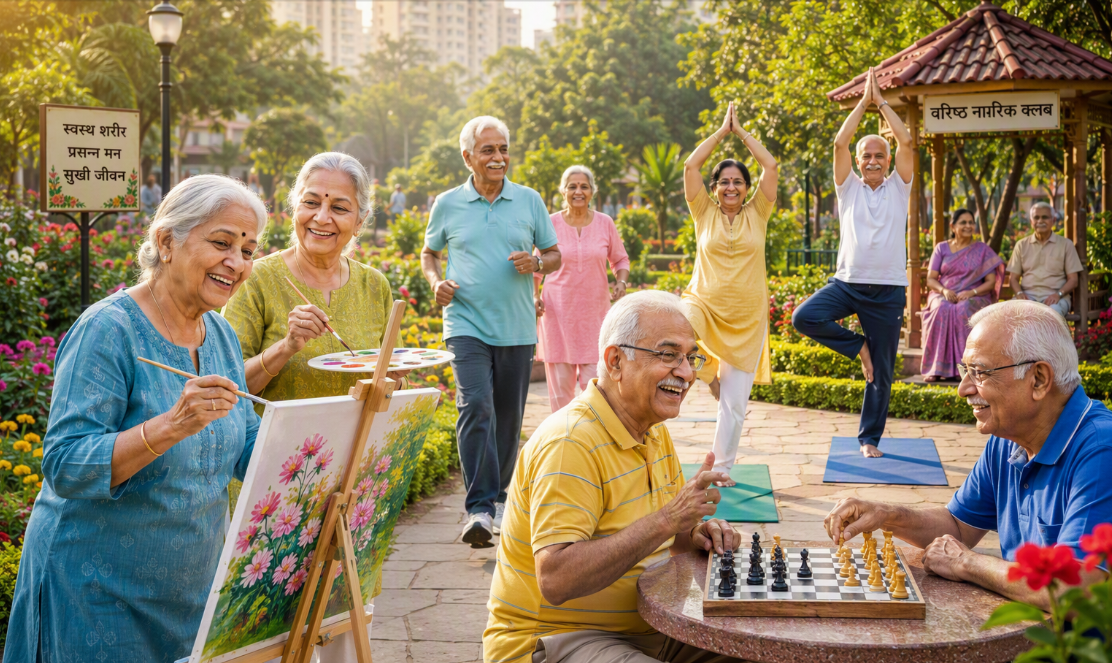
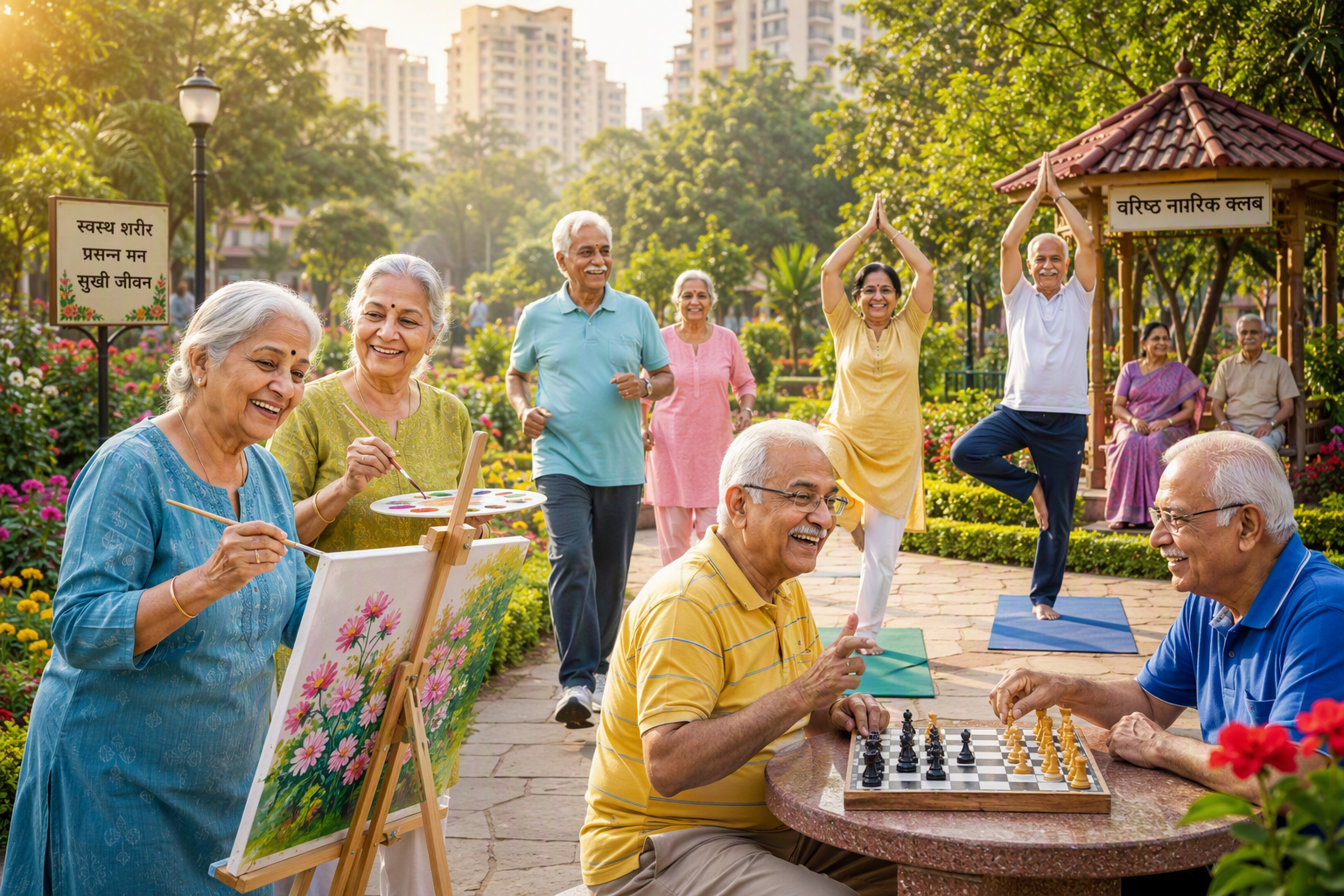
- Stay in touch with people and take part in your community. Community participation is very important.
- Learn some basic digital skills. It can help you use services and find information online.
Mental Health and Active Social Engagement
Mental health is just as important as blood pressure or how we get around. The gathered information shows that older adults and their caregivers both need better help with mental health. Being alone, feeling grief, having to depend on others, and losing some abilities can slowly hurt how people feel and their sense of self-worth.
One way to help is staying active in social life. Older persons who keep in touch with friends, family, or join local groups feel more connected to people. They feel like they belong and have something to offer. Taking part in community events, spending time with different age groups, and doing things that feel needed can make loneliness go down. This can also help their mood stay steady.
This is something middle-aged people can get ready for early. The best way is to build good relationships that last into later years. Keep up with community participation. Get help when you need it. Healthy ageing is not just about the body. It is also about whether you feel purpose, feel connected, and feel there is something worth getting up for each day.
Nutrition and Physical Activity for Longevity
Good nutrition and moving your body are some of the main things that help you live longer. The information shows that healthy ageing is connected to staying strong, staying healthy, and being able to do things easily at any age. You do not have to use hard or extreme routines. You just need regular habits that you can keep up with for a long time.
Good food, being active often, and paying attention to what you need as you get older can help you stay independent. They can also help lower health risks for many people. The next parts talk about simple steps you can take that work well in Indian homes. These tips also fit for people with different skills and needs.
Culturally Relevant Diet and Supplementation
Food choices are easier to stick with when they match the local way people eat. A diet that fits the culture really matters. Healthy ageing works best when routines feel right, do not cost too much, and last for a long time. The material here shows that good food is a part of keeping healthy for life, not something to fix later.
Older adults may need more focus on what they eat. This can be important when appetite is low. It also matters if they have trouble chewing, feel unwell, or do not have much money. Good meals help keep energy up. Eating right and having meals on time can also help. Food choices should fit health needs. If taking any supplements, these should match what is needed and go with a doctor’s advice.
Practical ideas include:
- Choose balanced meals that help you stay strong each day and help your body recover.
- Change the way you prepare food or the time you eat it if age makes eating tough.
- Pick foods that fit your health needs and what your doctor says.
- Only use supplements when your health care provider says you need them.
Accessible Fitness Options for Seniors
Being fit when you get older does not mean you need to go to the gym. You can do some physical activity at home or outside. A walk, some gentle stretches, yoga, or even easy moves to help with balance and how you move can be good. What matters most is to do it often and to stay safe.
For many older adults, the biggest problem is not that they lack motivation. It is that they do not have good access. It can be much easier for them to stay active if there are safe public spaces, programs close to where they live, and good care services. Age-friendly communities and care at home can help people keep moving even if it is hard to travel.
Middle-aged adults can get ready for later years by adding activity into their daily life now. Seniors can do movements that help them feel strong and sure of themselves. When fitness changes to fit what someone can do, instead of pushing one routine for all, it feels welcoming. It is useful and easier to keep doing for everyone.
Family and Community Role in Supporting Elderly
Families are still very important for older adults in India. Even though family structures are changing now, they are the ones who give much of the care, love, and safety old people need. Things like people moving, cities growing, and more nuclear homes have changed some old ways, but family members are still at the heart of life for many older adults.
Community support is very important right now. When homes, neighborhoods, and local groups help each other, growing old does not feel so lonely or hard. The next parts will show how people of different ages and care networks in the area can really help.
Intergenerational Bonding and Support Systems
Intergenerational bonding helps older persons feel stronger inside as they get older. They do not just need help with chores. They want respect, talk, and a place in the family. When older persons feel that they belong, it can help keep their confidence high and stop them from feeling alone.
Family members can help with support systems by being involved in simple, regular ways. Having meals together, talking and checking in, following up on medical care, and helping with digital tasks all help. A good support system does not take away someone’s independence. It makes it easier for them to keep their independence.
There is also a bigger social good. The collected information shows that older persons and many people can keep on giving back for years, even after retirement. Families and communities need to give room for them to share knowledge, help others, and stay active. When older persons keep in touch with people of different ages, care is shared both ways and is not only a duty for one side.
Community Healthcare and Volunteer Networks
Local systems help when families need more support. Community healthcare is very important, especially for older adults who live far from hospitals. It also helps when their relatives have to work away from home. Things like home care, local outreach, and strong community ties can make sure people get help faster and feel less stress.
Volunteer networks can help with your daily well-being. They may be there for things like getting to appointments, having someone to talk to, sharing information, or helping people get benefits. The main idea is to have these community helpers work together with public services, not on their own. This way, people get better support when they need it.
Helpful community actions include:
- Give support for home care and regular check-ups to older adults who cannot move much.
- Help seniors get to welfare schemes, helplines, and local health services.
- Make networks of volunteers. These people can help fight loneliness for them and offer help when needed.
- Link community groups with district hospitals, NGOs, and local authorities.
Economic Impacts of Healthy Ageing in India
Healthy ageing matters not just for the home. It is also important for the country’s money and growth. A bigger ageing population may bring higher costs when people get sick or need help. But there is value when older people keep working, stay skilled, and feel involved for more time.
This is a point where more people working and the silver economy matter a lot. If India plans the right way, people living longer can help with work, services, and bring new chances to make money. It does not have to be just something that needs help or care. The following parts show how this chance could grow and be helpful.
Workforce Participation of Older Adults
More people live longer now, so older adults can still add value after reaching the usual retirement age. This gathered information says that some people stay active and keep working for 10 to 20 years after they retire. That means India should look at the workforce in a new way.
Senior citizens have a lot of experience and can be counted on to do good work. They can also help others learn by being mentors. If they have their health and if workplaces let them work in ways that fit them, these people can keep working. This helps families and the whole economy. This is very helpful for a country that is going through a big demographic transition.
The idea is easy to understand. Healthy ageing helps keep the skills of older adults in use for more time. But poor ageing means some people have to stop working too soon, and this makes more people need care. If India wants to get the most out of people living longer, it should make sure older adults can stay active, feel good, and be part of useful work when they can.
Opportunities for Silver Economy Growth
The silver economy gets bigger when people see older adults as helpful members, buyers, and people who add value. In India, a growing ageing population means there is a bigger need for services that help with comfort, safety, health, and day-to-day independence. This can help the economy grow if the steps taken are practical and include everyone.
The gathered information shows that some topics are getting more notice now. These include senior living, assistive technologies, digital inclusion, rehabilitation, and dedicated care services. These things are not small or hidden issues anymore. They are now part of the main development planning.
Areas of opportunity include:
- There are homes and places for older adults that fit their needs and make life easier for them.
- People use devices and tools that help them do things on their own. They also get support to learn how to use new digital tools.
- Older adults can get help at home, get better after an injury, or feel comfort from palliative care services.
- There are ways for older adults to get around, and community services and products are made to suit what they need.
Conclusion
To sum up, healthy ageing is something we all need to focus on together. Families, people in the community, and the Indian healthcare system all have a part in this. When we better understand the needs of an ageing population, we can help create a place where people can live longer, feel good, and be happy. It’s important to make healthy choices in your daily life, pay attention to mental health, and give support in the community for our elders. As more of us live longer than before, we all need to work as one to help everyone enjoy a good and healthy life in these later years. If you want to talk about simple ways to work on healthy ageing, you can get in touch for a free consultation.
What can families do to help elderly relatives age healthily in India?
Families can help support healthy ageing by being part of the daily life of elderly people. They can keep up with regular routines and make sure there is help with medical care, emotional check-ins, and social time. Family members should also help the elderly with getting online, transport, and using their benefits. A good support system helps to improve the quality of life and lets older people stay independent for more time.
Are there government supports for people preparing for longer lives?
Yes. The Government of India gives support to senior citizens. It helps with healthy ageing through public health schemes. There are also pension and savings plans that the government gives to people. Insurance coverage and legal protection are also there. The Senior Citizens Act helps with the welfare of parents. There are social security plans and helpline support to help people feel safe as they get older. All these things help people be ready for longer lives with more safety.
What are simple actionable habits for healthy ageing anyone can start today?
Start small with habits you can do every day. A little bit of regular physical activity, going for routine check-ups, staying in touch with other people, getting help with stress, and eating a nutritious diet can make a big difference. These simple steps help older persons keep up with daily activities and stay independent. Healthy ageing comes from doing these things again and again, not from big changes. It is good to start early for the best results.